
How much painting after a renovation costs and what drives the price
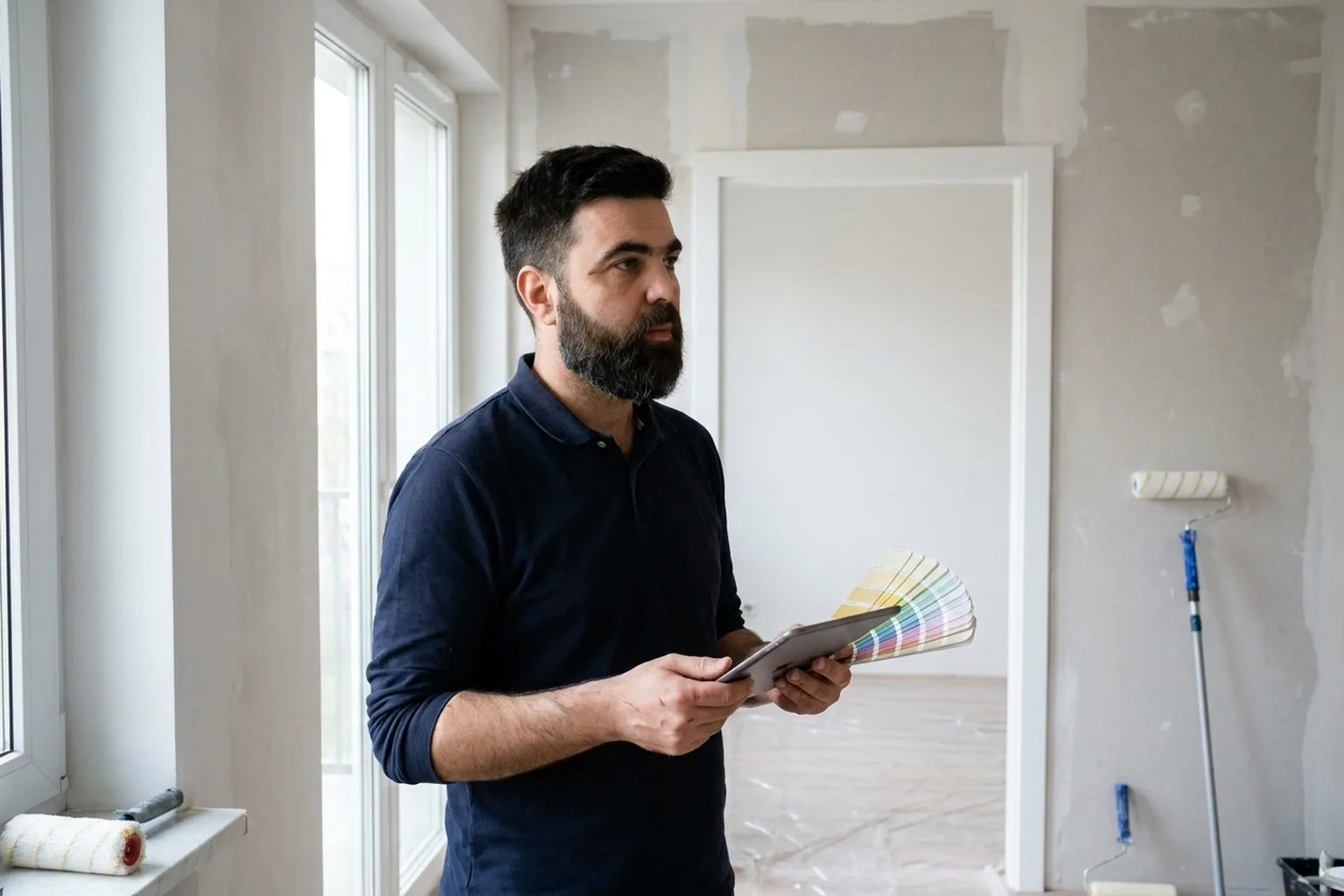
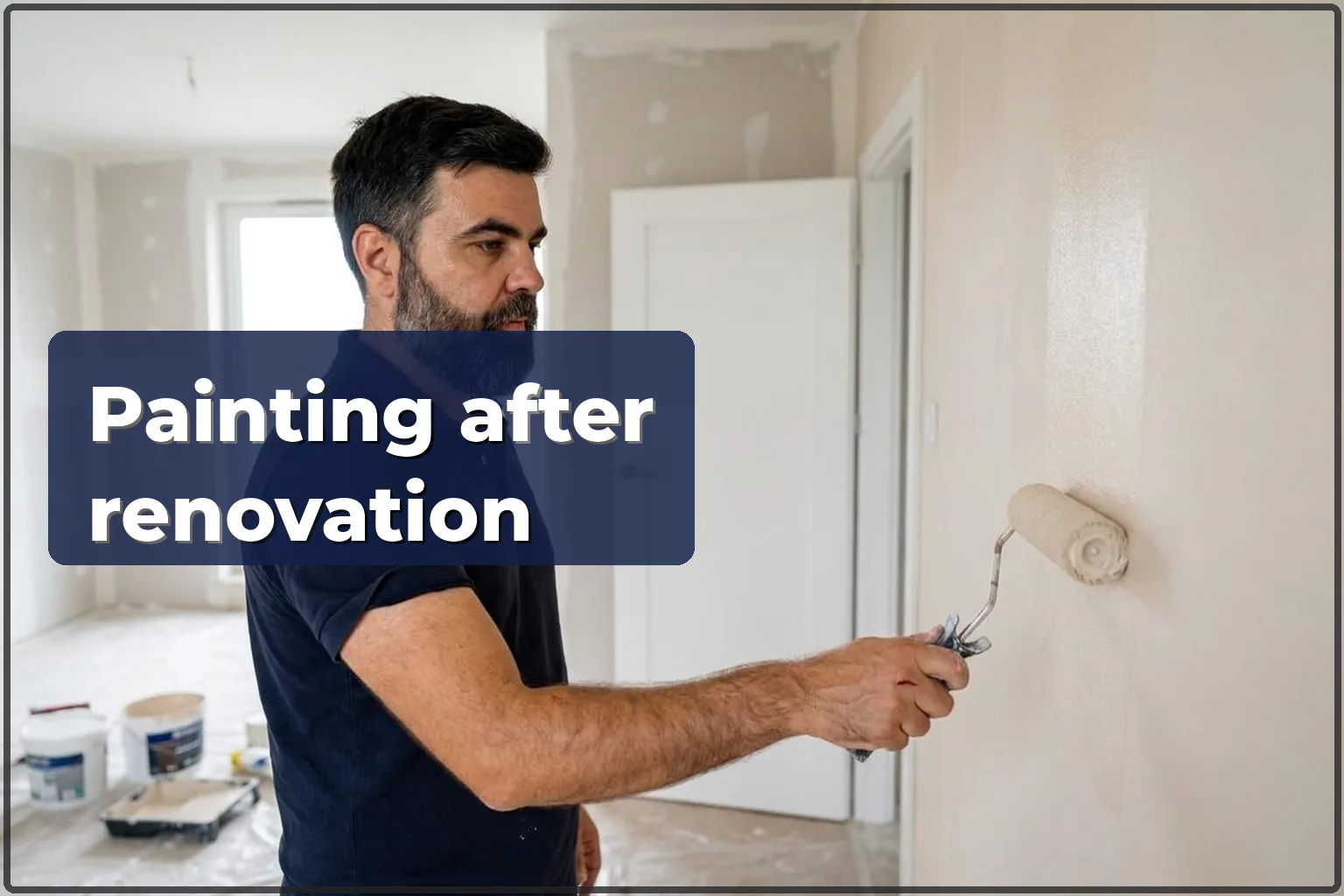
The price depends on the state the walls were left in after the rough work. If the surface is already skimmed and ready for paint, they charge for primer and two coats. If chases, joints and unevenness remain, filling and sanding are added, and those are separate operations. Separately they budget protecting the finished floor, windows and doors with film. Paint and materials are billed separately, while protective film and fixings are part of the labour. Rates per stage are in the table below.
| Service | Price |
|---|---|
| Wall cleaning before painting | 15–25 zł/m² |
| Filling holes and damage | 20–35 zł/m² |
| Priming before painting | 8–14 zł/m² |
| Gypsum skim coating | 55–90 zł/m² |
| Walls and ceilings, one colour (2 coats) | 30–50 zł/m² |
| Covering furniture, doors, windows and floors | 20–25 zł/m² |
Indicative prices. Ranges for a typical scope. Fixings included, materials separate. Minimum order 300 zł.
Construction dust and post-renovation debris are removed by arrangement; carrying paint up without a lift is also counted separately.
What it costs and how to book: flat painting in Warsaw.
How the job goes on site: step by step
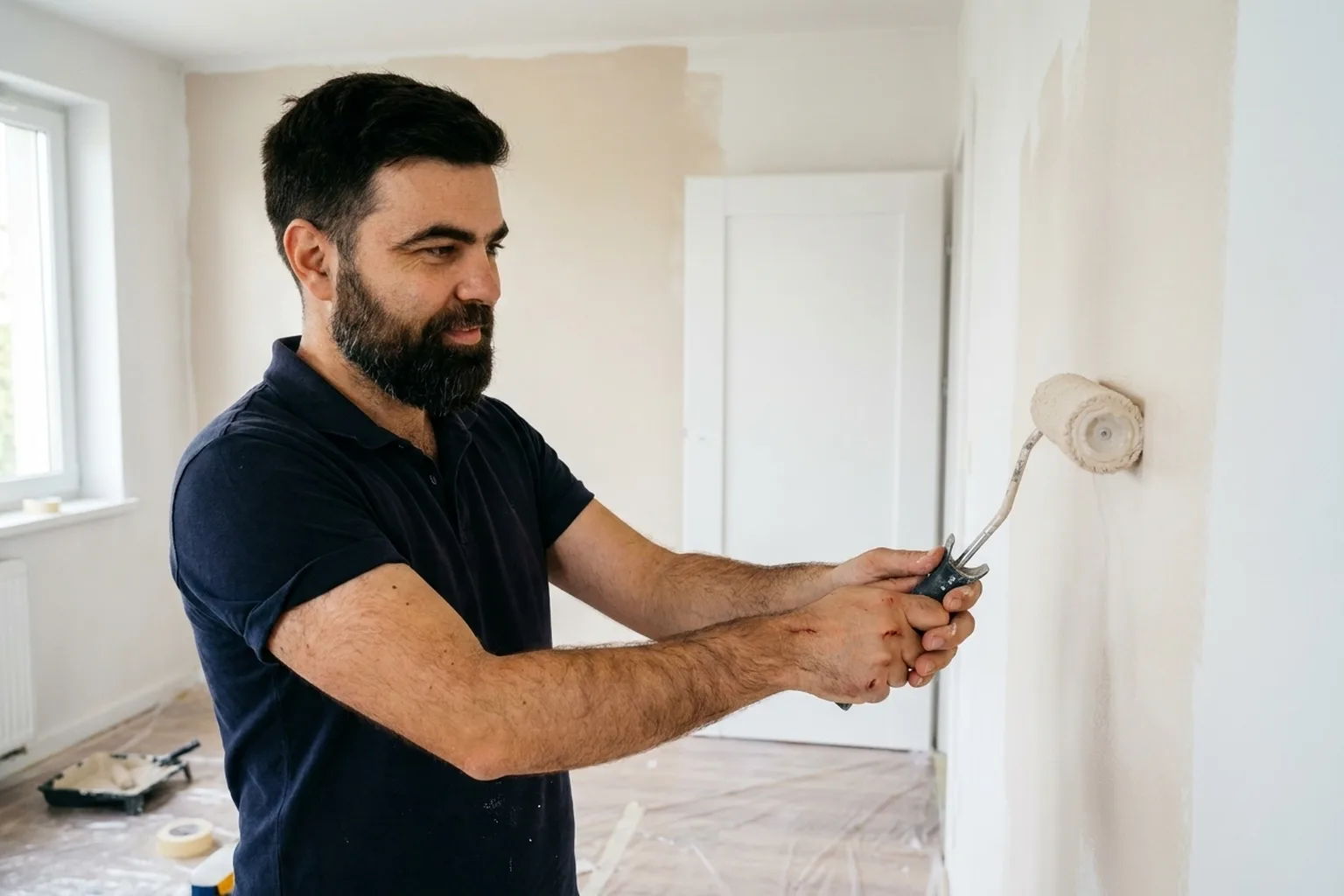
- Inspection after the rough work. Tradespeople check what’s left: chases, joints, screw heads, dust, local unevenness.
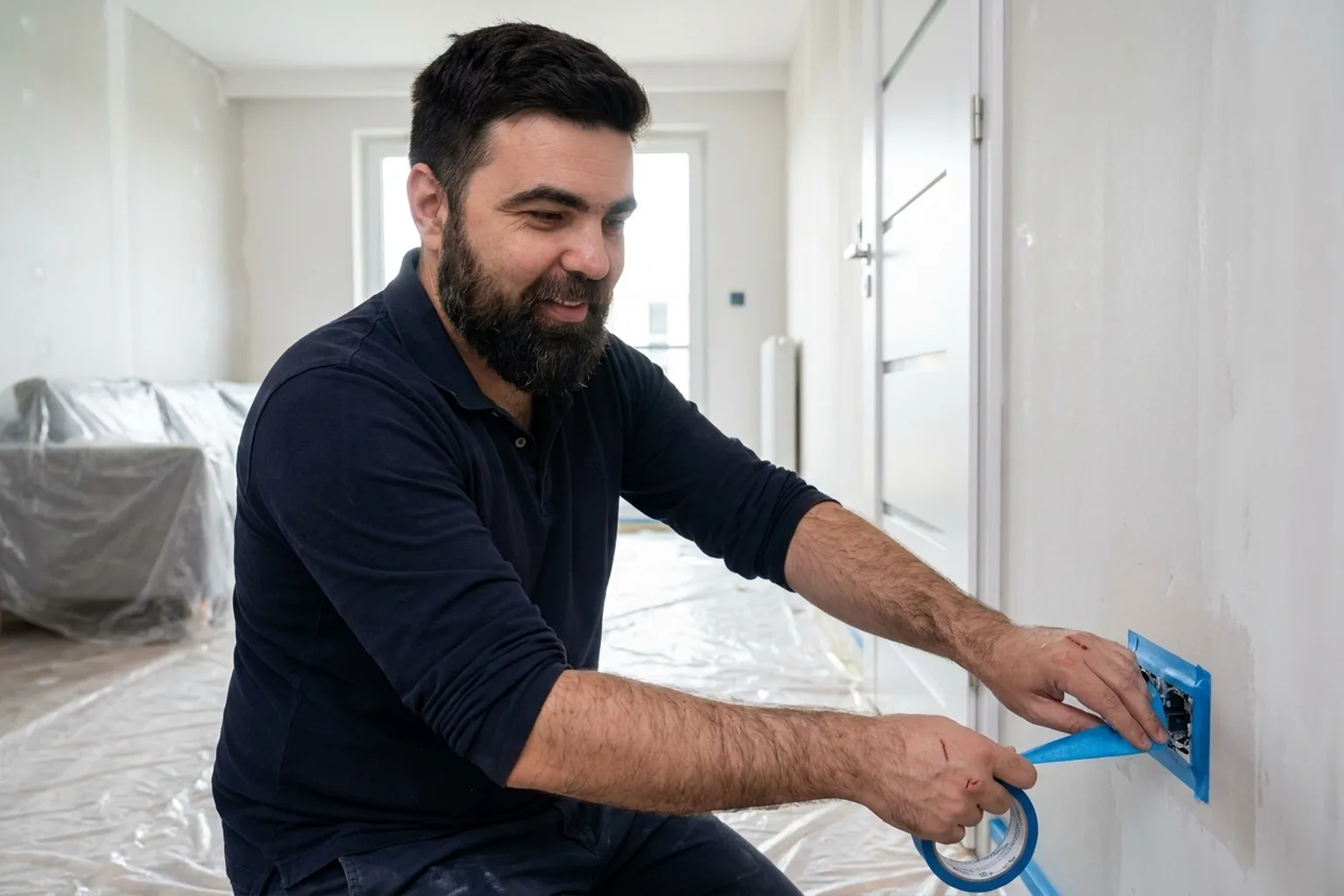
- Protecting the finished surfaces. The new floor is covered, windows, doors, radiators and sockets are masked — at this stage the main thing is to stain nothing.
- De-dusting. After construction the walls are dusty; they sweep and de-dust, otherwise the paint won’t bond.
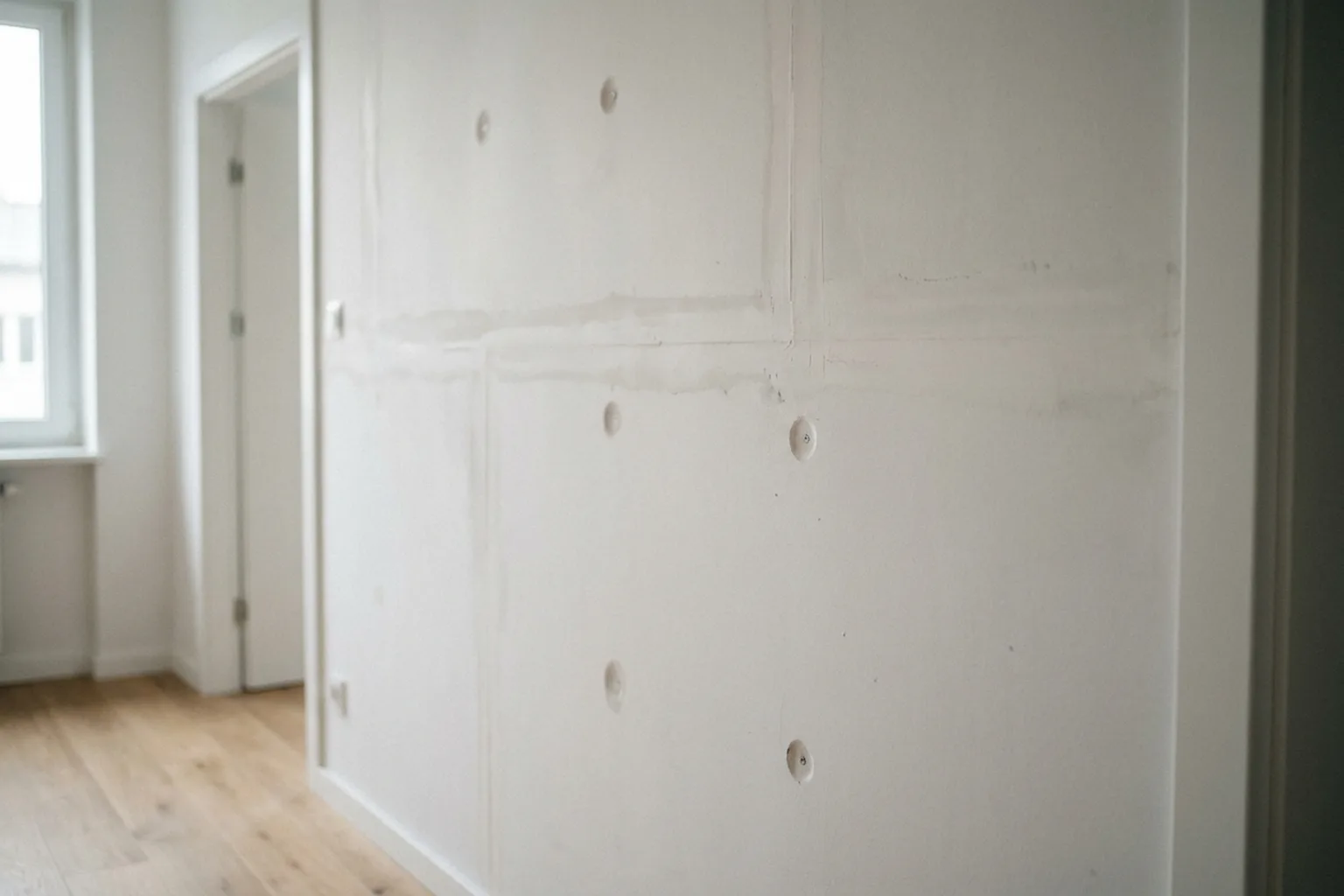
- Local filling. Chases, joints and flaws are levelled with filler and sanded flush.
- Priming. Tradespeople prime the whole area: fresh filler and plasterboard pull paint unevenly without primer.
- Two coats. Ceiling, then walls; they check under side light so joints and repairs don’t show through.
- Clean-up. Tradespeople remove film and tape, clear their dust and leave the room clean.
Common mistakes after a renovation (and how to avoid them)
- Painting over dust. After construction the walls are dusty; without de-dusting the paint peels.
- Skipping primer on plasterboard and filler. Fresh surfaces absorb unevenly — without primer you get patches.
- Not protecting the new floor and windows. Paint splashes on laminate and glazing are hard to remove; film is cheaper than a redo.
- Painting right after wet filling. Damp plaster needs to dry, otherwise stains and peeling appear.
- One coat over plasterboard joints. Filled seams almost always show through one coat: you need two.
- Rushing before construction dust is cleared. Dust settles on fresh paint and leaves a rough finish.
What to prepare before the pro arrives
- Finish the “wet” and dusty work (chasing, drilling, screed) before painting.
- Remove large debris and tools from the rooms.
- Decide on the colour and type of paint.
- Say so in the order which surfaces are already finished (floor, windows, doors) so they protect them.
- Provide access to water and electricity.
- Check that fresh plaster/filler has had time to dry.
- Clear access to the walls and ceiling.
- Say so in the order about the lift and parking if materials need carrying up.
A case from practice in Warsaw
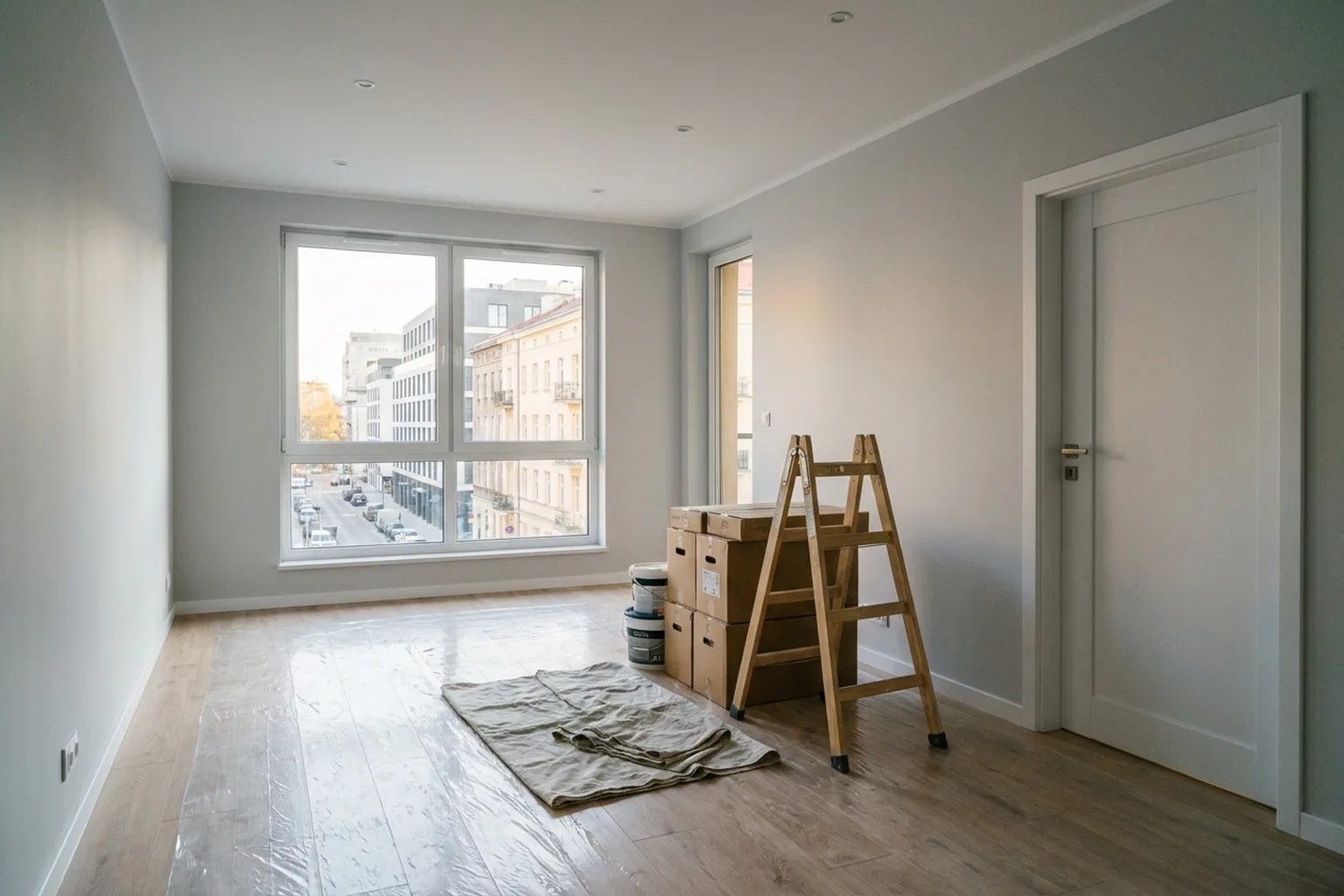
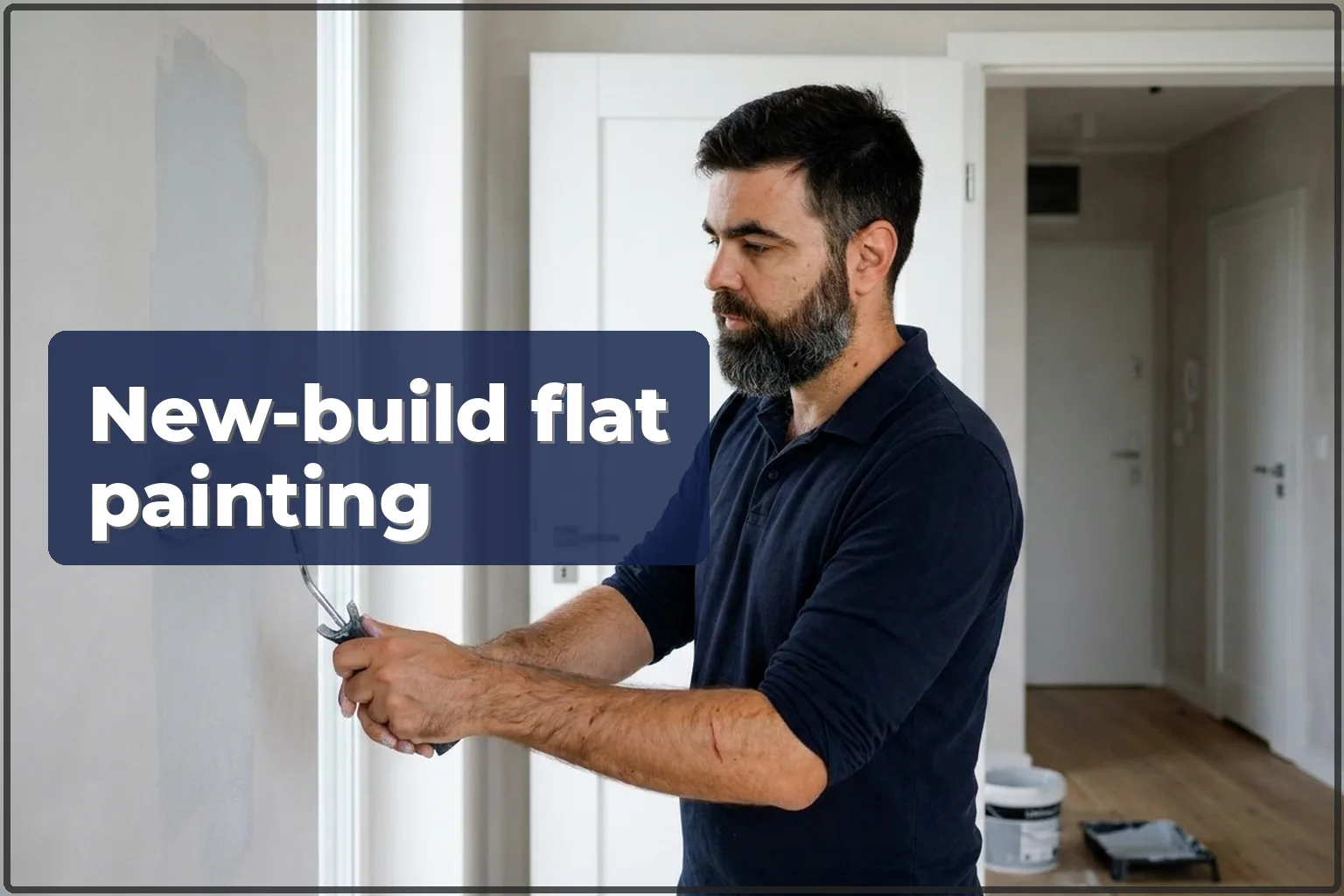
In a new build in Wola the clients had finished the rough renovation: wired the electrics, fitted windows and doors, laid laminate, handed over walls ready for paint but with dust and a couple of unlevelled plasterboard joints. They wanted to “just paint it white”. First they de-dusted everything, covered the floor and windows with film, levelled the joints and screw heads with filler and sanded them. Tradespeople primed and applied two coats. Under side light they confirmed the seams weren’t visible. It took two days and the laminate and windows stayed clean. The clients moved furniture in the next day. The takeaway: after a renovation, half the job isn’t painting but de-dusting, protecting finished surfaces and levelling joints; without that, fresh walls give away every flaw of the build.
Frequently asked questions
Can you paint straight after a renovation?
Yes, if the wet work is done and the plaster has dried. A damp surface can’t be painted: it will stain.
Do new walls need priming?
Definitely. Plasterboard and fresh filler absorb unevenly; without primer the paint goes on patchy.
Will the tradesperson protect the new floor and windows?
Yes, they cover the floor and mask windows, doors and radiators with film: it’s part of the prep.
Will the tradesperson level chases and plasterboard joints?
Yes, they fill, sand and prime them locally before painting so the seams don’t show.
Will the tradesperson clear the construction dust?
Tradespeople de-dust the walls before painting; removing large debris is by arrangement.
How many coats are needed after a renovation?
Usually two — over joints and fresh filler one coat almost always shows through.
Does the painter buy the paint?
Whatever is easier. Tradespeople work with your paint or advise what to get. Materials are separate.
How long does it take to paint a flat after a renovation?
A small one in one or two days if the walls are already levelled. With joint filling it takes a bit longer.
Will the tradesperson clean up afterwards?
Yes, they remove film and tape, clear their dust and leave the room clean.
Do tradespeople cover my district?
Tradespeople work across all of Warsaw: Wola, Mokotów, Ursynów, Praga and others. Leave a request with your address.
Who does the work and how

The work is done by painters on the platform. After a renovation, care matters: protecting the finished floor, windows and doors, de-dusting and levelling the joints so the finish looks even. The scope and price are agreed at the inspection, where it’s immediately clear what was left ready for paint and what needs finishing. Post a request in the HandyMan24 app and painters will send their offers.
Order in the app
Describe the job, add photos and the address. Tradespeople send their own prices and dates, and you pick one of the offers.
Open the app