
How much a trowelled architectural concrete finish costs
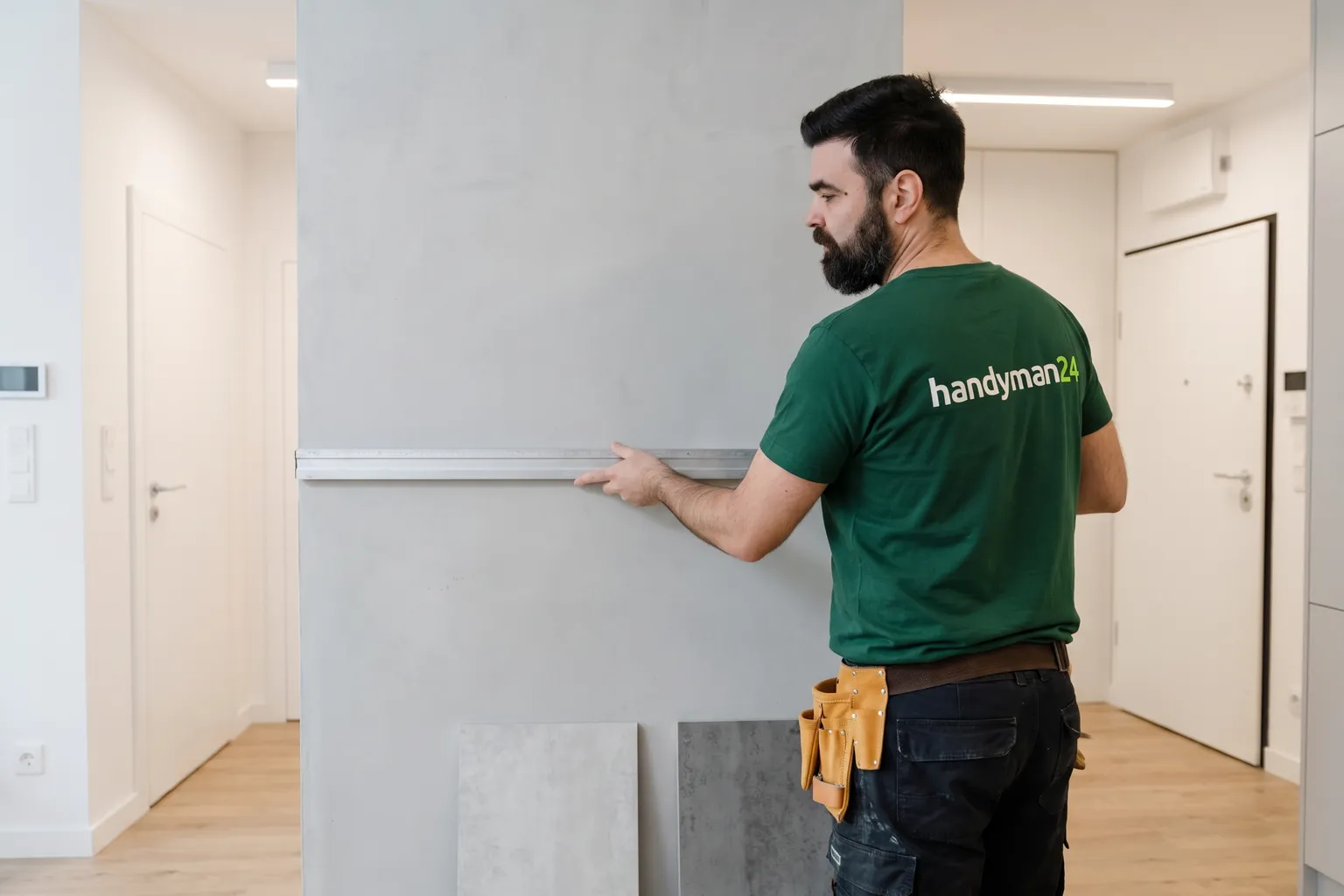
Trowelled architectural concrete costs 200–280 zł/m² on the price list. Labour cost depends mostly on the condition of the wall and how elaborate the effect is. A flat, primed surface is a very different job from old plaster where tiles have been hacked off. The number of coats, imitation formwork with tie holes and access to the wall all count too. Current rates for the trowelled finish are in the table, and a tradesperson will price panels in an offer based on your layout.
| Service | Price |
|---|---|
| Trowelled architectural concrete finish | 200–280 zł/m² |
Indicative prices. Ranges for a typical scope. Fixings included, materials separate. Minimum order 300 zł.
Small fixings normally come with the labour. You pay separately for materials (compound, primer, sealer or the panels themselves), plus taking away rubbish and carrying materials in. Straightening a crooked wall is usually its own line as well, so ask about it before you accept an offer.
What it costs and how to book: interior finishing in Warsaw.
Trowelled architectural concrete: how the wall gets made
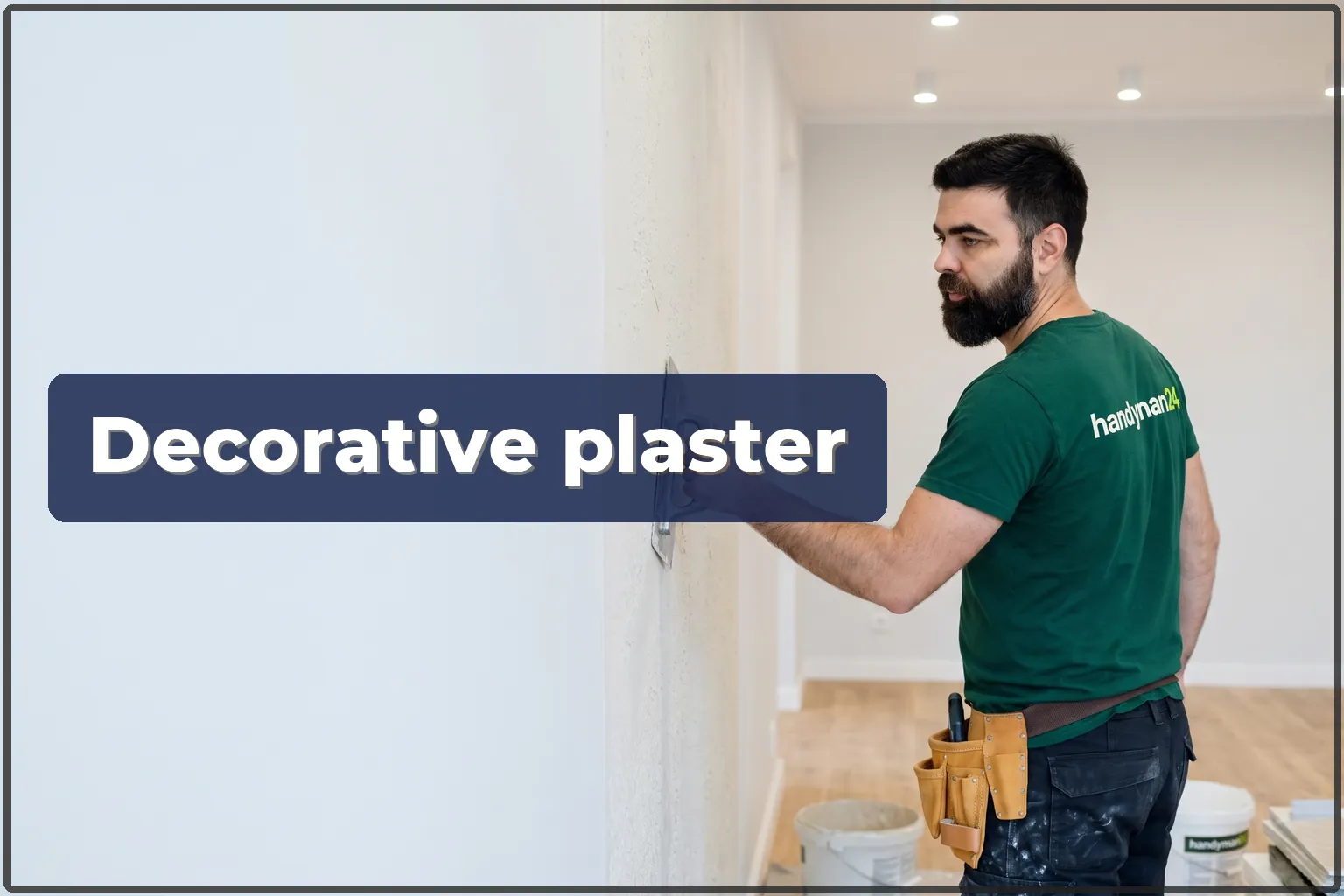
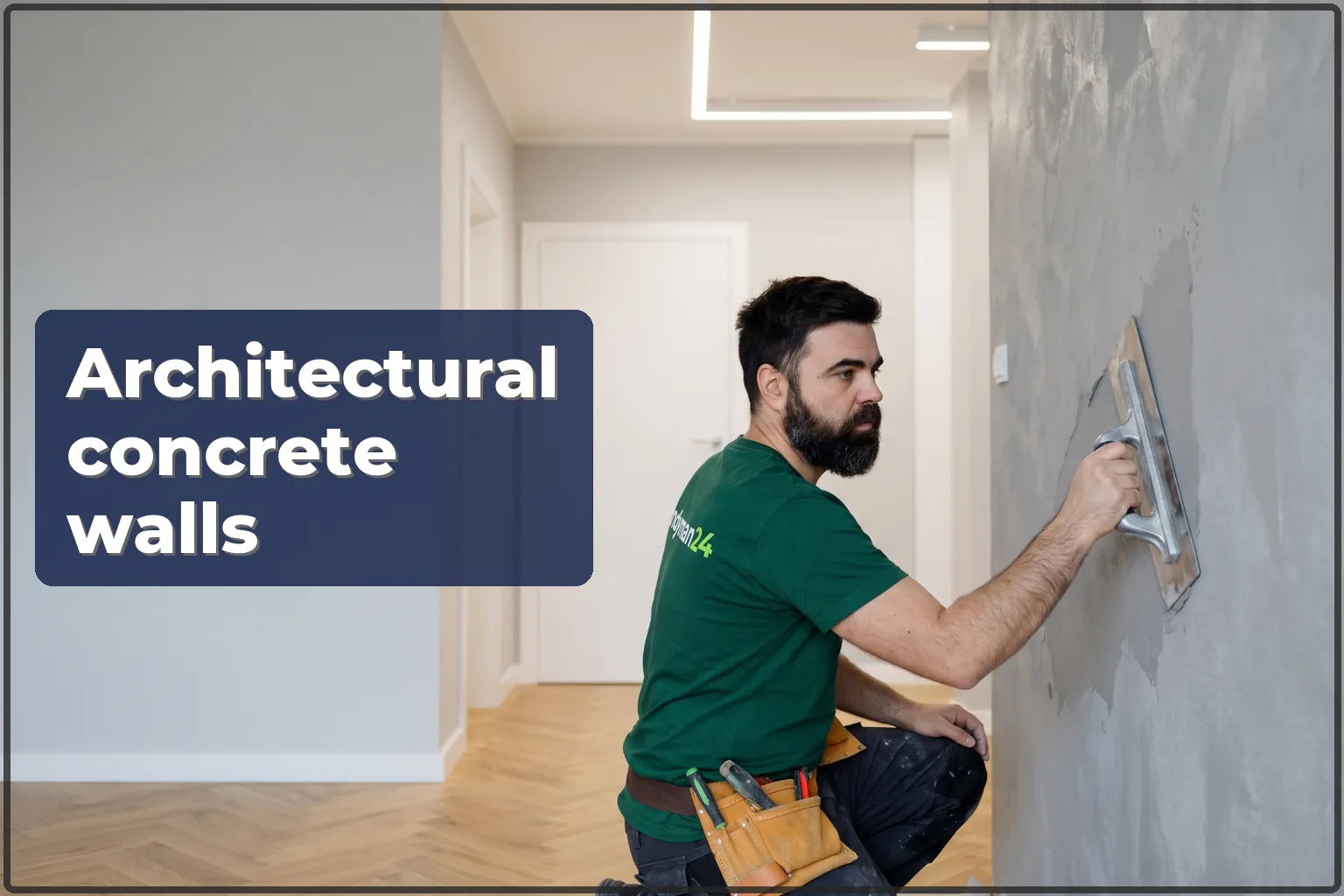
It is basically a type of thin decorative plaster. The tradesperson primes the wall, puts on the compound in several coats, works irregularities in with the trowel, and can then press in lines and holes like those left by formwork. Protection comes last: an impregnating sealer or lacquer, depending on the system. Every wall comes out slightly different, which is what people are paying for.
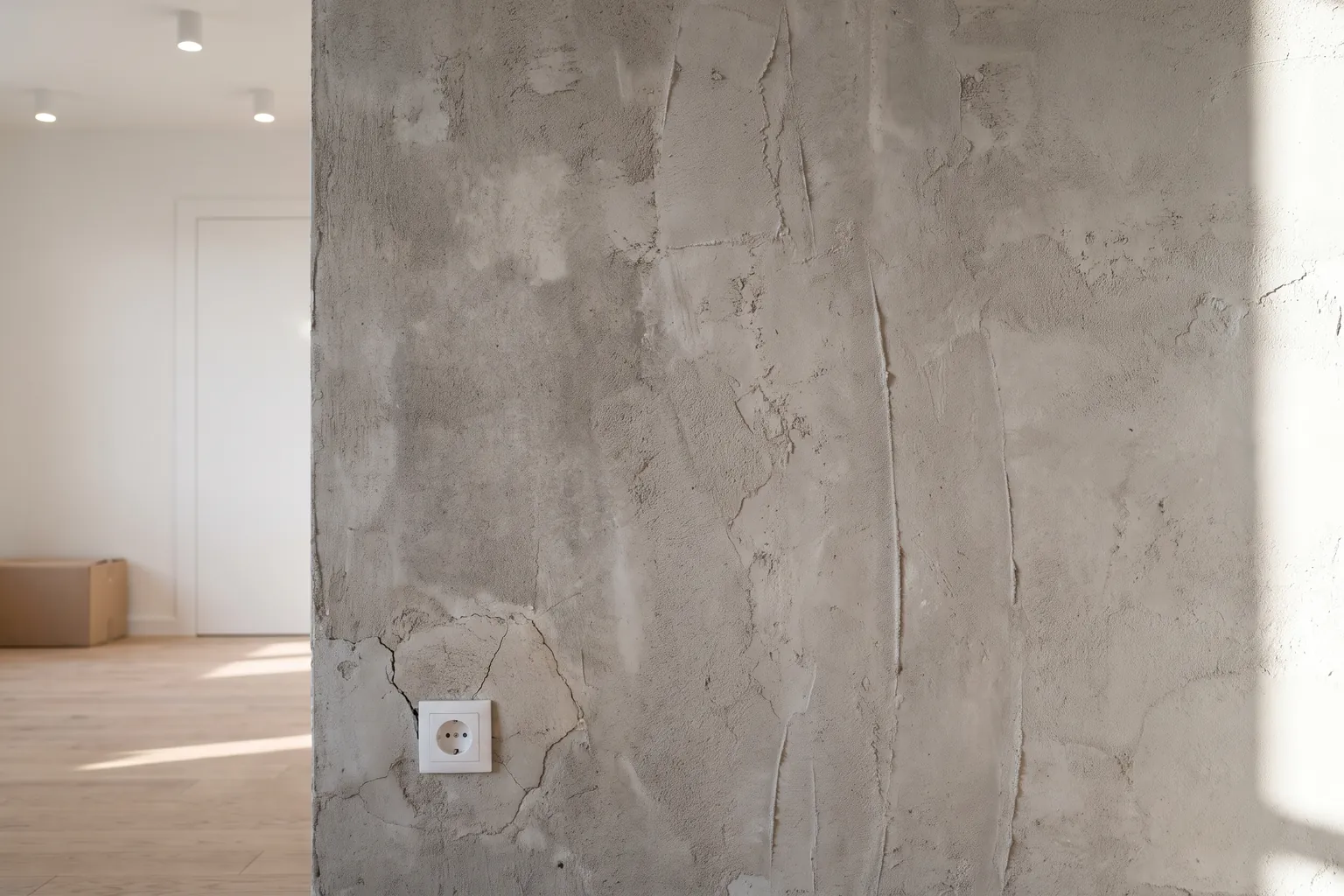
The coat is thin, so it adds almost no load and follows corners and arches well. It also shows up whatever is underneath, so cracks and bows have to be fixed first. If you care more about texture than a raw concrete look, compare it with mosaic and textured plaster.
Architectural concrete panels: when they make sense
Panels are made in a factory, so the pattern repeats, the thickness is even and the joints show, which often looks just like real board-formed concrete. Fitting is cleaner because there is less wet work, but panels vary a lot. Concrete ones can be heavy, which limits the walls you can use and means fixing them exactly as the product sheet says. Lighter gypsum and composite panels exist too. Keep gypsum ones to dry rooms unless the manufacturer says otherwise.
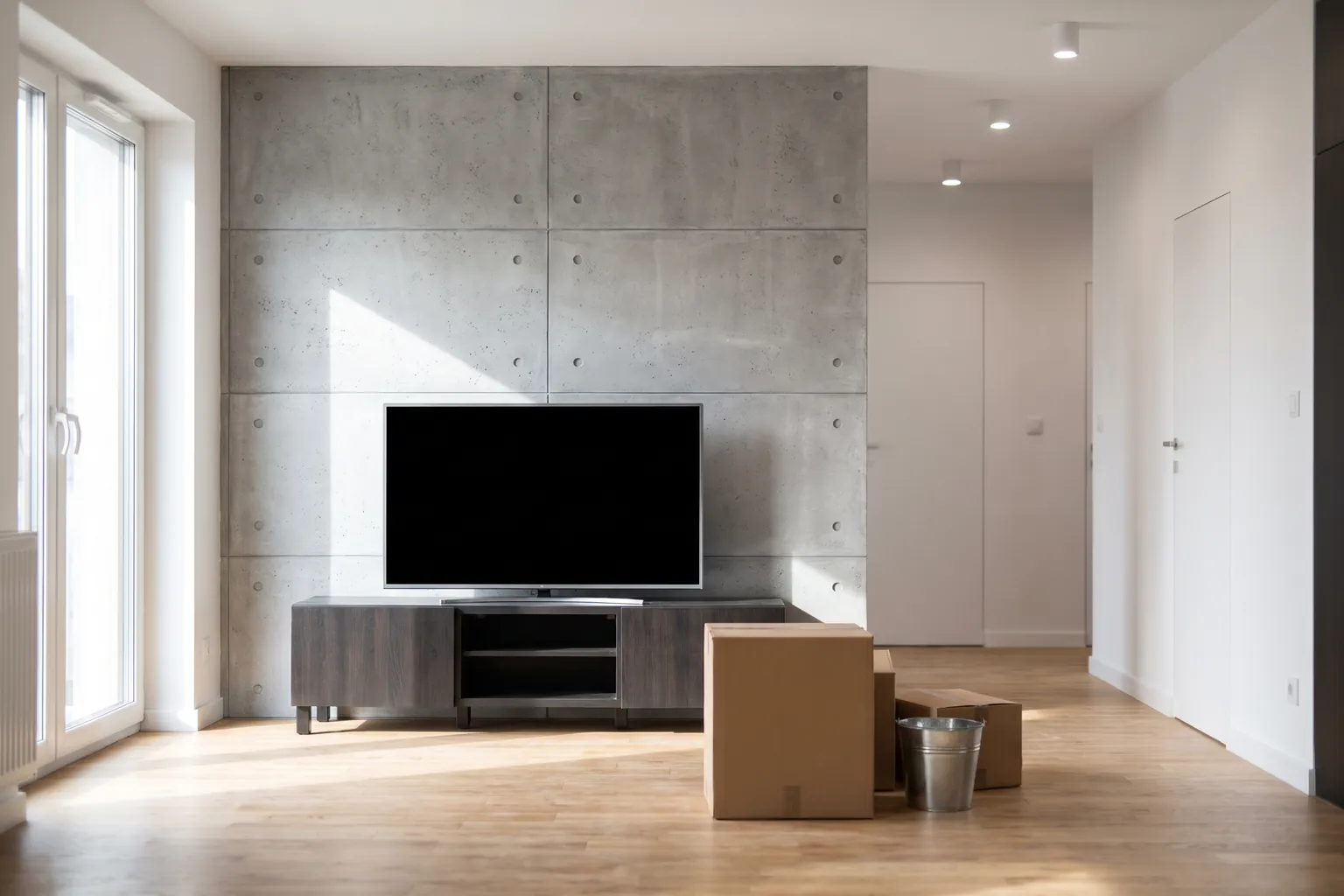
On a plasterboard wall, ask whether the frame can carry the load before you order a full heavy set.
Trowelled architectural concrete or panels: which to choose
- Trowelled suits a wall with no repeating pattern, arches or odd shapes, and places where you don’t want extra weight.
- Panels suit a regular grid with visible joints, less wet work and a solid wall.
- You can’t see the trowelled result until the end, so ask for a sample. With panels, the pattern is visible straight away.
Architectural concrete in the lounge and on a TV wall
In a lounge it is mostly one feature wall, behind the sofa or carrying the TV, with ordinary paint on the others (see painting walls step by step). Watch out for side lighting, which picks out every bump. Look at a sample in the same spot at the same time of day. Plan cables and the TV bracket before the compound goes on, so nobody has to break into a finished surface. A wall behind a kitchen island needs a tougher lacquer, because grease soaks into unprotected compound. If a built-in bio fireplace will sit against it, check the system’s product sheet to see whether the lacquer copes with heat. Already have photos of the wall? Post an architectural concrete job and compare the offers.
Architectural concrete in a bathroom: damp and lacquer
Mineral compound absorbs water, so in a bathroom the system decides everything: what base, whether there’s waterproofing, what lacquer on top. Without protection, soap and water stains arrive quickly. A wall by the basin usually gets by with a well-lacquered surface. In a shower, where water runs every day, use only products the manufacturer approves for wet zones, laid over waterproofing.
Clean with mild products, no abrasive sponges or strong descalers, and renew dull patches as the instructions say. For the shower itself, people more often choose microcement in the bathroom, as long as the manufacturer provides for it in a system with waterproofing.
Architectural concrete outdoors and on a facade
Interior compound won’t last outside. For a facade you need products labelled for exterior use, resistant to frost, rain and sun, and compatible with your insulation if you have any. In Poland the weather needs watching as well: rain or frost while the coat sets will ruin the work, and the technical sheet gives the application conditions. Check any change to the look of a facade with the starostwo (county office), or with the manager in a block of flats.
Safety: working at height needs scaffolding or a lift, and someone who knows how to use it. Don’t fix panels to a facade until the base and anchor system have been checked. Wear a dust mask with a proper filter for sanding and cutting, and switch off the power before chasing or drilling walls with wiring in them.
Architectural concrete colours: grey, beige, black
Grey is the classic, but it comes in plenty of shades, from cool to nearly green. Beige sits better with timber and warm interiors, and looks less like a car park. Black and graphite are striking, though scratches, dust and lacquer marks show on them fastest. Colour shifts after lacquering and looks different under artificial light. So decide from a sample of the same batch, lacquered the way the finished wall will be.
Architectural concrete and microcement: what sets them apart
Both look mineral, but they do different jobs. Architectural concrete imitates raw board-formed concrete, with board marks and holes, and goes mainly on walls. Microcement gives a smoother continuous coat with no joints, which manufacturers also provide for floors, stairs and tiles. For one wall with a raw character, go for concrete. For a continuous coat on the floor and through the whole bathroom, look at microcement.
How a tradesperson makes an architectural concrete wall
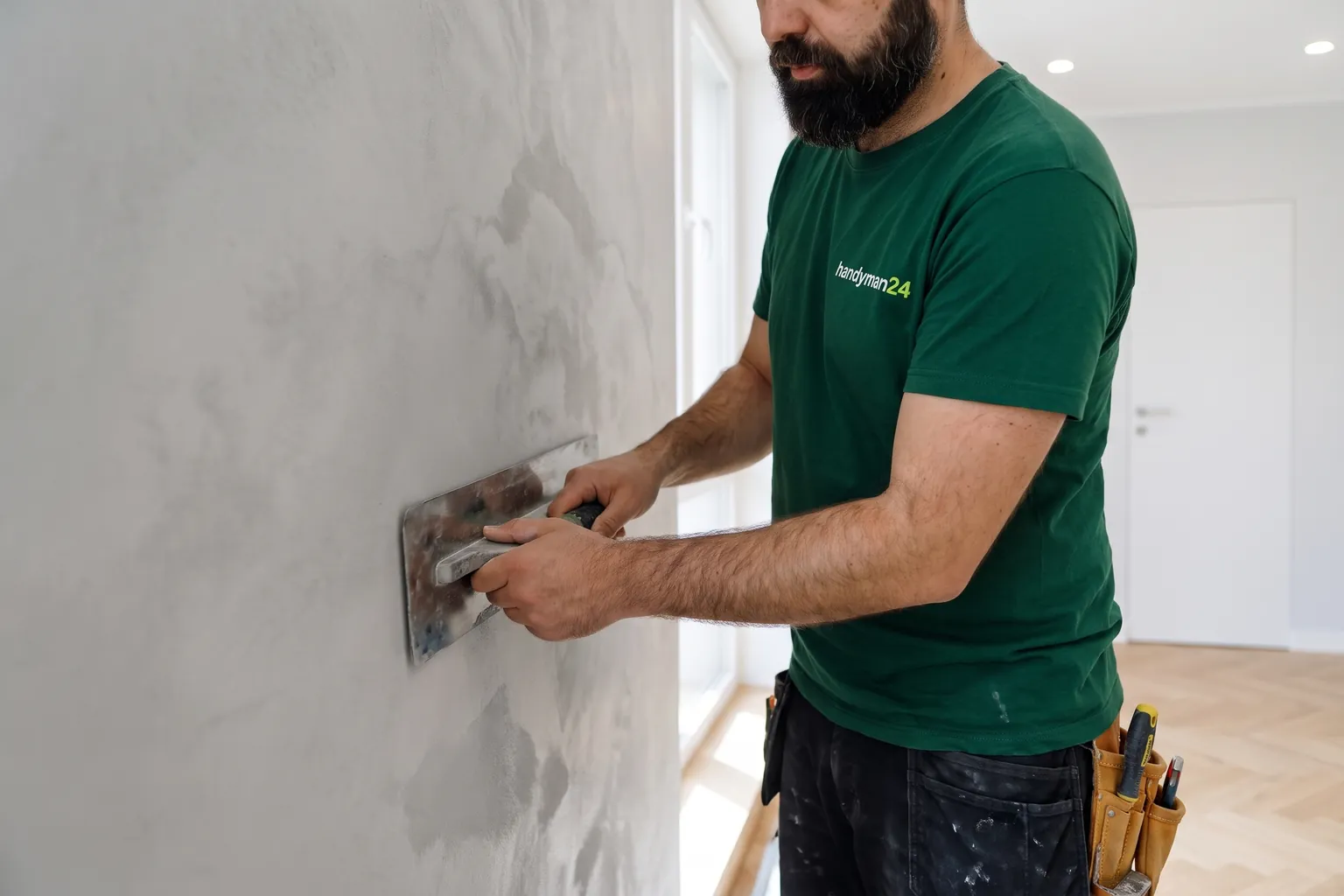
- Inspects the wall, checks how flat it is and what lies underneath.
- Covers the floor, windows and sockets, and screens off the dusty area.
- Fills holes and cracks, then primes the surface.
- Shows a colour and texture sample for you to approve.
- Applies the coats, with drying breaks as the product sheet says.
- Presses in formwork lines and holes if planned, then sands and removes the dust.
- Puts on the sealer or lacquer and, once dry, hands over a clean wall and room.
Common architectural concrete mistakes
- Interior compound on a terrace or facade, because it was already bought.
- No colour sample, then a big surprise after lacquering.
- Working on an unprimed, dusty wall, so the finish later comes away.
- A shower wall with no waterproofing, only lacquer on top.
- Heavy panels on plasterboard with no check of the frame.
What to prepare when ordering architectural concrete
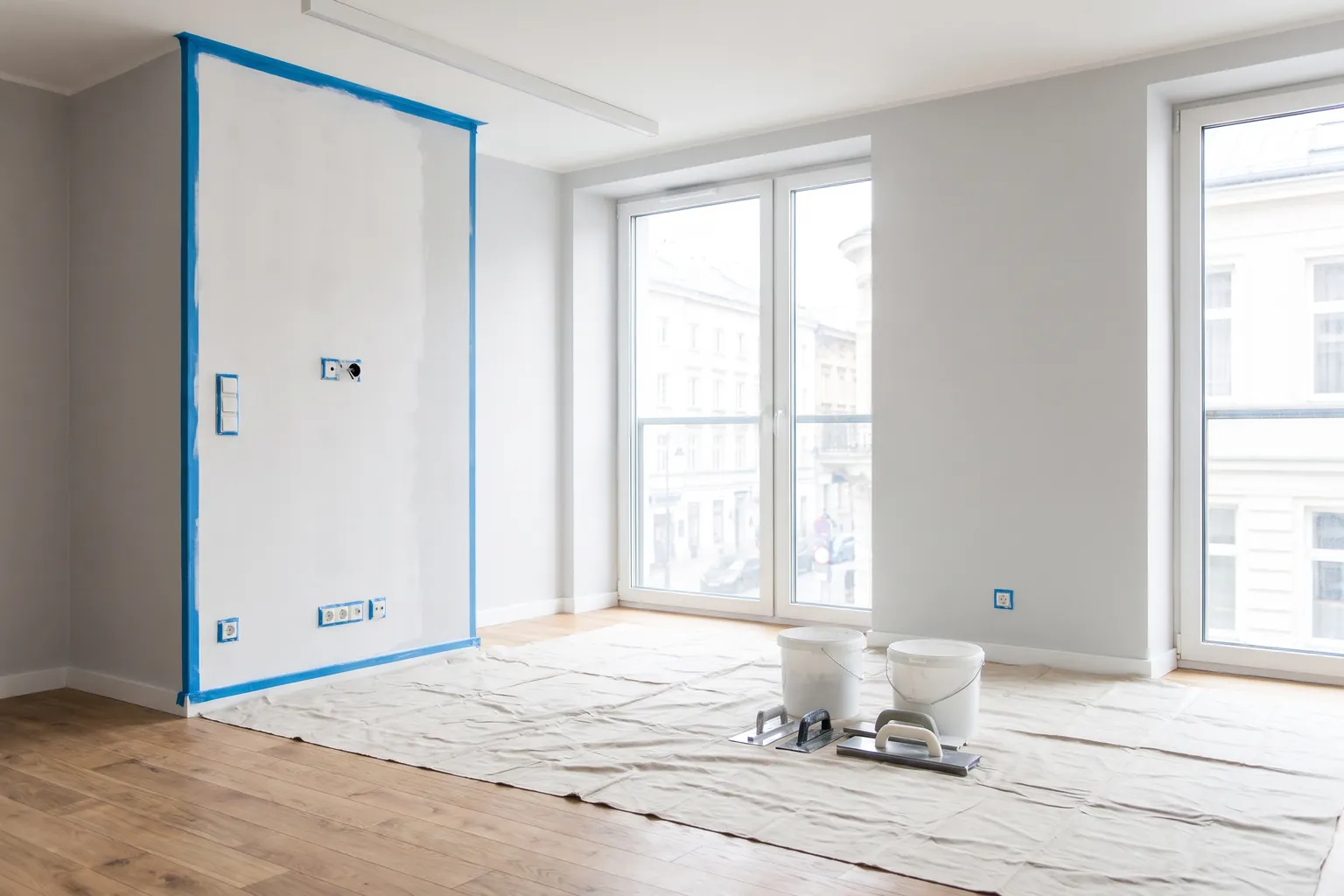
- Photos of the whole wall in daylight, and close-ups of cracks and holes.
- Wall measurements, with windows, doors, sockets and brackets marked.
- What the wall is: plaster, plasterboard, tile or something else.
- An example of the look, the colour, and whether you want holes and formwork lines.
- The type of room: dry, kitchen, bathroom, shower or outdoors.
- Who buys the materials, plus the product sheet if you’ve picked one.
- For a facade, consent from the manager or owners’ association and room for scaffolding.
Questions and answers
Is architectural concrete suitable for a bathroom?
Yes, if the system allows for it and the surface is well lacquered. A shower needs waterproofing and a product approved for wet zones.
What’s the difference between architectural concrete and microcement?
Concrete imitates formwork with marks and holes, mainly on walls. Microcement is a smoother continuous coat, also for floors and stairs.
How much does an architectural concrete wall cost?
The labour rate for the trowelled finish is in the table above. Materials and wall repairs come on top, and panels are priced to your layout.
Can architectural concrete go on plasterboard?
Usually yes, once joints are treated and the board is primed as the manufacturer recommends. Heavy concrete panels also need a check of what the wall can carry.
Can you use architectural concrete outdoors?
Yes, but only exterior products that resist frost and rain. Check facade formalities with the starostwo or building manager.
How to order an architectural concrete wall
In the app, describe the room, its size and whether you lean towards trowel or panels, add photos and publish your job in the app. Tradespeople near you send offers with their own price. Choose by reviews, scope and photos of earlier walls.
The tradesperson answers for their own work and puts it right if something goes wrong, but not for hidden defects in the base, other people’s plastering mistakes or faulty material they couldn’t have spotted. The invoice comes from the tradesperson.
Do you do decorative plaster and trowelled concrete? Set up a tradesperson profile and pick up jobs close to home. Everyone here works for themselves, and you choose your own business form and bookkeeping.
Order in the app
Describe the job, add photos and the address. Tradespeople send their own prices and dates, and you pick one of the offers.
Open the app