
How much microcement costs: what affects the price per m2
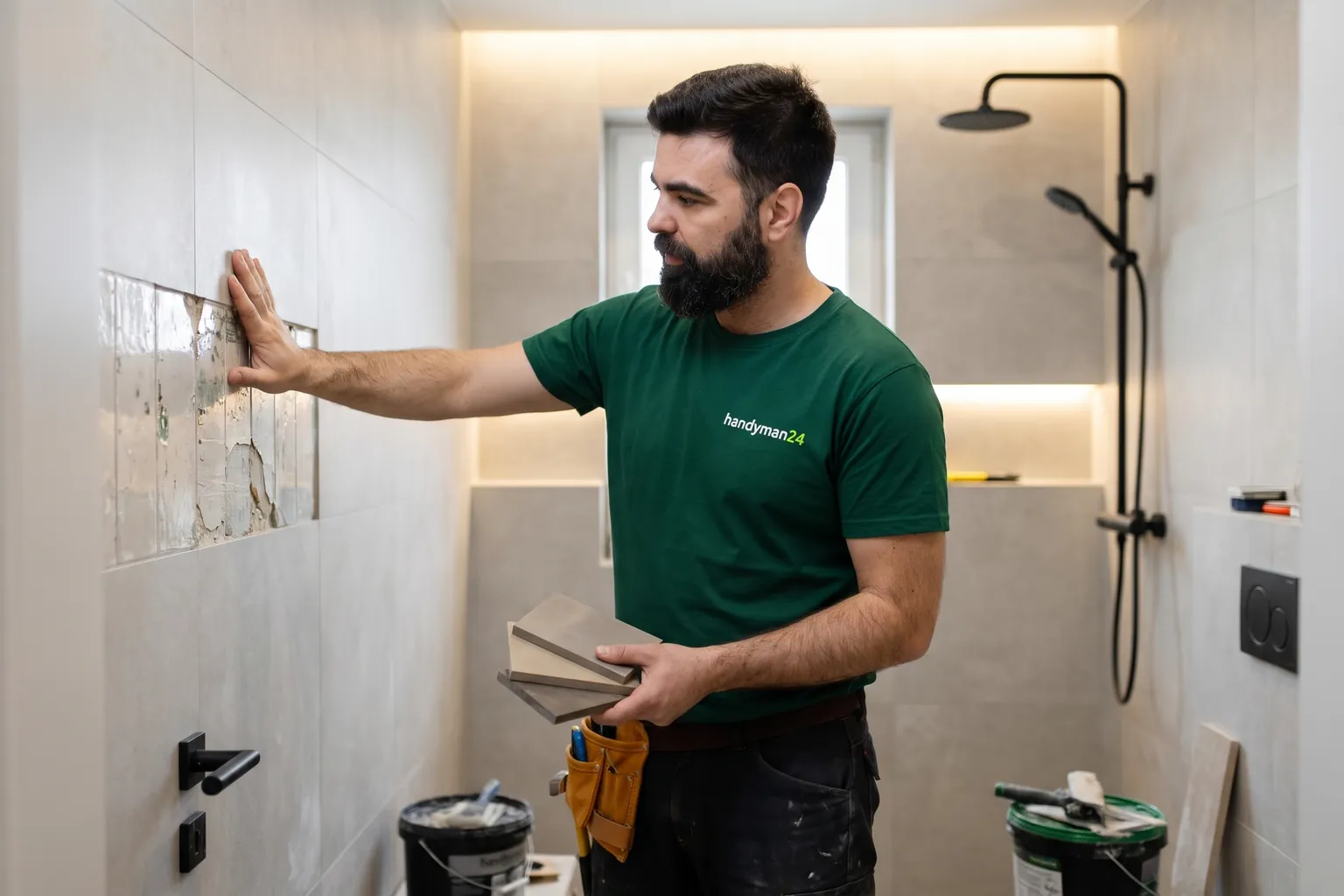
On the price list, microcement on a wall costs 350–450 zł/m² and a microcement floor 410–550 zł/m². The base sets the price more than anything. A flat, sound screed takes less work than old tiles that must be checked, filled along the joints and primed. Area counts too (small jobs are priced differently), along with the number of coats, waterproofing in wet areas and shape: a niche, a bath panel or a staircase means a lot of trowel work in a small space. Current rates are in the table.
| Service | Price |
|---|---|
| Microcement wall finish | 350–450 zł/m² |
| Microcement floor | 410–550 zł/m² |
| Microcement in a shower area | 390–500 zł/m² |
Indicative prices. Ranges for a typical scope. Fixings included, materials separate. Minimum order 300 zł.
Small consumables and masking tape are normally part of the labour. Materials are separate: the microcement, primer, mesh, waterproofing and sealer. So are carrying materials in and clearing rubble if anything has to come off. Levelling a crooked screed is usually its own line, so ask for it in the offer.
What it costs and how to book: wall filling and skimming in Warsaw.
Microcement types and colours: what to choose
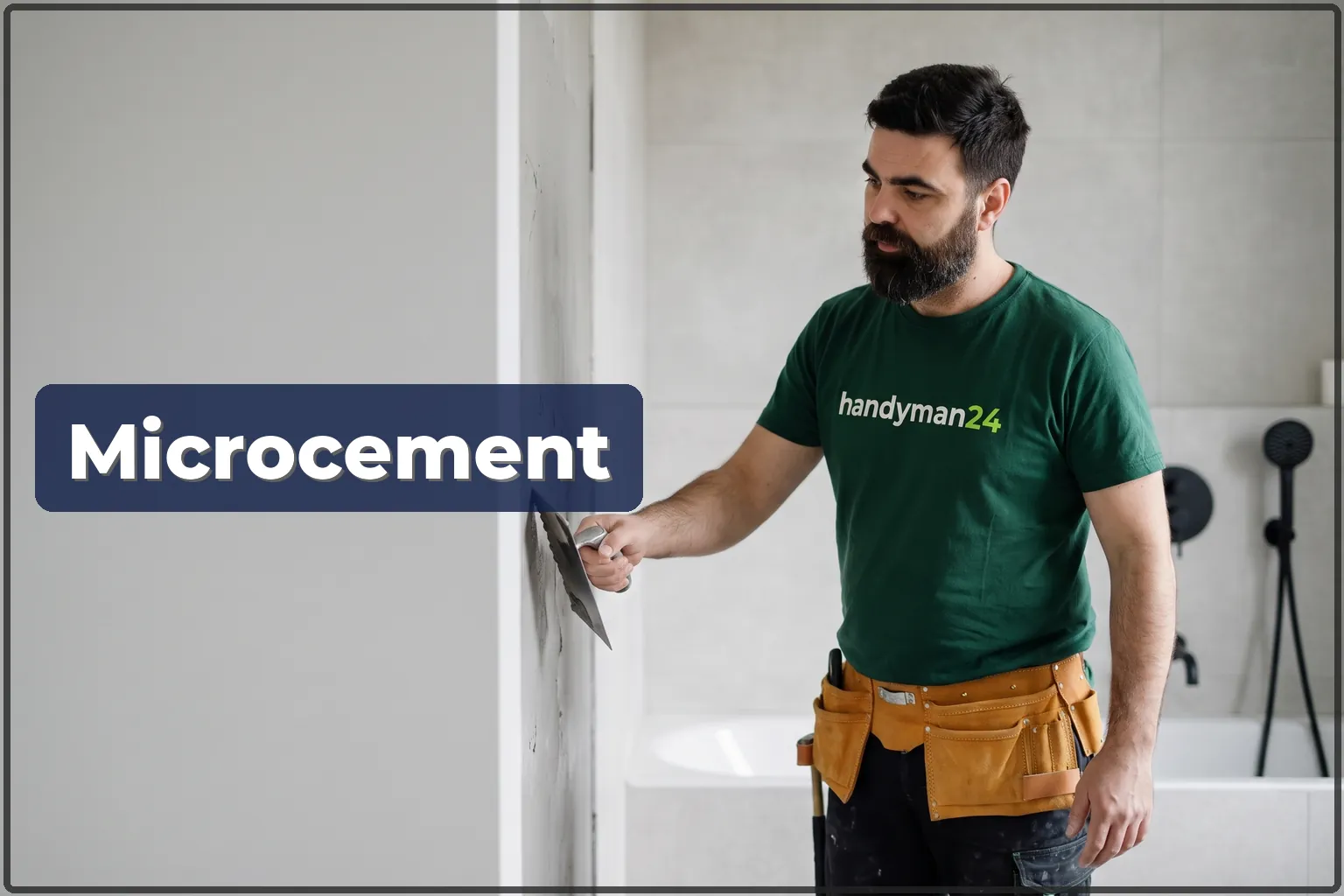
There are two main types. One-component comes ready to use and is handy on walls. Two-component is a powder plus resin or polymer mixed on site, usually chosen where the surface takes more wear. Grain differs as well: coarser for base coats, finer for the finish. Floor grades are harder than wall grades, and the manufacturer’s data sheet says where each may go. Stick to one system, from primer to sealer.
Colour comes from pigments, so the choice is wide: greys, beiges, whites, dark graphite. Trowel marks make a cloudy pattern, each wall comes out slightly different, and sealer can darken the shade. Ask for a sample board under the same sealer and look at it in your own light. On a floor, pale colours show dirt and dark ones show dust and scratches.
Microcement in a bathroom and shower
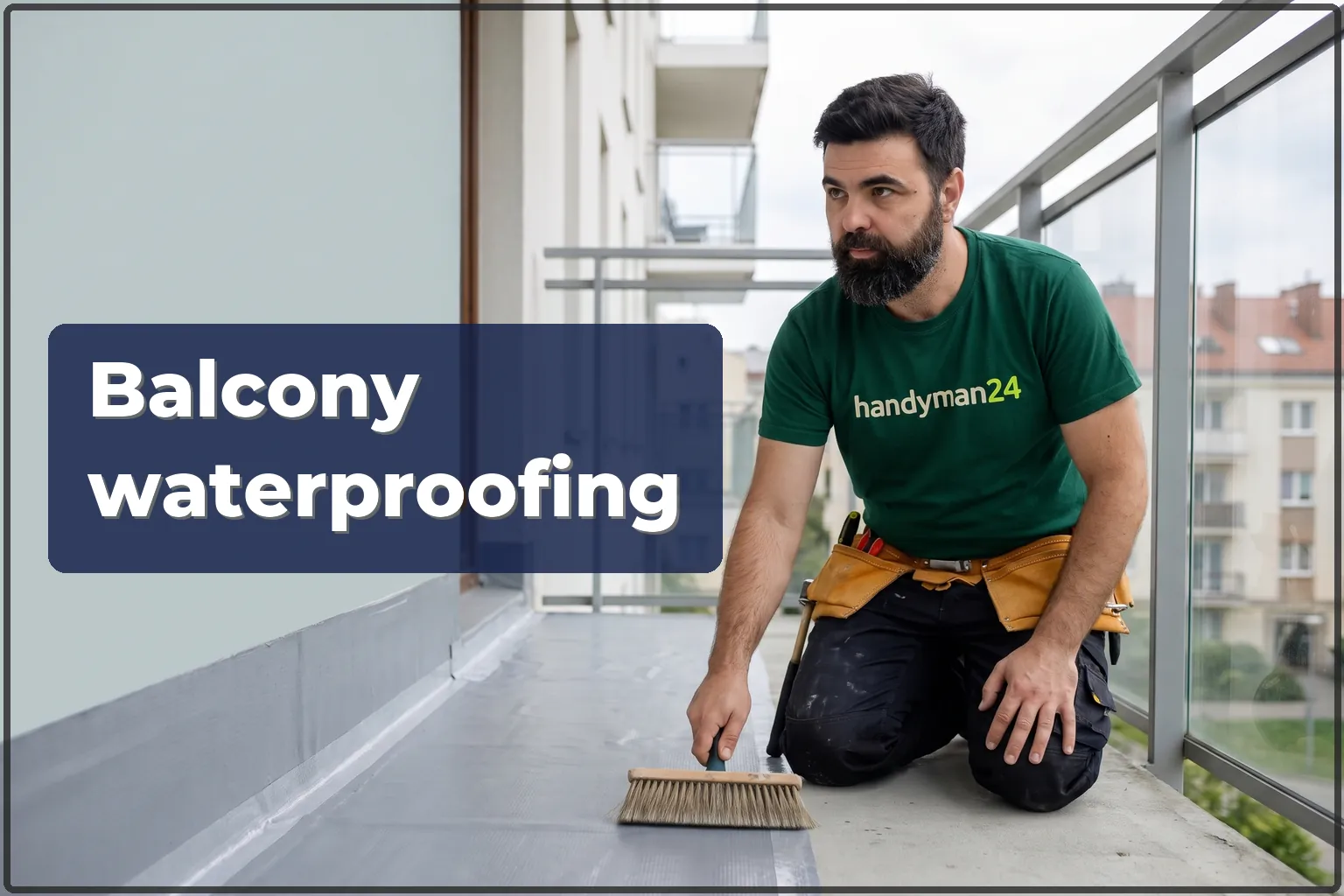
This is where most people meet microcement, and where mistakes cost most. The coating does not replace waterproofing. In the shower area, around the bath and at the drain, a watertight layer (liquid or sheet membrane) must lie underneath, with tape in the corners and collars on pipes. Sealer protects the surface from stains and daily water, while the layer below keeps the room watertight. Some systems have their own approach, so check the data sheet. Waterproofing a balcony under tiles shows the same logic of layers and junctions.
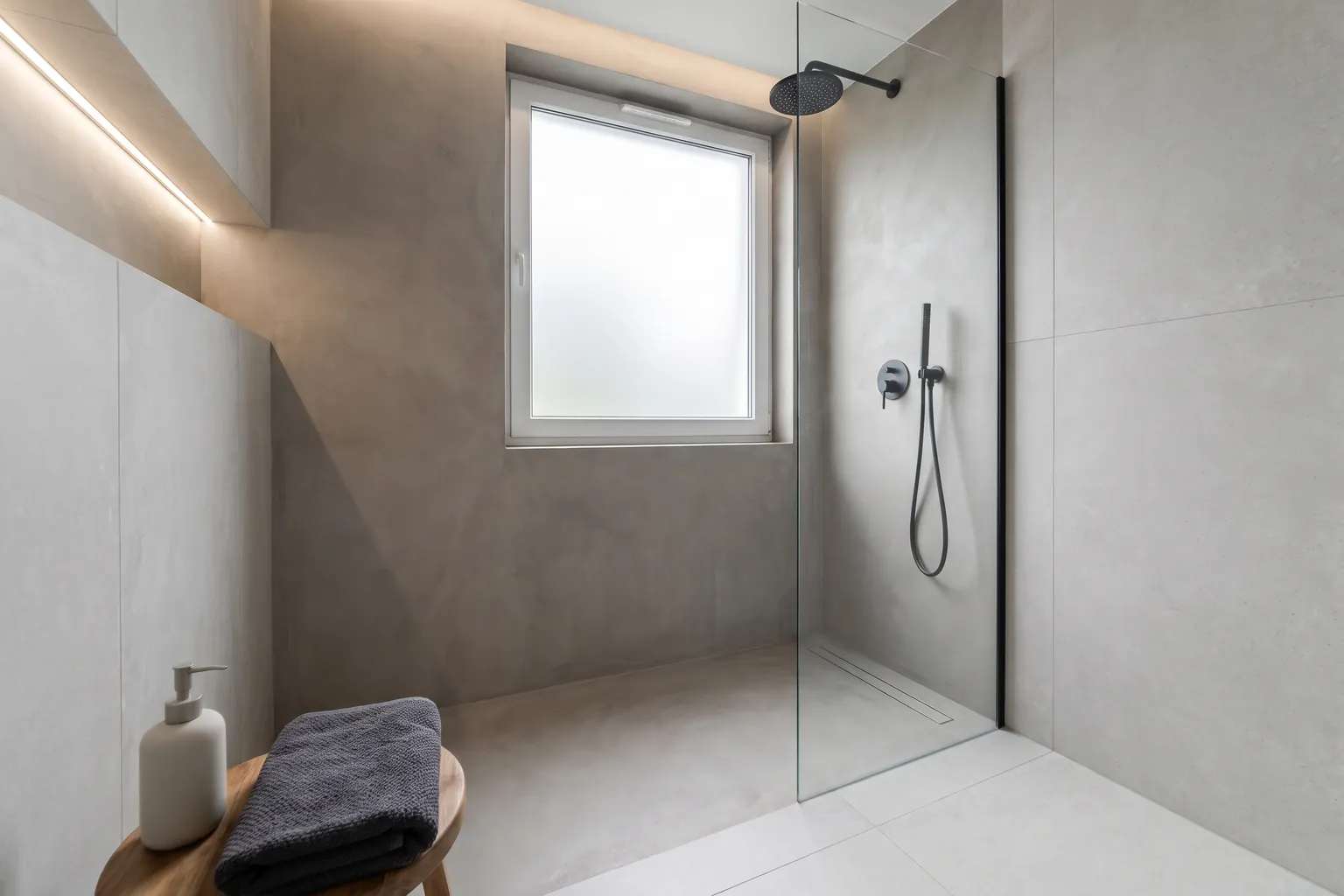
Any fall to the drain has to be built beforehand; a thin coating cannot create one. Joints with the shower tray and ceramics get silicone. If you are costing the whole job, see what a bathroom renovation costs item by item. For the coating alone, the simplest way to a figure is to add photos to an order.
Hard water leaves pale marks on a dark matt coating. Squeegee the walls after a shower, or you will end up removing limescale with the very products the sealer dislikes. Ask the tradesperson which sealer they suggest and when it will need renewing.
Microcement on floors, walls, tiles and stairs
Floors
The screed must be dry, sound and free of cracks. Moisture gets measured first, and movement joints in the building must stay open, because the coating will crack exactly there. With underfloor heating, the screed is heated up first as the manufacturer directs. Use a floor grade and a tougher matt sealer: it is less slippery when wet.
Walls
Walls are the most forgiving. Plaster has to be flat and firmly attached, and bumps will show in side light. A living room rarely needs a sealer as tough as a floor does.
Old tiles
Microcement over tiles works if the tiles are solid. The tradesperson taps them and removes any that sound hollow. Joints must be levelled or they will ghost through later. Glossy glaze gets a bonding primer and mesh if needed. Cracked or loose tiling is better taken off. If you then decide to go back to ceramics, you will want a tiler for the new tiles.
Stairs
Stair edges wear first, so they get reinforced first. The structure must be rigid: timber treads that flex will crack the coating. Pick a matt, non-slip sealer.
Microcement pros and cons
In its favour: no grout lines, little thickness and one surface from floor to wall. Stable old tiling can stay. Cleaning is easy, with no gaps for dirt to collect.
Against it: sharp knocks and grit under shoes do damage, and spot repairs usually stay visible. Sealer needs renewing over time. Acid limescale removers and abrasive creams can harm it, which leaves gentle pH-neutral cleaners. A lot depends on the hand that applied it, hence the wide gap in reviews of microcement bathrooms. I would not take the cheapest offer without photos of earlier work.
Microcement, decorative plaster and architectural concrete
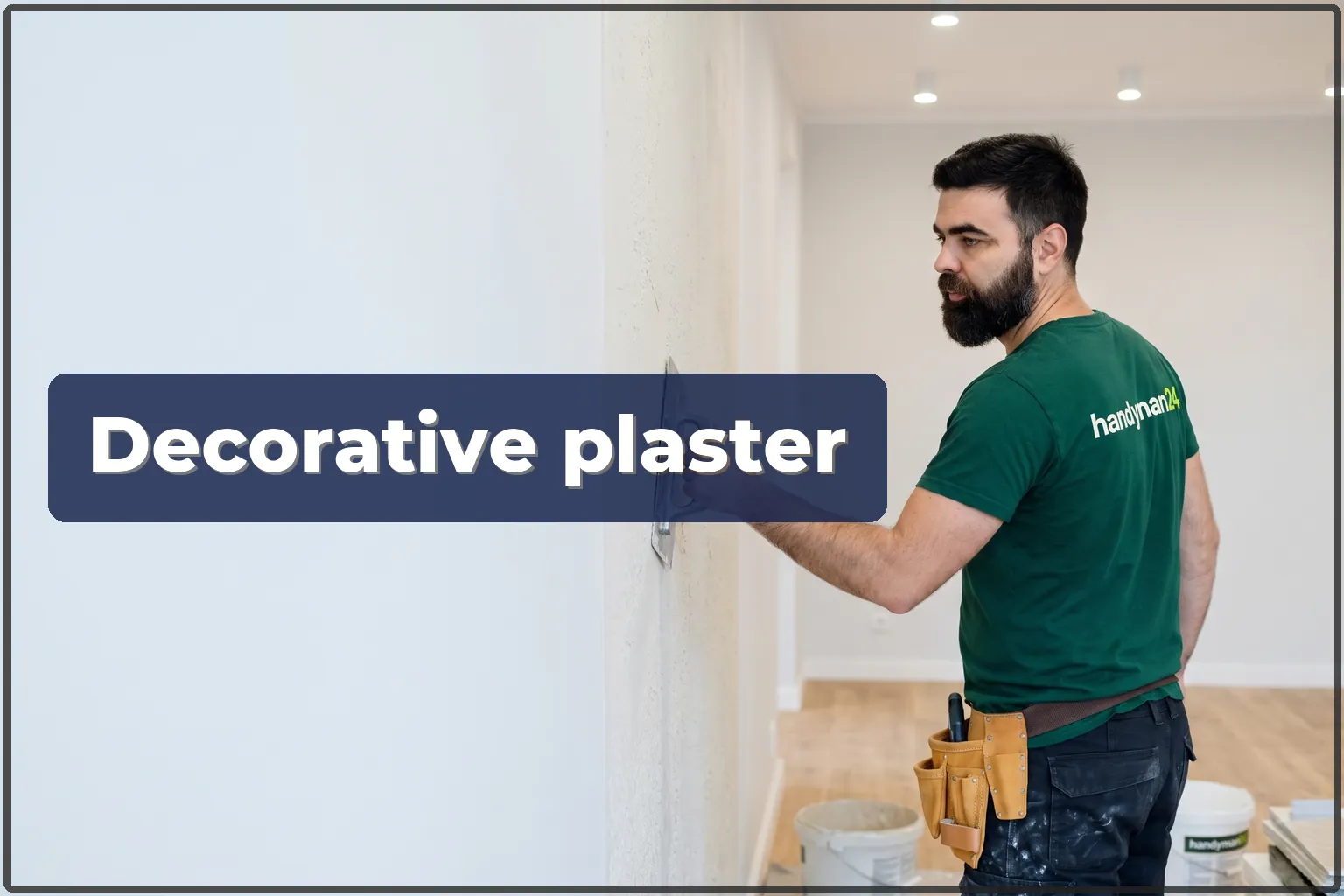
Decorative plaster, mosaic or textured, is mainly a wall finish, often with a clear texture, and usually unsuitable for floors or showers. Architectural concrete on a wall gives a raw concrete look, as trowelled plaster or panels, and stays mostly on walls. Microcement is thinner and smoother, and the right system also goes on floors and into wet areas.
Safety when working with microcement
Water and electricity in a bathroom are the main risk. Switch off sockets and lights in the work area before wet sanding, and leave moving them to a qualified electrician. Changes to water pipes go to a plumber. Sanding dust calls for a respirator and an extraction vacuum. Keep the room aired during priming and sealing, and follow the data sheet.
How microcement goes on, step by step
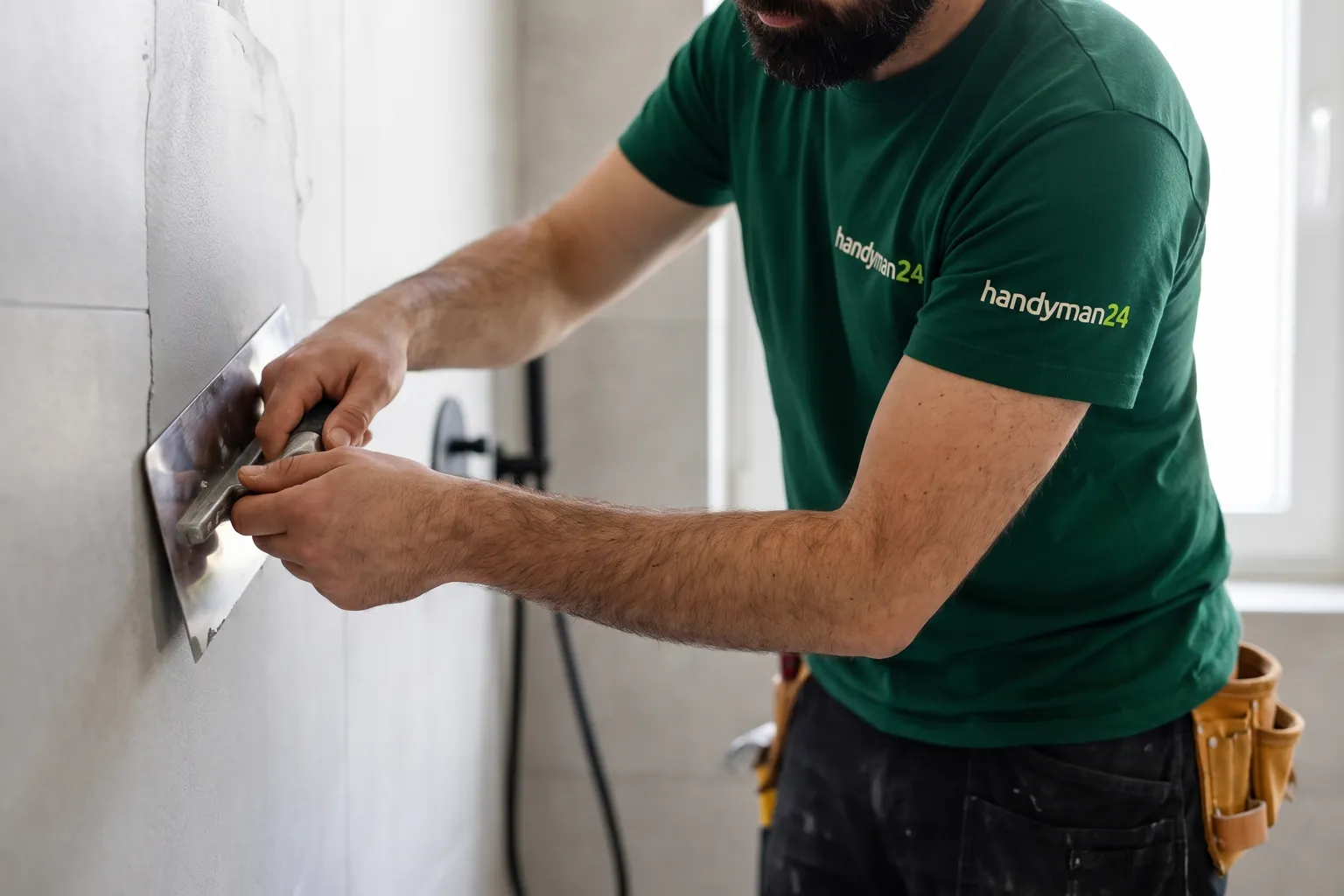
- Inspection: moisture reading, base condition, cracks, movement joints.
- Repairs and levelling; on tiles, tapping and filling the joints.
- Waterproofing in wet areas with tape and collars.
- Primer and, if the system calls for it, mesh.
- Base coats, sanded once dry.
- Finish coats in the chosen colour, by trowel.
- Several coats of sealer, with gaps as per the data sheet.
- Curing time and a short briefing on how to clean the surface.
Common mistakes with microcement
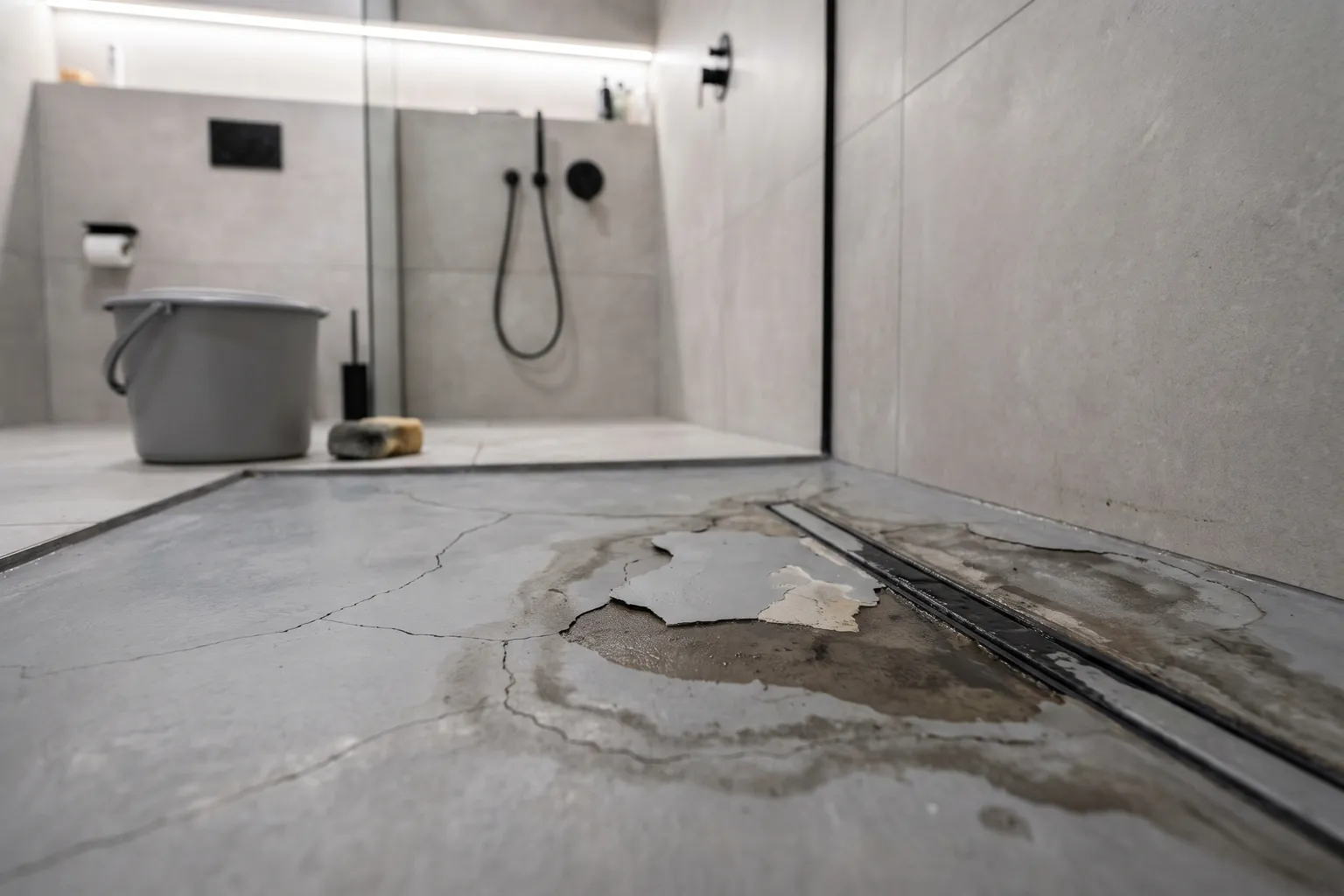
- A shower with no waterproofing because the coating looks watertight.
- A covered movement joint, back as a crack within a season.
- Unlevelled joints on old tiles, with the grid showing in side light.
- Choosing a colour from a picture, with no sealed sample.
- Skimping on sealer or too few coats on a floor.
- Gloss on stairs and in a shower.
- Material from different batches, so the shade drifts.
What to prepare before ordering microcement
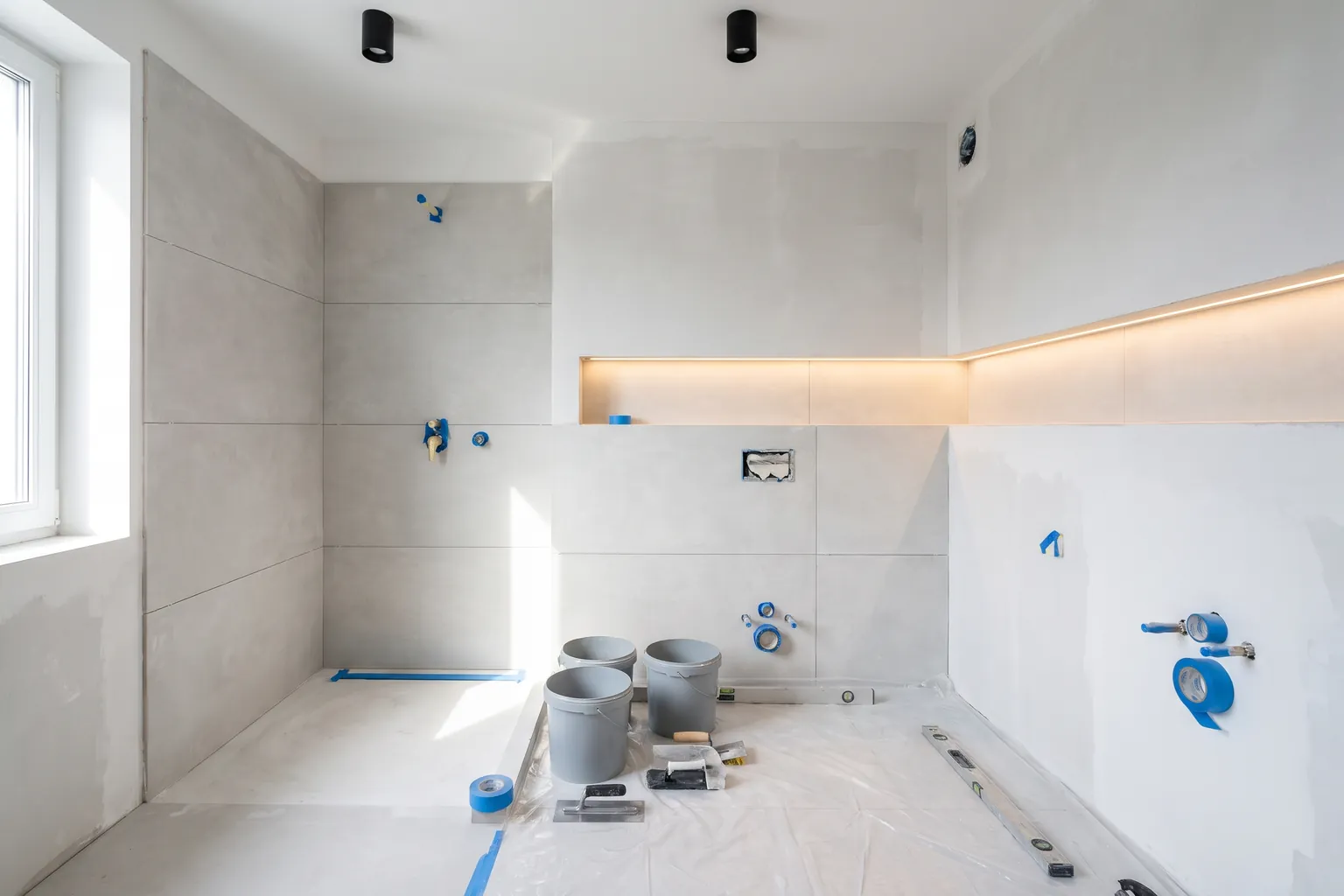
- Photos of every surface, near and far, cracks included.
- Dimensions and a sketch with doors, drains and niches.
- The base: screed, plaster, tiles or plasterboard.
- Details of underfloor heating and the screed’s age.
- A colour example, and whether you want matt or semi-matt.
- Material if already bought, with the data sheet.
- Access to water and power, plus a free bathroom while the coats dry.
Questions and answers
Does microcement work in a bathroom and shower?
Yes, with waterproofing underneath, properly detailed corners and a wet-area sealer on top. Reviews differ mainly because of poorly protected wet areas and weak bases.
How much is microcement per m2?
The labour rate is in the table above. The total rises on small areas, old tiles, stairs and wet zones. Material is charged separately.
Can microcement go over tiles?
Yes, if the tiles are solid. Hollow ones come off, joints get levelled and the surface gets a bonding primer.
Does microcement crack?
It can, if the base moves, a movement joint gets covered or coats were not left to dry. Good material will not save a weak base.
Is microcement suitable for stairs?
Yes, on a rigid structure. Edges need reinforcing and the sealer should be matt and non-slip. Flexing timber treads are a risk.
How to order a microcement job
Publish an order in the app: what needs coating, the area and photos of the base. Tradespeople near you send offers at their own prices, and you choose by reviews and photos of earlier jobs. The invoice comes from the tradesperson you pick.
The tradesperson answers for their own work and puts it right if they got it wrong, but not for hidden faults in the base, other people’s mistakes or defective material.
Do you apply microcement or decorative coatings and want jobs nearby? Create a tradesperson profile. Everyone here works for themselves, and you choose your own business form and reporting.
Order in the app
Describe the job, add photos and the address. Tradespeople send their own prices and dates, and you pick one of the offers.
Open the app