Old joints get cut out, not covered up
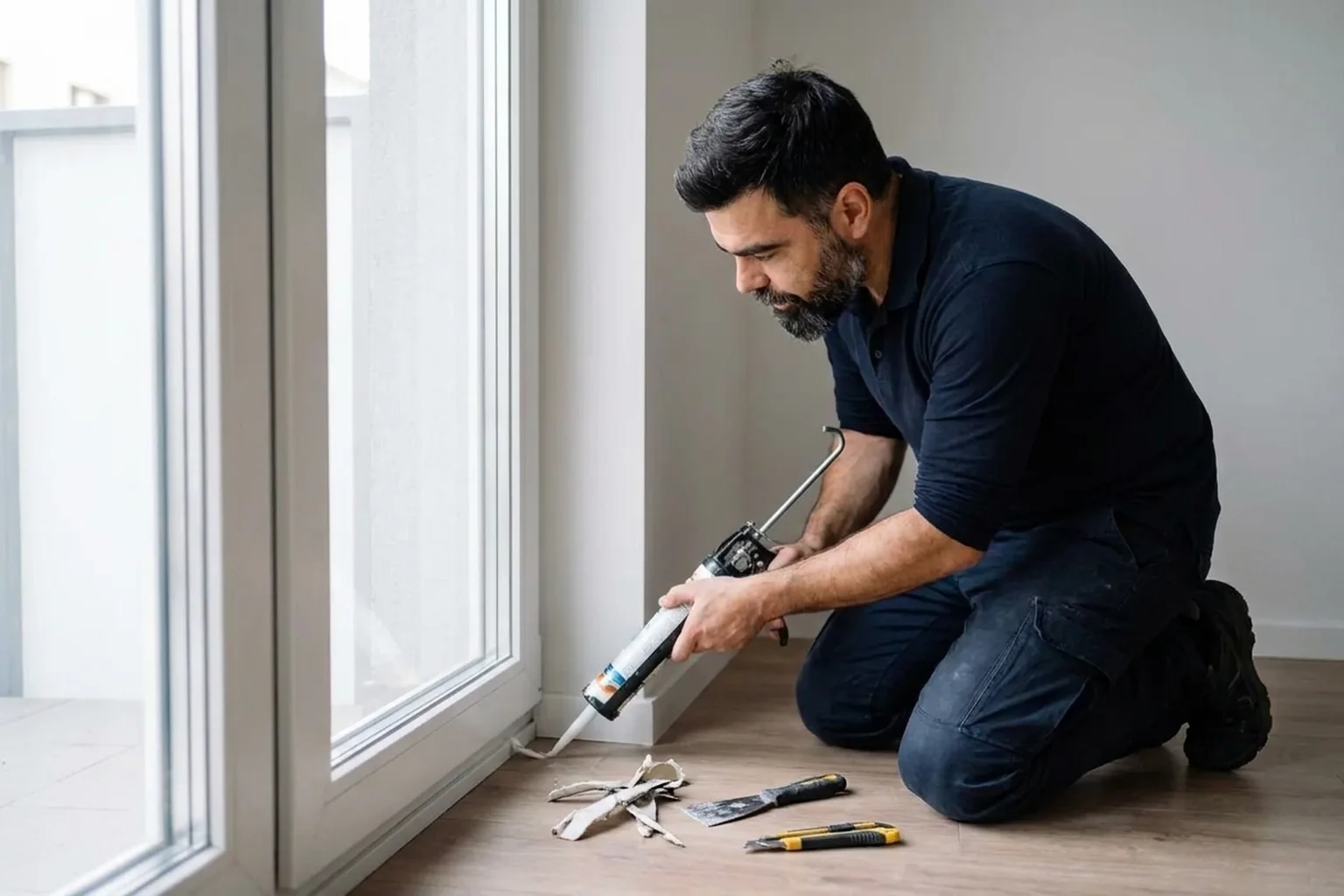
Den Braven is a Dutch maker of sealants, silicones, acrylics and expanding foam. Plenty of tradespeople use it, but the product only solves half the problem. The other half is preparation. The old joint is cut out completely, the surface cleaned and degreased, and only then does the new sealant go in.
The shape of the joint matters too. Sealant should stick to two sides of the gap, frame and wall, not three. So a deep gap first gets a backer rod pushed in, and the sealant goes on top of that. A joint like this moves with the window, which shifts a little between summer and winter, and doesn’t tear.
On the room side it’s usually acrylic, since you can paint it along with the reveal. By the sill, and anywhere water gets, you want silicone or a flexible sealant.
Rather hand the job over? More here: window seal replacement in Warsaw.
There’s a joint outside too
The joint between the frame and the outside sill gets soaked every time it rains. If it has cracked, water runs under the sill and into the wall, and from inside it looks like a damp corner under the window board. Above the second floor, outside work needs safe access, so raise it with the tradesperson up front.
Den Braven window sealing: common mistakes
- Laying silicone over an old, dirty joint.
- Using ordinary bathroom silicone where the joint will be painted. Paint won’t stick to it.
- Wiping a fresh joint before it has cured. You get smears and fingerprints.
- Cranking the sash pressure to maximum to ‘help’ a leaking joint. It only wears the gasket faster.
Den Braven window sealing: getting ready
- Photos of the joints in the window corners, by the sill and, if visible, outside.
- An empty sill and access to the window.
- A list of the windows where the joint has come away.
Booking
Describe which joints have failed in the app and add the photos. Tradespeople reply with offers at their own price, and you pick one by rating and reviews. Phone and address are shared after you choose. You pay the tradesperson directly, they issue the invoice, and sealant and backer rod are charged separately from the labour.
Order in the app
Describe the job, add photos and the address. Tradespeople send their own prices and dates, and you pick one of the offers.
Open the appThe tradesperson answers for their own joints and will redo them if they come away. Cracking plaster, a damp wall or a crooked frame aren’t on them.