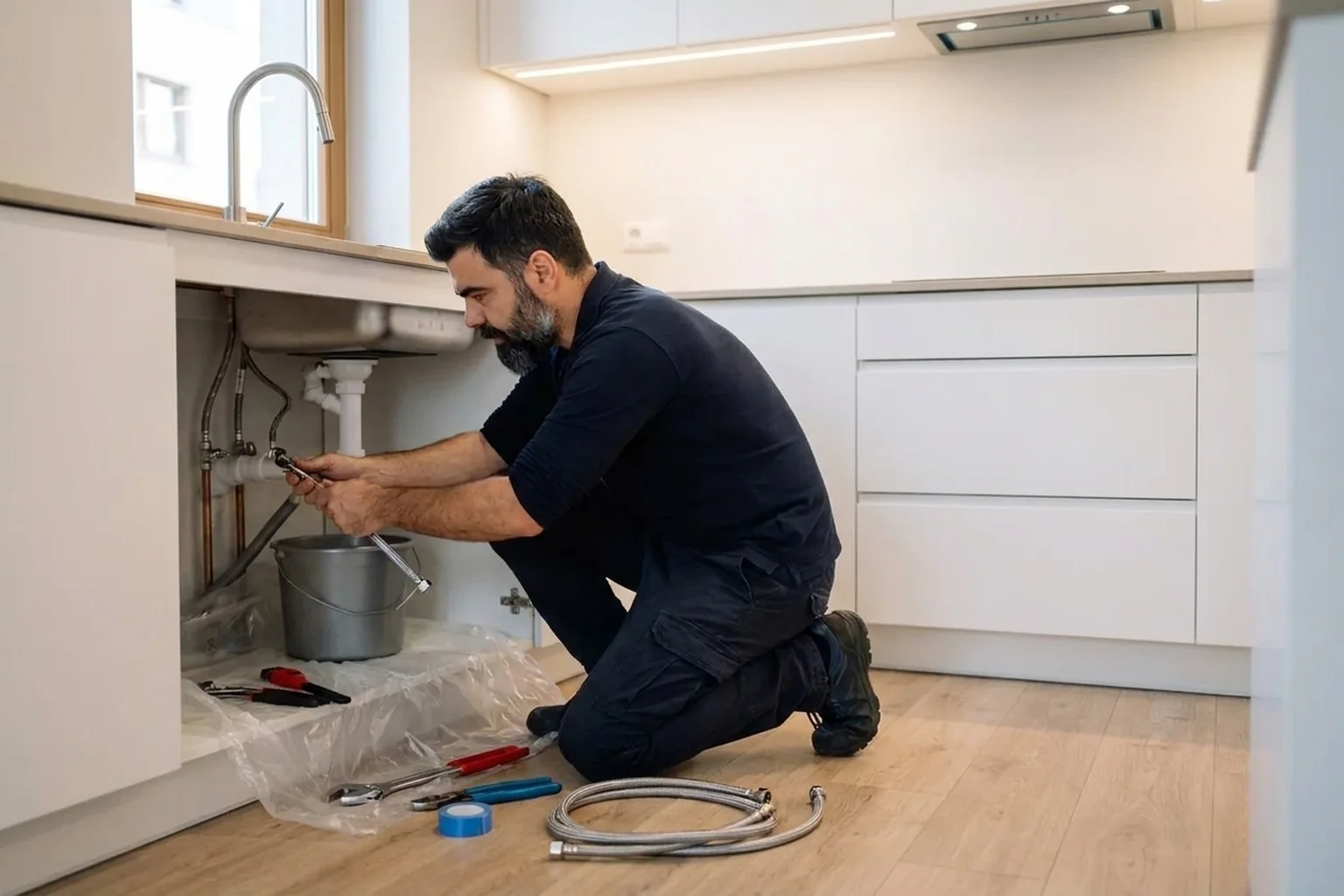
Ferro hoses: what is worth knowing
Ferro is a Polish maker of taps and bathroom fittings. Braided connector hoses are part of its range and often arrive in the flat in the box with a new tap. Inside is a rubber hose, and the metal braid keeps it from ballooning.
The braid doesn’t last forever. Rust spots, stiffness, a bulge near the nut or broken strands all mean the hose should go before it makes the decision for you. When replacing one, what matters is the thread at each end, the length, and where it goes: tap, cistern or washing machine.
Hoses are replaced in pairs. If the one on the hot side has rusted, the cold one is the same age and not far behind.
When buying, read the label: a tap connector should be rated for drinking water, and on the hot side it has to cope with the temperature. The cheapest unmarked hoses are a lottery. The washing machine is a separate story, with its own inlet hose, and a valve there that you close before going away is worth having.
What it costs and how to book: plumber in Warsaw.
Where floods come from
- A hose that is too short and pulled tight. The strain at the nut finishes it off quickly.
- A hose kinked sharply behind the cabinet. It splits at the kink first.
- A nut cranked with a wrench as far as it will go. The washer gets crushed and starts to weep.
- Old angle valves left in place with new hoses. The hose is new, and the leak comes from the valve.
- Cleaning products stored right against the braid. The fumes speed up corrosion.
Getting ready
- Empty the cabinet under the sink and put a towel down.
- Look for signs of an old leak: a swollen cabinet board means water has been seeping for longer than you think.
- Check that the angle valves under the sink actually close.
- Take close-up photos of the hoses and valves with the nuts visible.
- If you are buying hoses yourself, take the old ones to the shop or note the thread and length.
How to book the replacement
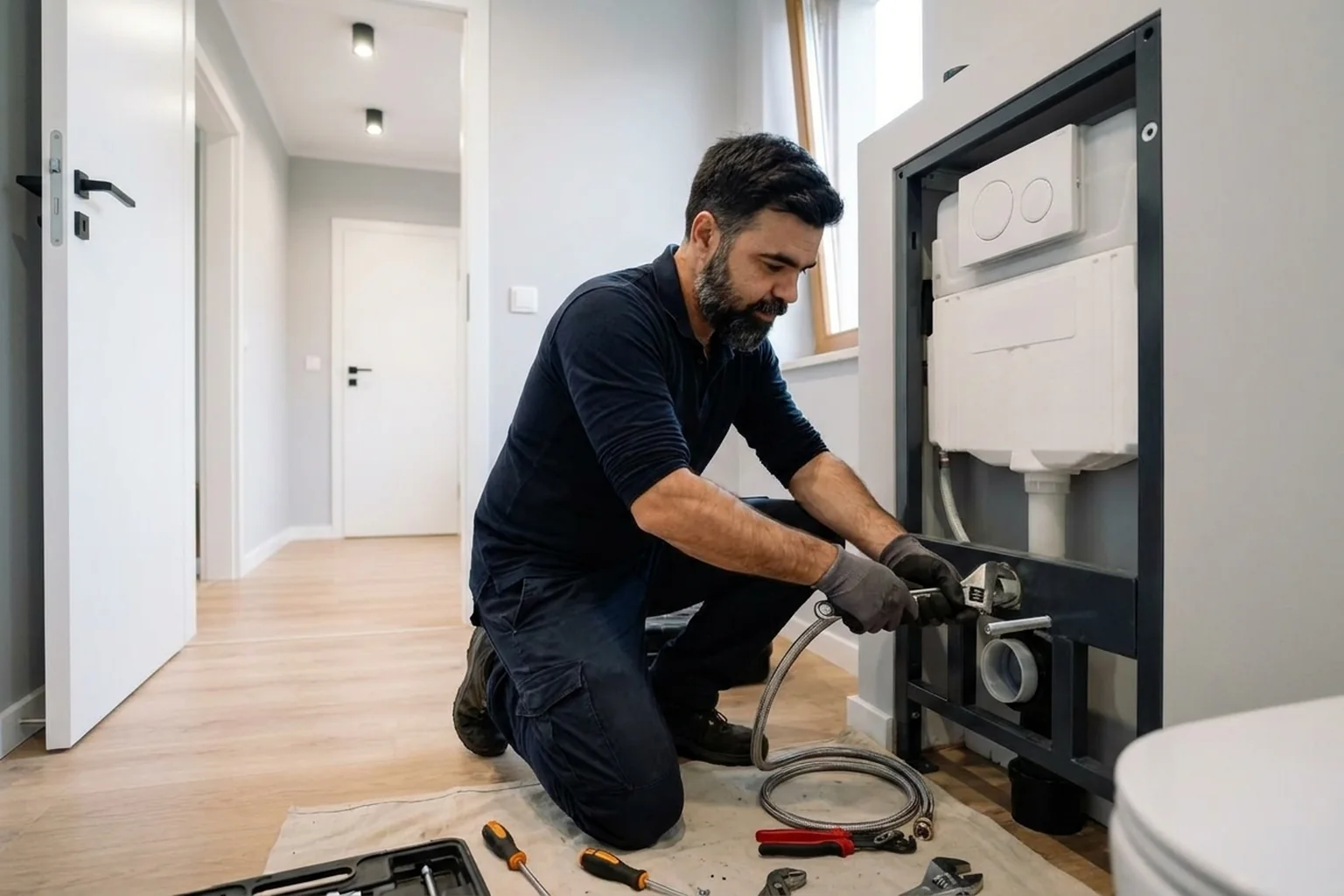
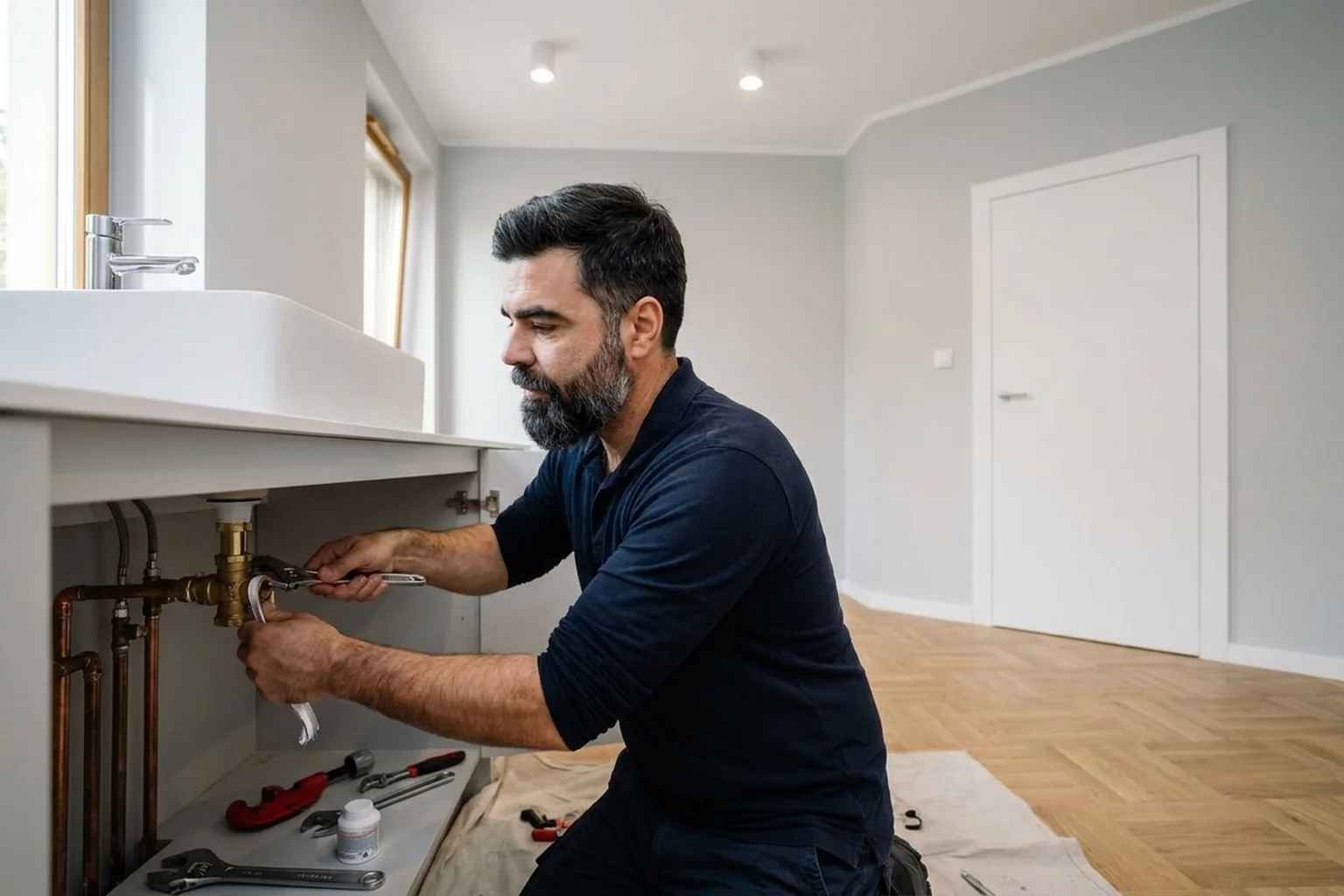
Swapping hoses is a short job, so it pairs well with something else: new angle valves, a dripping trap, or a new tap.
- In the app, describe which hoses and where, and add photos.
- Plumbers send bids with their own price and date.
- You pick based on price, rating and reviews. Phone number and address show after you choose.
- You pay the plumber directly, and he issues the invoice.
Hoses and new angle valves are paid for separately from the labour. The plumber answers for his own joints and will redo them if they start dripping. Old pipes in the wall and someone else’s work are not on him.
Before the swap, close the angle valves or the main valve and open the tap to let the pressure off.
Order in the app
Describe the job, add photos and the address. Tradespeople send their own prices and dates, and you pick one of the offers.
Open the app