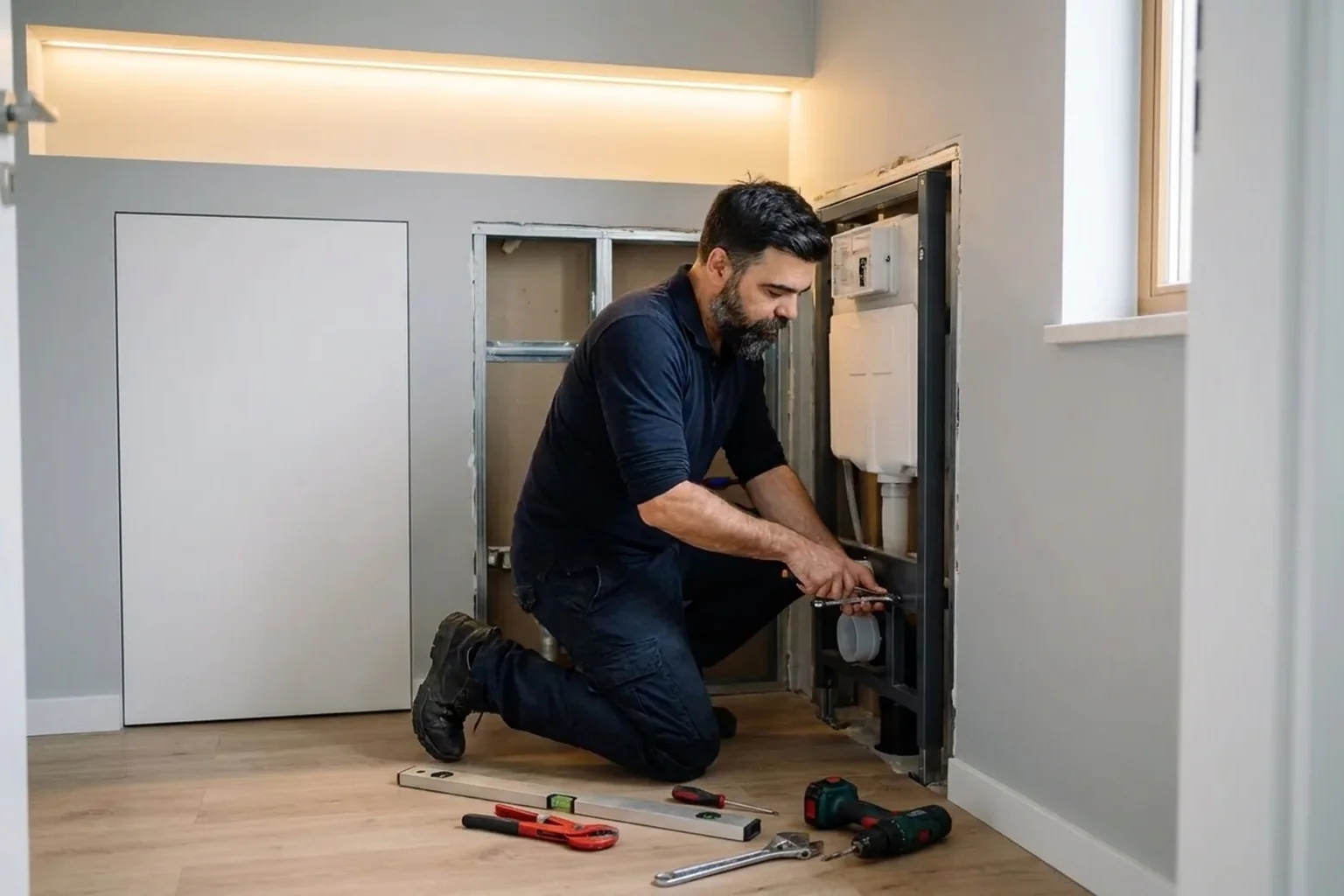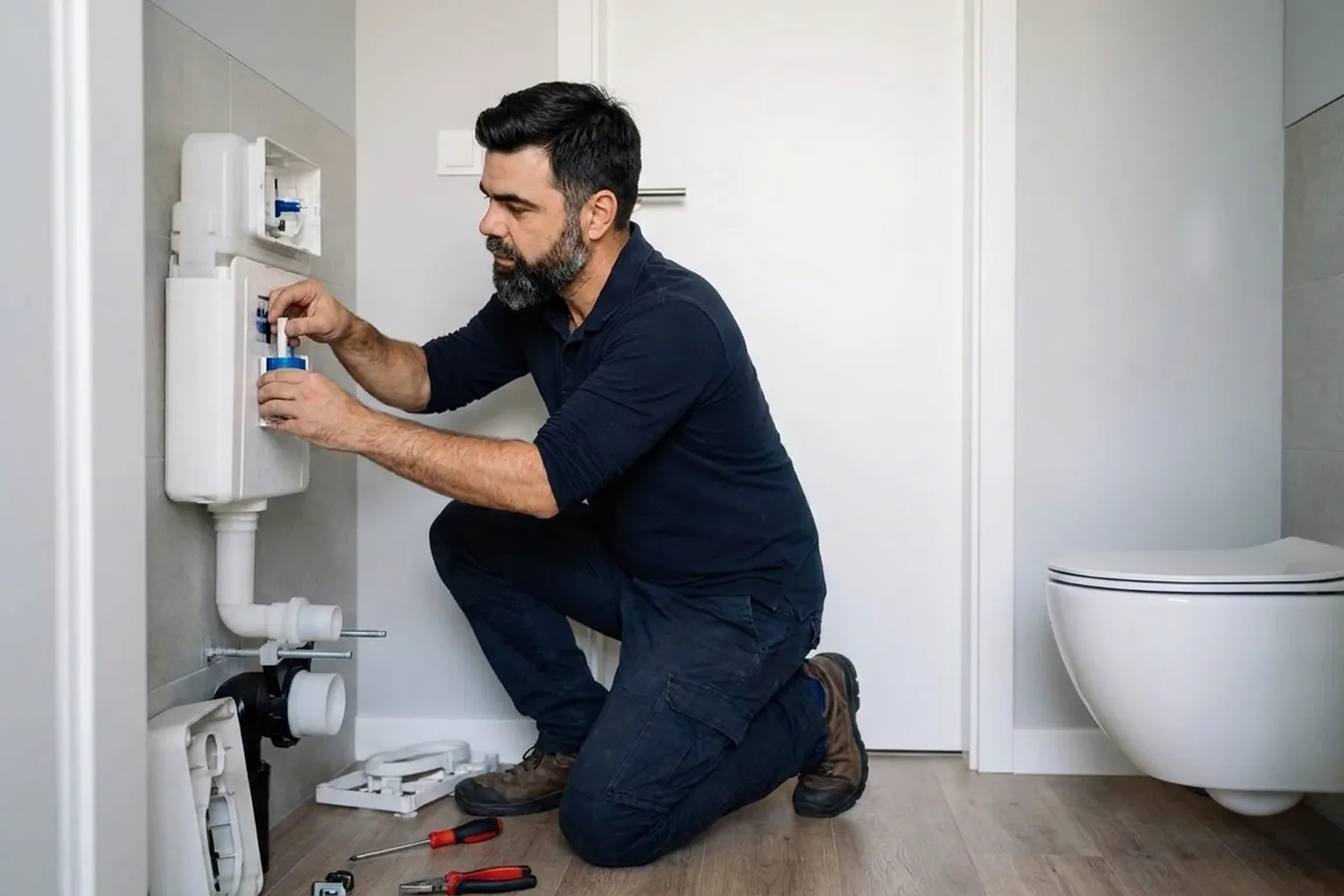
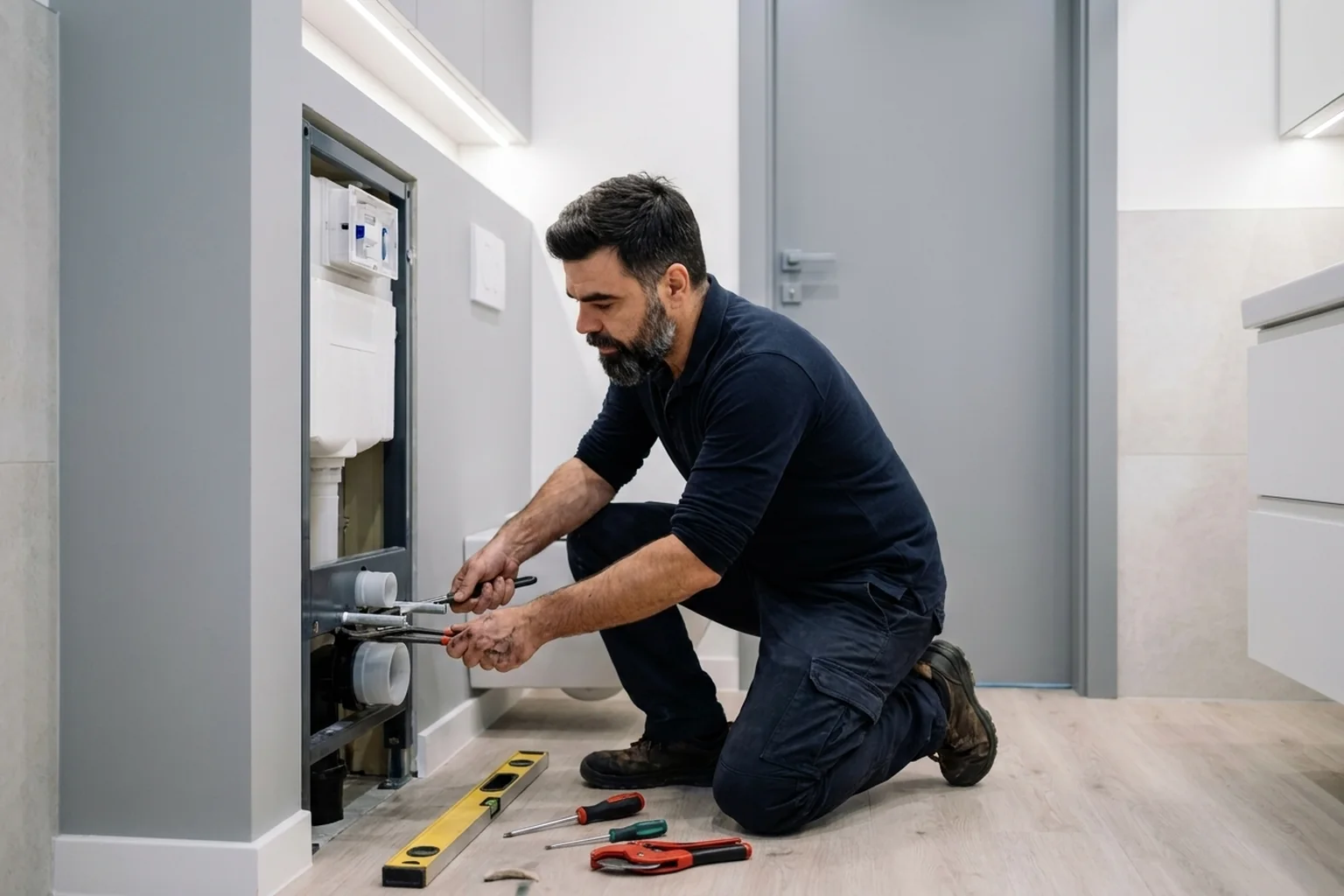
How a Geberit in-wall cistern is built
Geberit is the Swiss maker that made concealed WC frames common. The cistern sits in a frame behind the tiles, and the flush plate covers an access opening. Take the plate off and the fitter can reach the fill valve and the flush valve. Both lift out and can be replaced without touching the wall.
Spare parts for this brand are easy to find, but not every part fits every cistern: older and newer frame generations use different mechanisms. So before the visit it’s worth removing the plate and photographing what’s inside. The fitter will know straight away what to bring.
In a new bathroom the frame goes in before tiling. It’s fixed to floor and wall, levelled, and the water and waste are connected at first fix. Once the wall is closed, any change costs a lot more.
Geberit cisterns have a dual flush, and the volume for both the small and the full flush can be set in the mechanism. If the pan doesn’t clear or the water runs too long, an adjustment is often enough, with no new parts at all.
Rather hand the job over? More here: toilet installation in Warsaw.
What usually fails, and why
- Water constantly running into the pan. Most often the flush valve seal is scaled up or has gone hard.
- The cistern fills very slowly. A blocked filter in the fill valve, or the isolation valve half closed.
- A sticking button. The push rods weren’t adjusted after retiling, or the plate is pressed in too tight.
- Water on the floor under the pan. That’s usually the connector between pan and waste, not the cistern.
One DIY mistake comes up again and again: taking the mechanism apart without closing the valve inside the cistern. The water then pours out through the access opening onto the floor.
Before you post the job
- Take off the flush plate and photograph the inside of the cistern.
- Describe the symptom: running, hissing, not filling, button not returning.
- Check that the isolation valve inside the cistern actually closes.
For any work on the plumbing, the water goes off first, and if in doubt, at the flat’s main valve.
Booking through the app
- Describe the problem in the app and attach photos of the mechanism and the flush plate.
- Tradespeople who take these jobs in Warsaw send bids with their own price and date.
- Compare prices, ratings and reviews and pick one. He sees your phone number and address only after you choose.
You pay him directly and he issues the invoice. Spare parts and a new flush plate are charged separately from the labour. Whoever did the repair answers for it and will redo it if it runs again. A frame set crooked by a previous crew, or old pipes in the wall, are not on him.
Order in the app
Describe the job, add photos and the address. Tradespeople send their own prices and dates, and you pick one of the offers.
Open the app