Which seal, and where
Geberit makes wall frames with concealed cisterns, flush plates, traps and drains. Spare parts for its cisterns are easy to get, since it’s one of the most common brands in Polish bathrooms. For seals, three places matter.
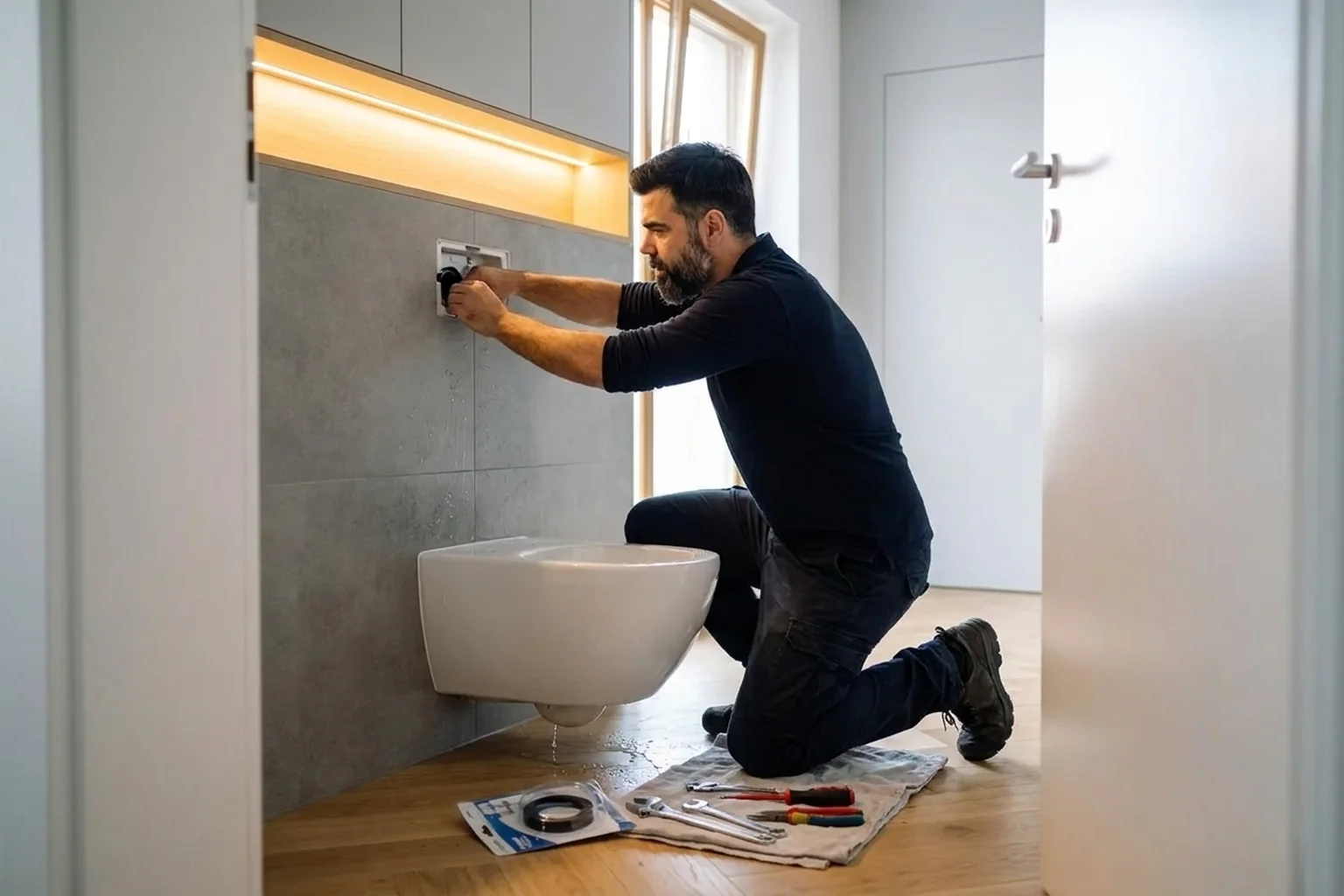
The flush valve seal. Water keeps running into the bowl, and there’s a thin trickle down the back. The seal has hardened or picked up limescale. The plumber takes off the plate, lifts out the valve, cleans the seat and fits a new seal.
The fill valve. The cistern refills endlessly, or very slowly. This one is also reached from the front, through the service opening.
The joint between bowl and wall. It’s damp behind or under a wall-hung toilet rather than inside it. Usually that’s the seals on the flush pipe or on the outlet. To change them the bowl comes off its studs, so it’s a bigger job, and the ceramic needs something to rest on.
A new seal or the whole valve? With an older cistern the plumber sometimes suggests replacing the entire flush valve. The part costs more, but you’re not back with the same fault a little later. It’s your call, and the difference should be spelled out in the bid. Sometimes it’s the other way round: the seal is fine, it’s just sitting on a layer of limescale, and a proper clean of the seat does the job.
Price ranges and offers from tradespeople: plumber in Warsaw.
Common slip-ups
- Buying a repair kit without checking the cistern model. Parts differ between generations.
- Pulling the valve out without shutting off the water. The cistern refills mid-job and water pours out of the opening.
- Scraping the seal seat with a knife or sandpaper. The scratch lets water through.
- Tightening the bowl to the wall too hard. Ceramic can crack at the stud.
- Silicone instead of a proper seal at the bowl. Next time the toilet won’t come off without damage.
Before the visit
- Take off the flush plate, or photograph it and the label in the service opening, if you know how.
- Check that the isolation valve inside the opening closes.
- If it leaks at the bowl, photograph exactly where the water shows up.
- Clear the space in front of the toilet so there’s room to kneel.
How to book in the app
- Describe the symptom: water running into the bowl, cistern not filling, damp at the wall.
- Add photos of the flush plate, the service opening and the leak.
- Plumbers who take this kind of repair in Warsaw send bids at their own price. You choose by price, rating and reviews, and the phone number and address are shared after you choose.
- You pay the plumber directly, and he issues the invoice. Parts are paid separately from the labour.
Order in the app
Describe the job, add photos and the address. Tradespeople send their own prices and dates, and you pick one of the offers.
Open the appWhoever fitted the seal answers for it and will redo his own work. The state of an old frame, cracks in the ceramic from before his visit and pipes inside the wall are not on him.