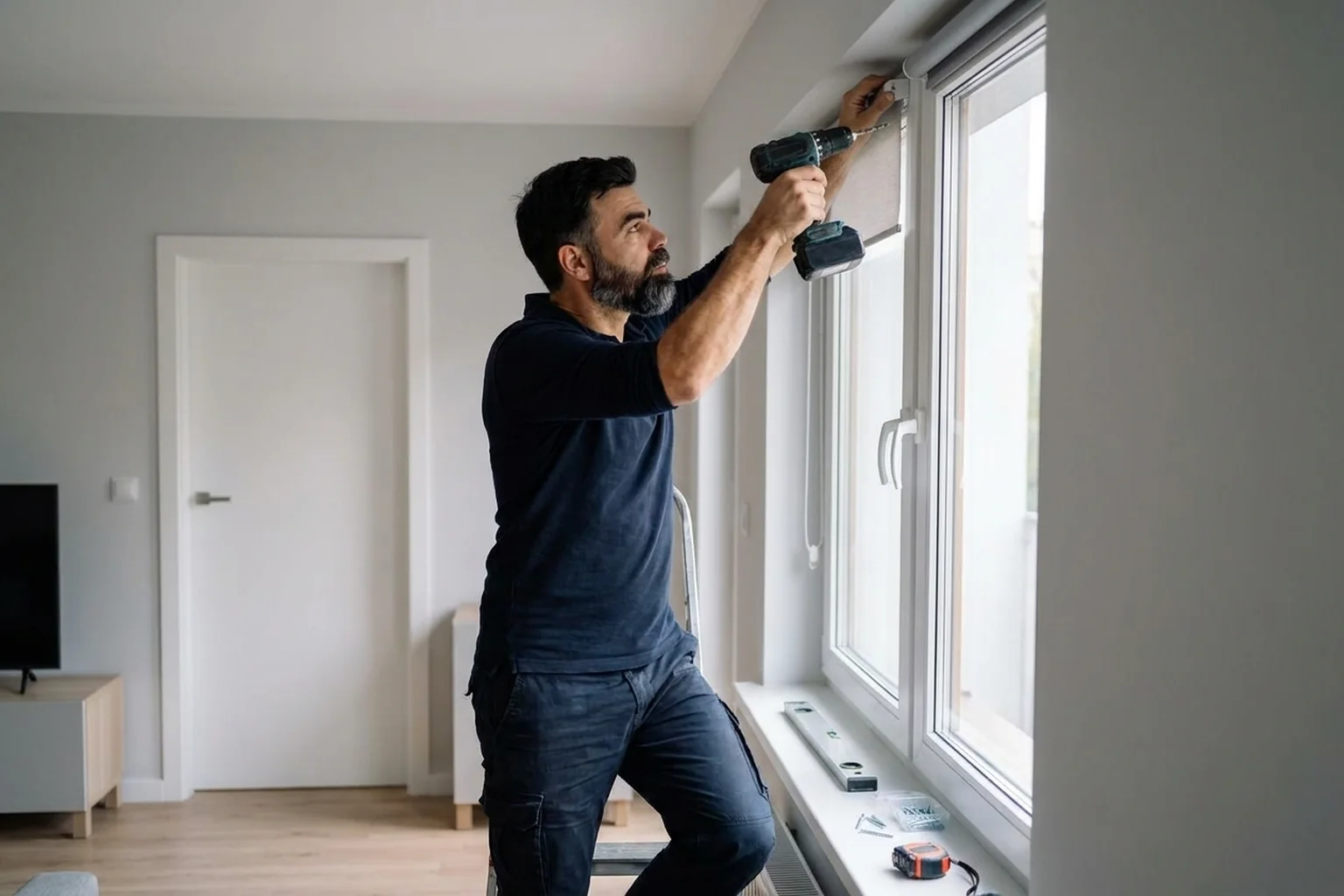
Velux: the data plate knows the size, the tape measure doesn’t
Velux makes roof windows and blinds for its own windows. Every window has a data plate on the frame with a type and size code. That code is what the blind is ordered by, because the channels and brackets are made for a specific sash. A tape measure won’t help much: two windows with similar glass can have different codes.
Blackout blinds, such as the DKL range, run in side channels, which is why light doesn’t leak round the edges. If one channel is a couple of millimetres out, a bright strip appears and the fabric starts to rub.
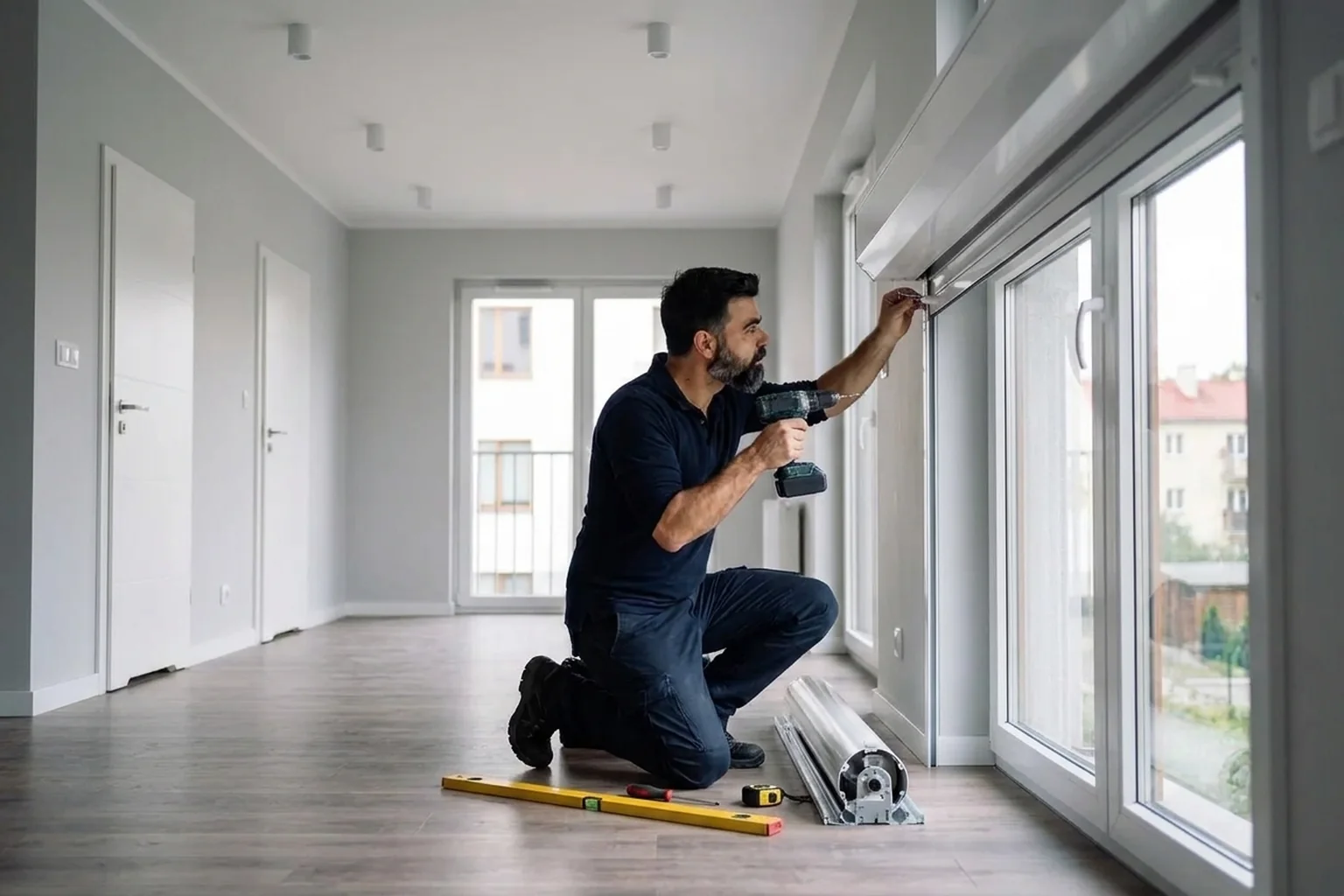
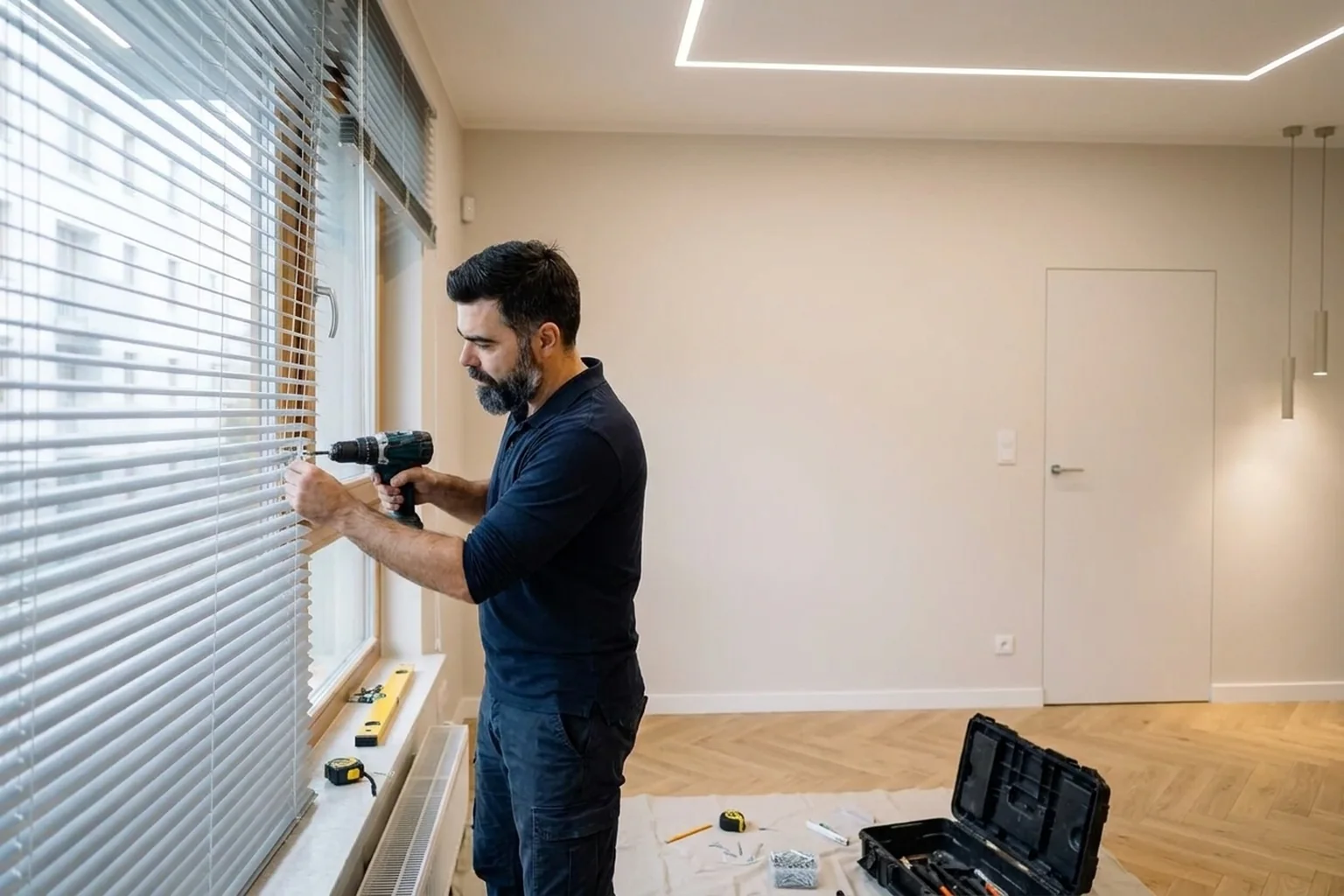
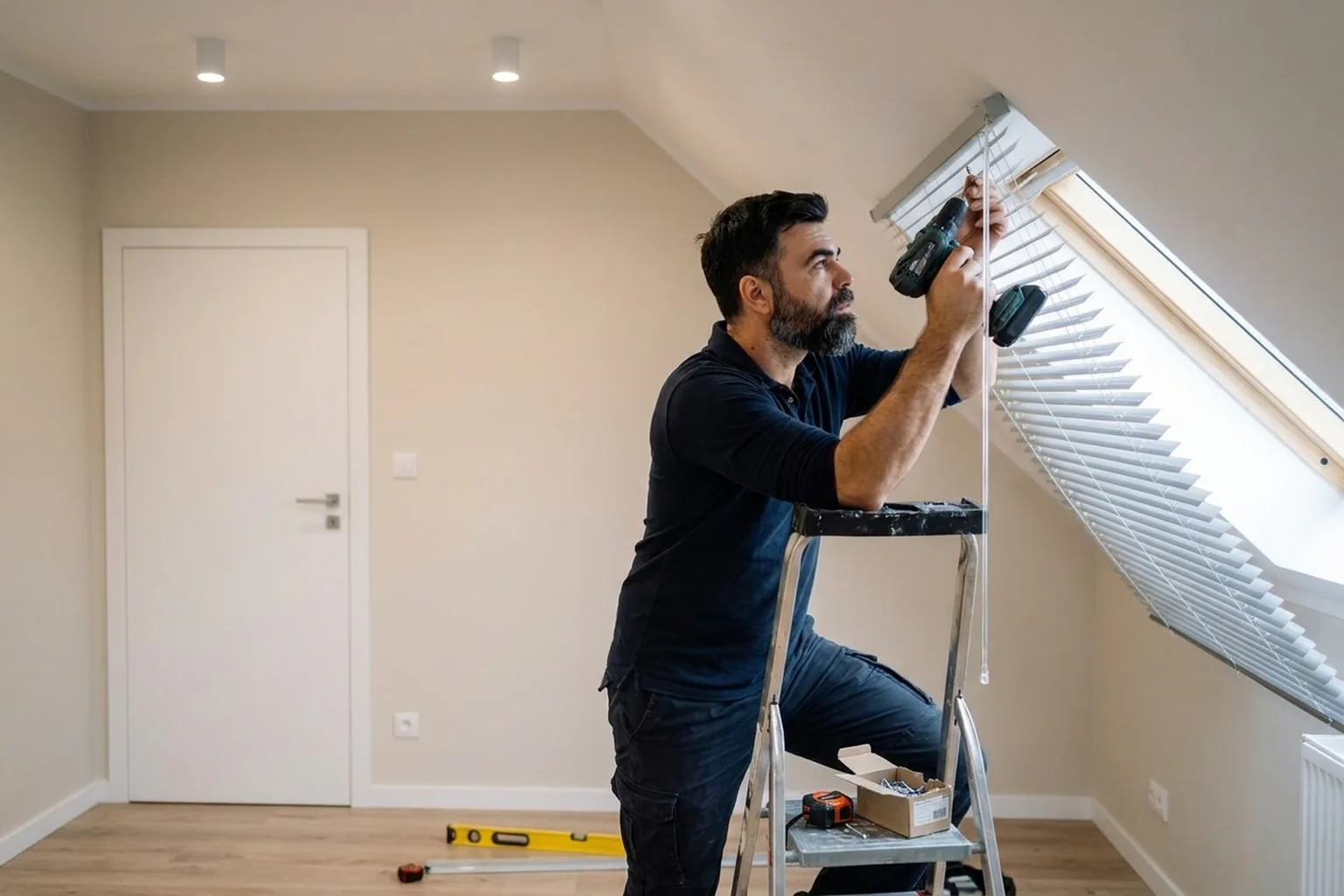
An internal blind goes on from the room side, onto the sash, so nobody needs to climb onto the roof. An external shutter is a different story, with work at height and around the flashing.
An old blind that no longer stays put in any position usually has a tired spring or a broken bracket. Sometimes one part is enough, sometimes a new blind is the simpler answer. Photos and a short video in the order let the fitter judge that before he comes out.
Price ranges and offers from tradespeople: handyman in Warsaw.
Where people trip up
- The blind was ordered to the size of the glass. It doesn’t fit, and the return drags on.
- Brackets screwed in the wrong place because nobody opened the instructions.
- The fabric rolled up crooked on the first run, and now it tracks at an angle and wears at the edge.
- An electric blind gets hooked up without checking that the window has the right controls.
Before anyone arrives
- Open the window and photograph the data plate on the frame so the code is readable.
- Buy the blind for that code and keep the instructions from the box.
- Move the bed or desk away from under the window.
Electric and solar models are not just mechanics. If anything needs connecting to the mains, it should be done by someone qualified, with the circuit switched off.
If there are several windows, put them all in one order. The fitter prices the lot in one go and you don’t have to arrange three visits.
Booking it
Two steps are enough. First, describe the job in the app: how many windows, which blind, a photo of the data plate. Then compare the bids from Warsaw tradespeople, each with their own price and date, and choose by reviews.
Only after you choose does the fitter see your phone number and address. You pay him directly and he issues the invoice. He redoes his own fitting if needed; faults in the window itself are not on him. The blind and taking away packaging are paid separately, fixings are usually included.
Order in the app
Describe the job, add photos and the address. Tradespeople send their own prices and dates, and you pick one of the offers.
Open the app