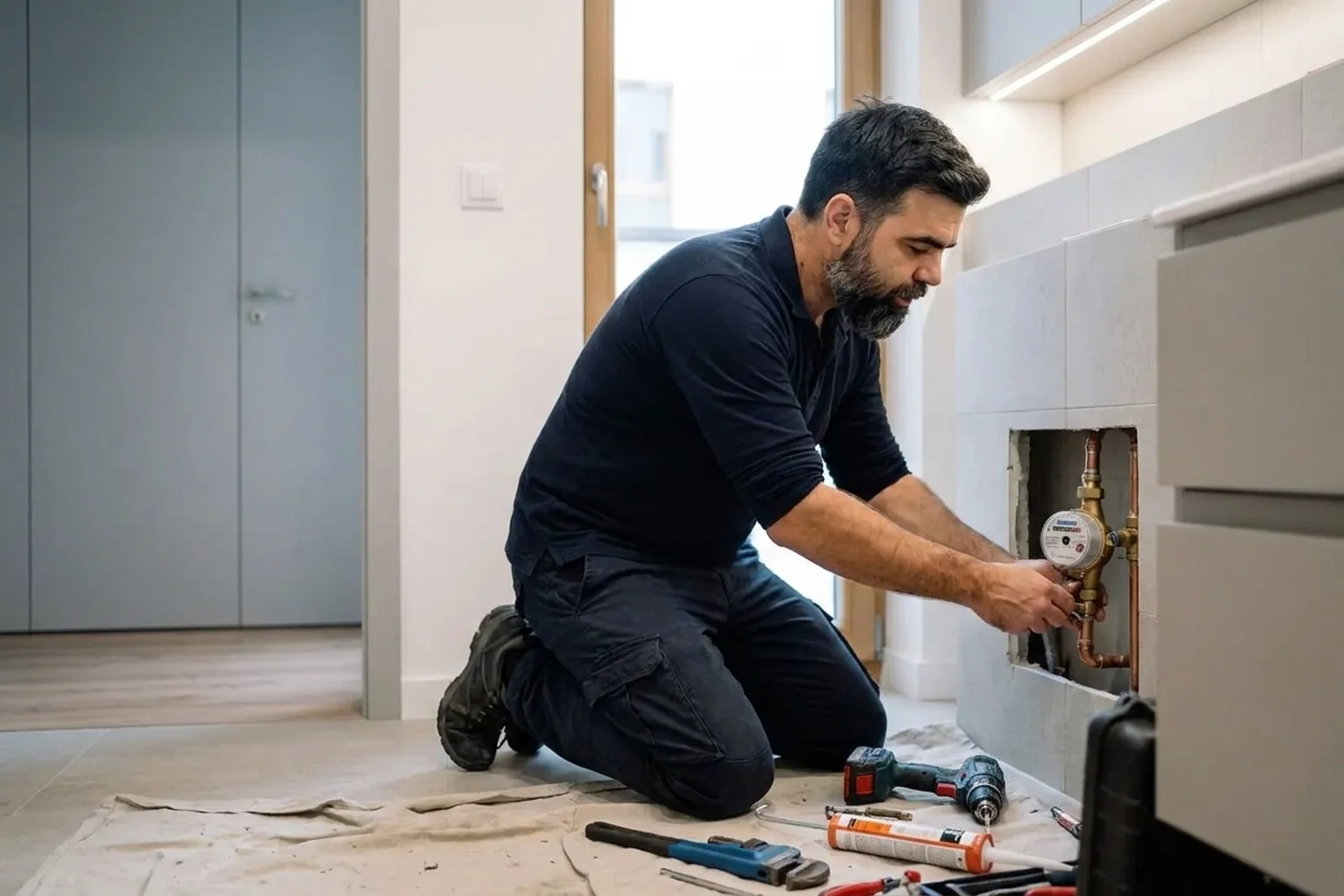
Zenner: what to check on a first installation
Zenner is a German water meter maker, and its meters turn up in flats and houses alike. Some models are purely mechanical, others can take a remote reading module.
Not every meter can go in any position. Some models only work horizontal, others also vertical; the dial and the instructions say which. If the riser only leaves room for a vertical fit, the meter is chosen for that spot, not the other way round.
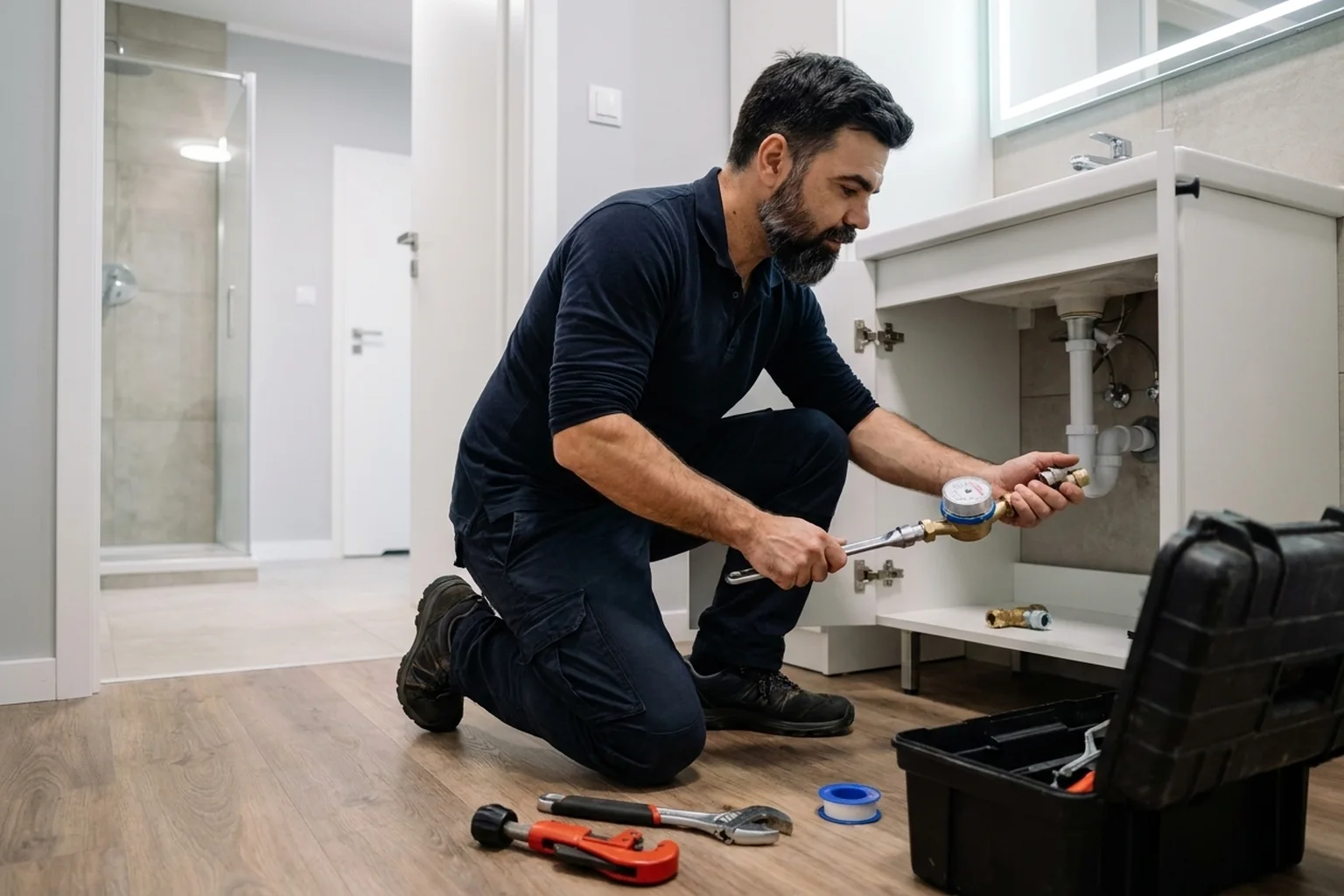
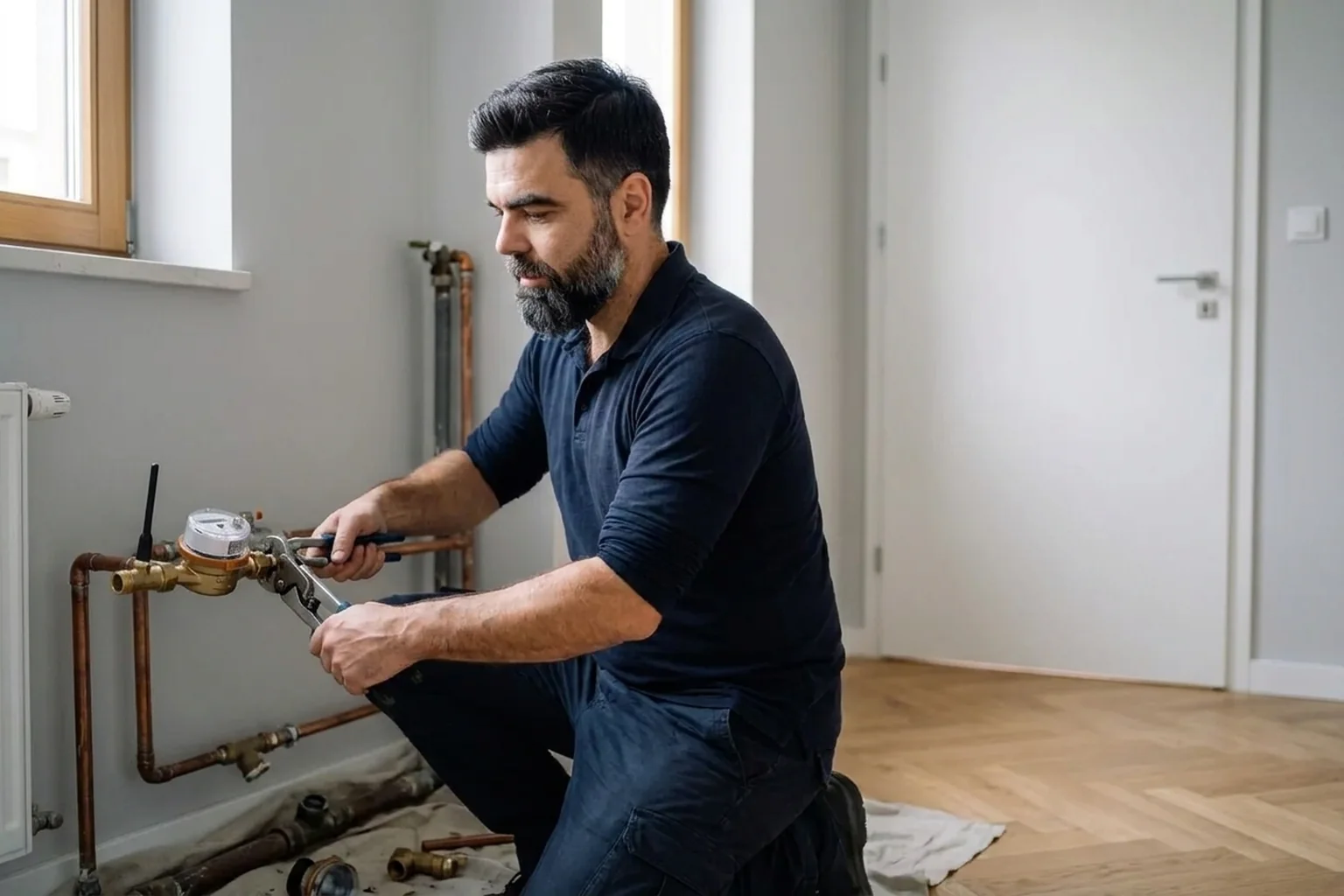
A new metering point usually means a small assembly: a valve before the meter, the meter itself, and often a strainer and a non-return valve. The strainer catches sand and rust from old risers that would otherwise jam the impeller. Ask the association up front what they accept, because some building offices have their own rules.
The meter has to stay reachable. Someone will read it, seal it and one day replace it, so tiling it in without an access hatch comes back to bite at the first inspection.
Once it is in, write down the serial number and the starting reading, photograph them and register the meter with the association. Until it is registered and sealed, the office may keep billing you a flat rate, which usually costs more than what you actually use.
Price ranges and offers from tradespeople: plumber in Warsaw.
Slip-ups with a new meter
- Pipe cut to the exact meter length with no room for the nuts, so everything has to be redone.
- No strainer in an old block. The first slug of rust from the riser and the meter stops.
- A meter boxed in with no access door.
- A horizontal-only model fitted vertically.
Getting ready
- Any written requirements from the association about the meter.
- Photos of the spot by the riser: pipe, valve, distance to the wall.
- Clear access to the riser, with no boxes or cupboards in the way.
- A clear answer on where it goes: cold water, hot water, or both.
Booking it
Post the job in the app with photos of the riser and a note on what the association wants. Plumbers who take this kind of work send bids with their own price and date, and anything unclear gets sorted in the chat.
Then you pick one on price, rating and reviews. Contact details and the address unlock once you choose. You pay him directly and he issues the invoice. The meter, strainer, valves and taking away pipe offcuts come on top of the labour. The plumber who made the joints answers for them and redoes his own fitting; the state of an old riser is not on him.
Water on the riser stays off for the whole job, and with old valves it is worth checking twice.
Order in the app
Describe the job, add photos and the address. Tradespeople send their own prices and dates, and you pick one of the offers.
Open the app