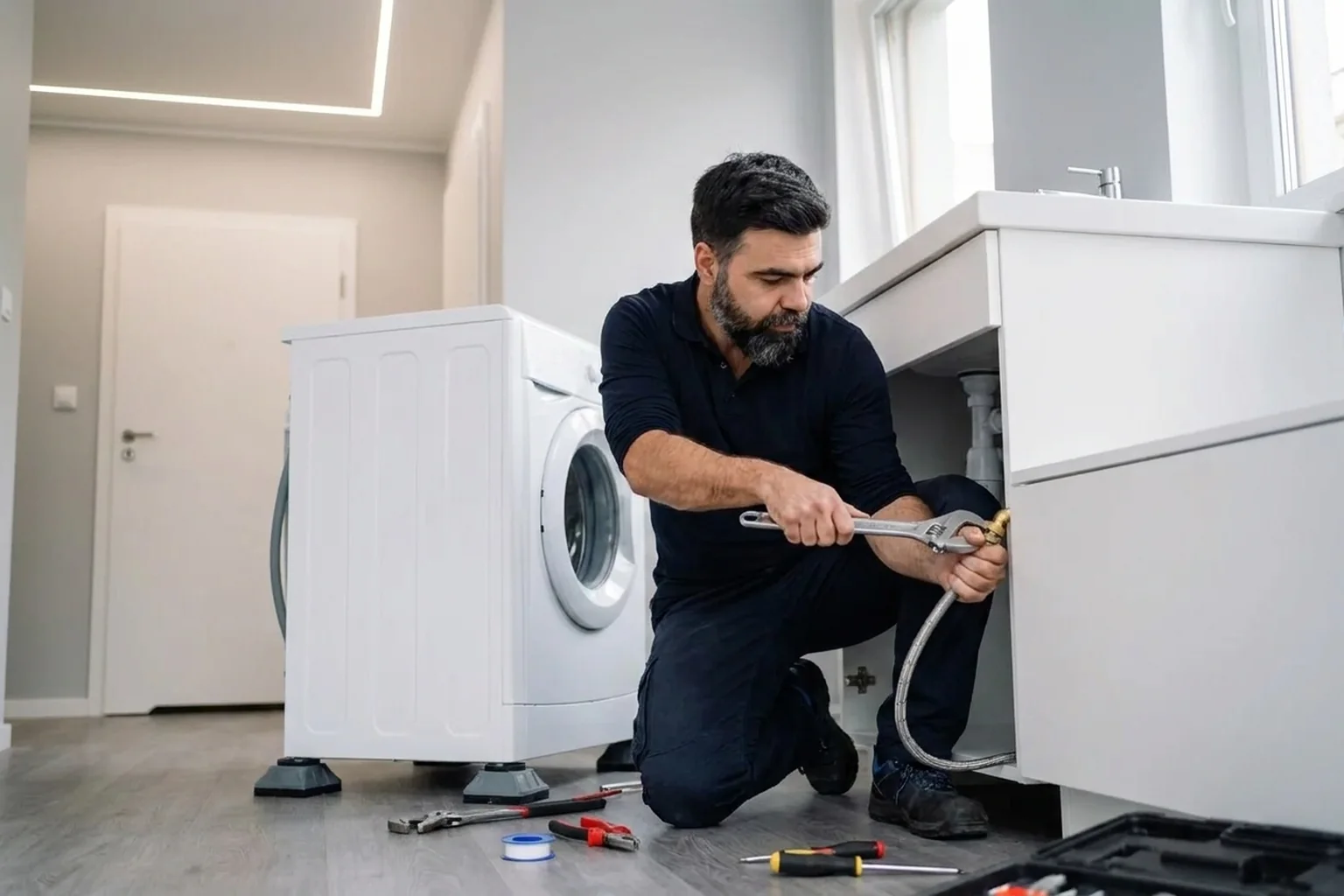
What matters with a Bosch washer
Start with the transit bolts on the back panel. They hold the drum still during delivery and have to come out before the first wash. The caps from the kit go into the holes. Keep the bolts, you’ll want them when you move.
Then the level. The feet adjust, and a decent tradesperson checks them with a spirit level on the top panel rather than by eye. A washer that sits crooked will walk across the tiles on a fast spin.
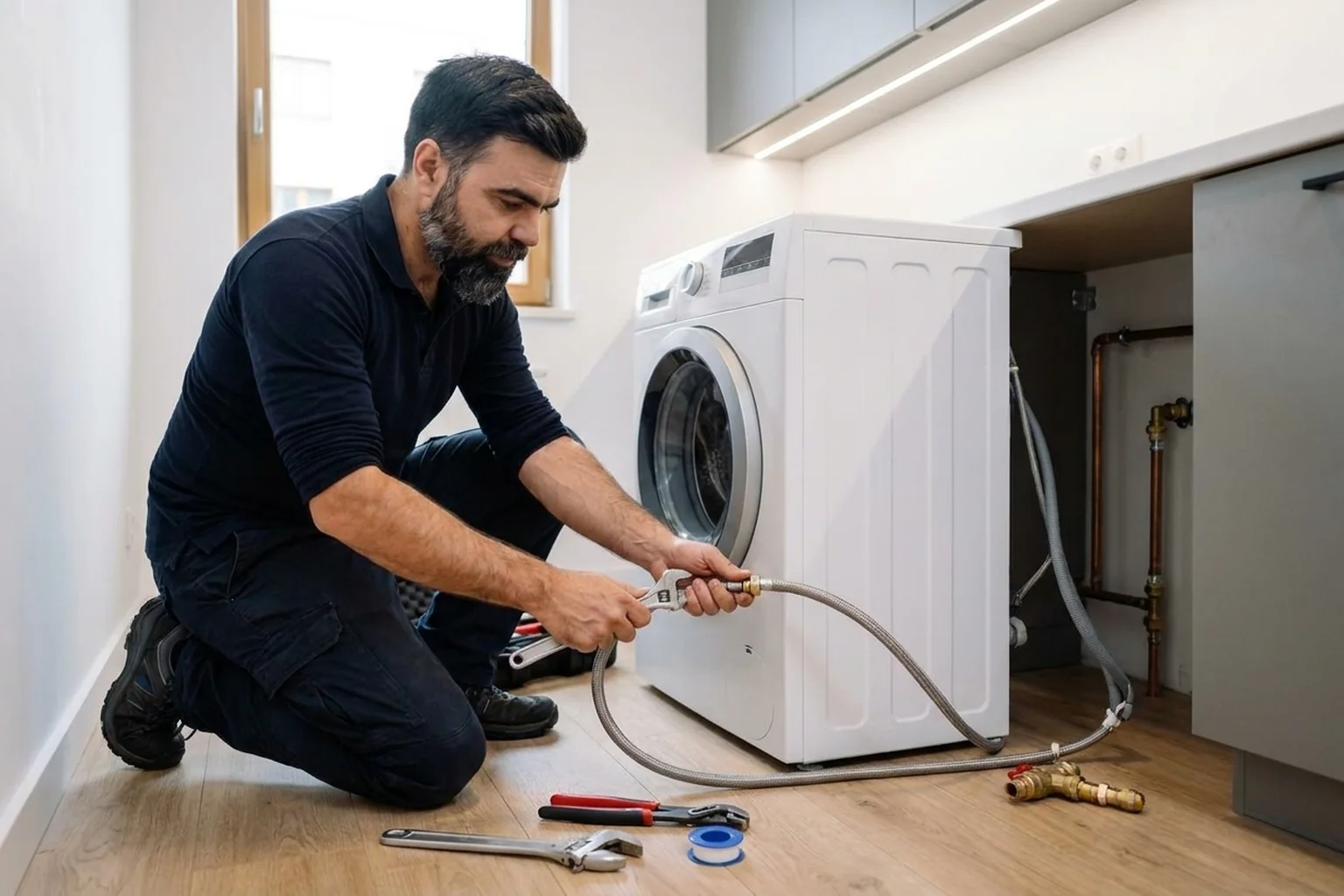
Some Bosch models come with an inlet hose that has leak protection built in (AquaStop). You can’t extend that hose with an ordinary connector without defeating the point. If the valve is too far away, it’s easier to move the machine or rework the supply.
The drain hose goes into a trap with a spigot or into the waste pipe. It shouldn’t lie on the floor or hang too low, otherwise the washer siphons water out mid-cycle.
Power is simple: its own earthed socket, no extension lead, no adapter.
How it looks in the appConnect washing machine: what the request looks like in the appFirst the service and a photo: just show the washing machine valves. A price range appears right away. All that’s left is the address and the day. Handymen see the job and each decides whether to take it. Offers with prices land in the app. You pick the one that suits you.Service and a photoAddress and a day that suits youOffers from handymen, you choosePost a request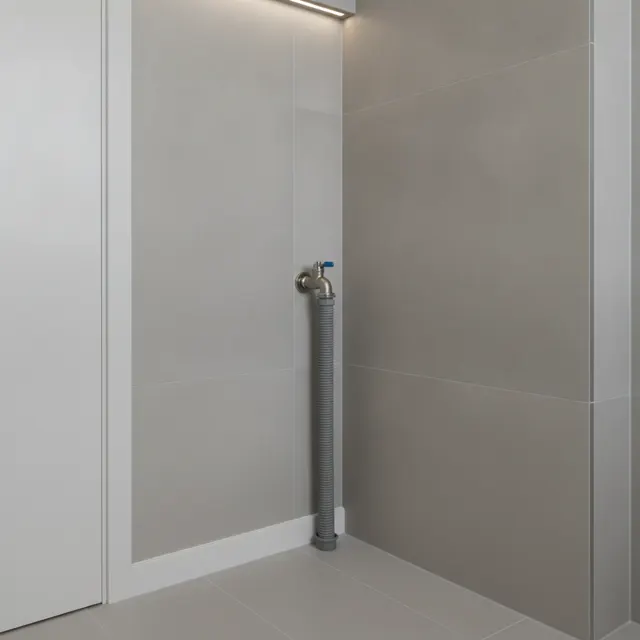
Price ranges and offers from tradespeople: washing machine installation in Warsaw.
Where it usually goes wrong
- One transit bolt left in. The machine roars and bounces, and the bearings take a beating from day one.
- Drain hose hooked over the edge of the bath. One jolt on the spin and the water ends up on the floor.
- An old valve under the basin that won’t close. You can’t swap a hose without shutting off the riser.
- A hose nut cranked tight with a wrench. The washer gets crushed and the drip is back in a few days.
- An extension lead behind the cabinet. A washer heats water and draws a lot of current, and a thin lead warms up.
Before anyone comes round
- Check there’s a threaded valve near the spot and that it actually shuts.
- Work out where the water will drain: a trap with a spigot or a pipe in the wall.
- Photograph the socket and the connections. From those a tradesperson can tell whether any rework is needed.
- Get the washer into place, or say in the order that it needs carrying in. That’s a separate item.
Water and electricity in one corner call for care: switch off the breaker before touching the socket, and close the water before touching the supply.
Getting it booked
Describe what you have in the app: the model, where it will stand, what connections are there. Add photos. Tradespeople who take this kind of job reply with bids at their own price, and you compare them along with ratings and reviews.
Once you pick someone you see their phone number and they see your address. You pay them directly and they issue the invoice. Washers and small fittings are usually included; a new hose, trap or valve is material and billed separately. Whoever did the connection answers for it and will redo his own work. A corroded riser or old wiring in the wall is not on him. If the machine was already acting up before the move, washing machine repair is a different job worth mentioning in the same order.
Order in the app
Describe the job, add photos and the address. Tradespeople send their own prices and dates, and you pick one of the offers.
Open the app