
Why a square metre is not a square metre
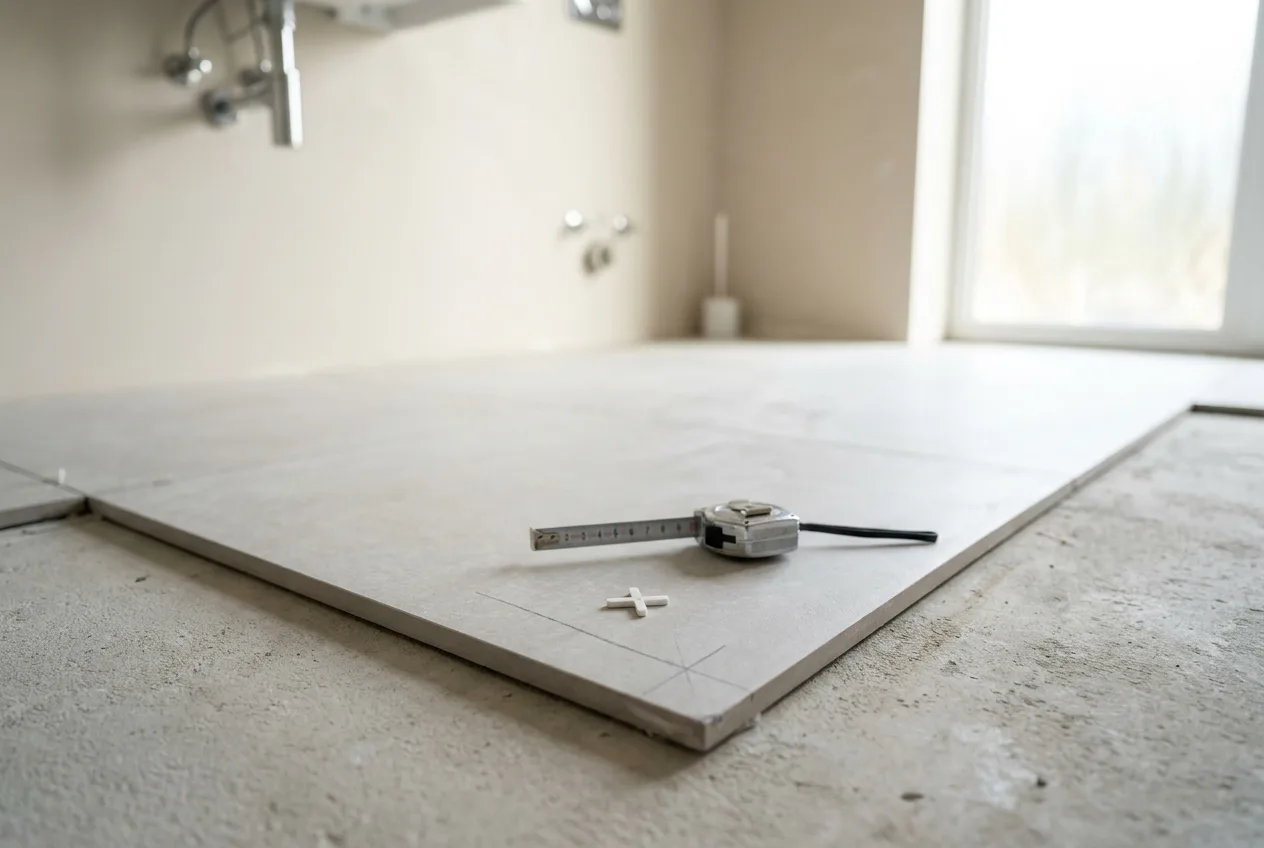
Tiles are not laid by clean area. The count includes trimming along the edges, a 45-degree mitre on external corners and working around the drain and pipes. Each of those eats a separate tile, ruined halfway, plus the time at the cutter.
Hence the range. A three-by-two bathroom with a straight layout and a bathroom of the same size with a niche, a boxed-in pipe run and a linear drain are two different jobs. The second has several times more cutting.
- large format from 120 cm cuts slower and breaks more often;
- mosaic is counted separately: a square metre of it takes longer than a square metre of anything else;
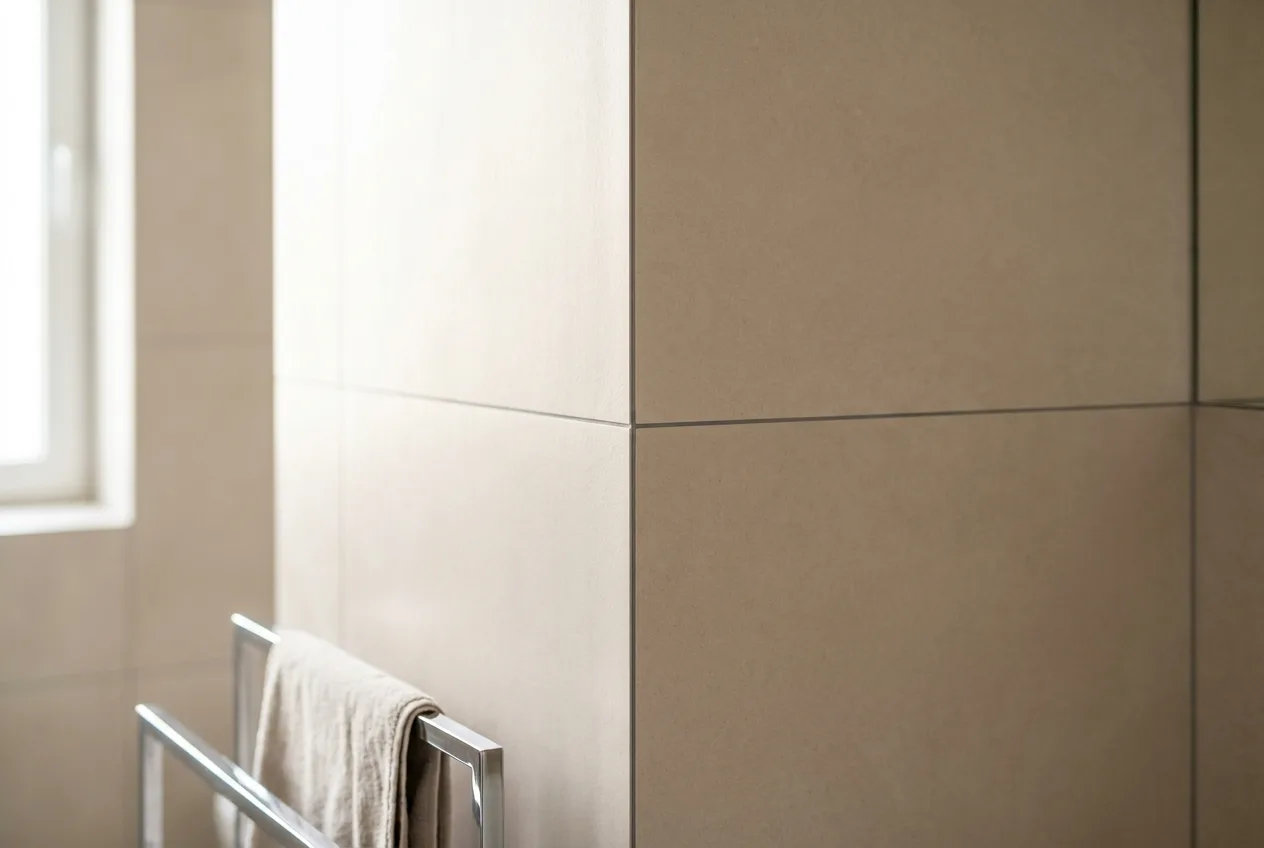
- a 45° mitre gives a corner with no trim, but every such corner is two cut tiles;
- mixed tile sizes in one layout add joint matching on top.
What the work around the tiles costs
Laying tiles is only part of the time. The plumbing sits right next to it and is counted separately. Here are live ranges from the price list for the work that goes with it:
| Service | Price |
|---|---|
| Shower cabin installation | 900–1200 zł |
| Shower tray installation | 500–800 zł |
| Shower tray replacement | 600–1000 zł |
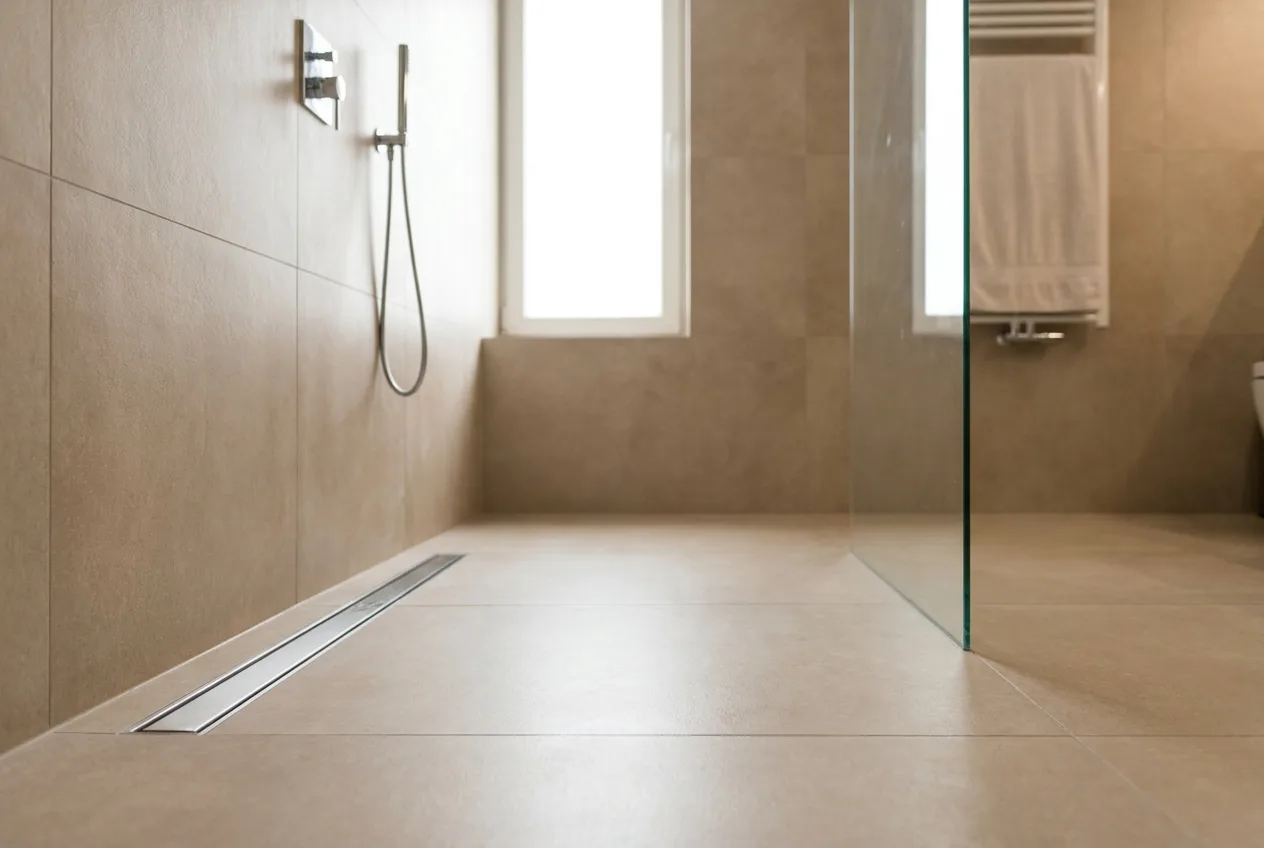
| Linear drain installation | 800–1500 zł |
| Silicone replacement / shower and bath sealing | 35–60 zł/mb |
Ranges for a typical scope. Fixings included, materials separate. Minimum order 300 zł.
The ranges in the table cover a typical scope. The exact amount comes from the tradesperson after they see the room: until then nobody knows what is under the old tiles. The minimum order is 300 zł, fixings are included in the price of the work, materials and waste removal are paid separately.
How the job runs
- Measuring and inspection. Walls are checked for plumb, the floor for fall, and whatever sits under the old surface gets a look.
- Strip-out. Old tiles come off together with the adhesive, otherwise the new ones land on an uneven bed.
- Substrate prep. Levelling wherever the difference is more than a couple of millimetres.
- Waterproofing. In the shower zone and around the bath it is not optional, and it is not where anyone saves money.
- Dry layout. Before any adhesive goes down the tiles are laid out dry, so you can see where the cuts will land.
- Laying and grouting. Grout gains strength over roughly a day; the silicone bead around the edges goes on last.
Where it usually goes wrong
- Waterproofing done by eye, or skipped. The leak shows up at the neighbours a month later, and putting it right costs more than the whole tiling job.
- Cuts pushed into the visible corner. The rule is simple: whole tiles go where the eye lands from the door, cuts go to the far corner and under the furniture.
- Grout picked to match the tile rather than how the joint will look in a year. White grout on a bathroom floor goes dark within six months.
- Silicone applied the same day as the grout. The joint is still giving off moisture and the silicone lifts.
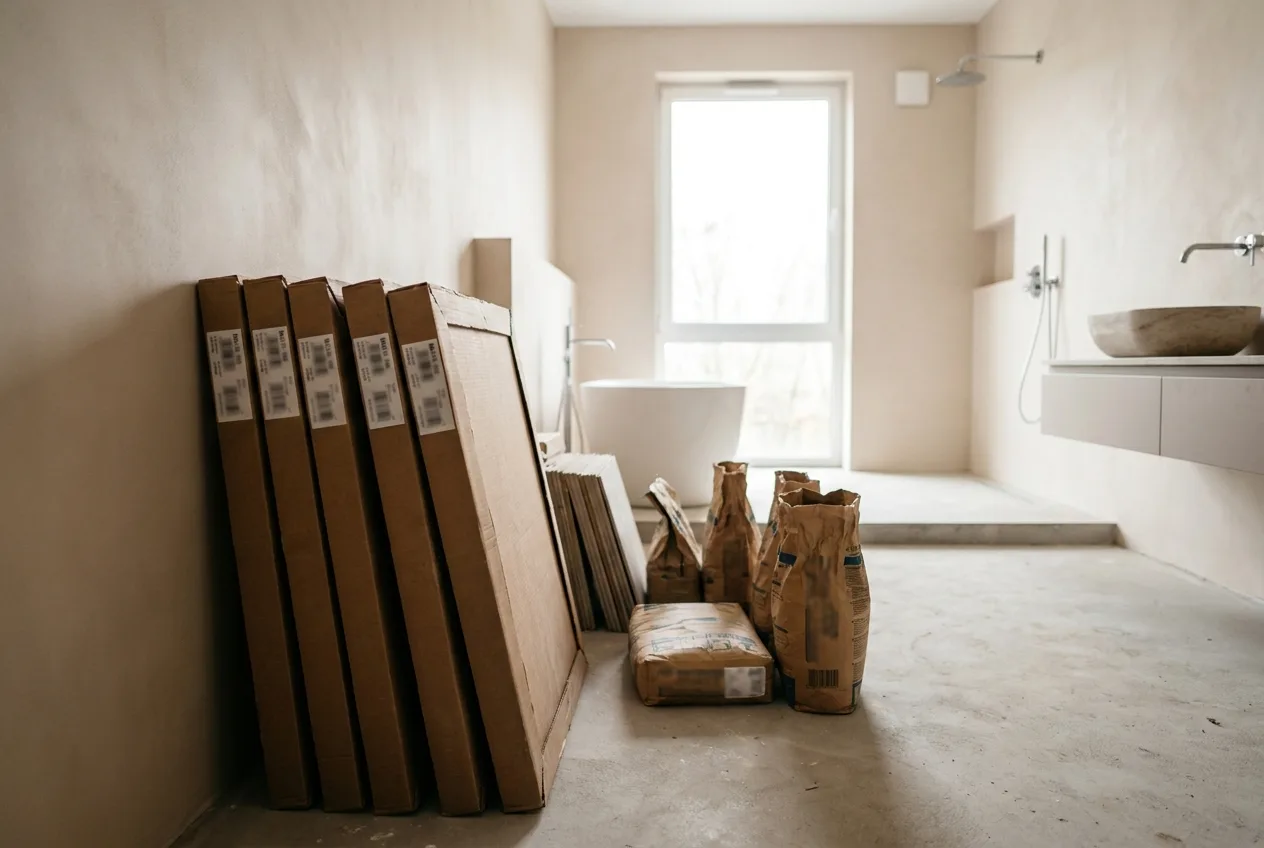
- Area counted with no spare. Allow at least 10% for breakage and cuts, up to 15% for diagonals and large format.
What to check before the start
- Tiles from one batch: the batch number is printed on the box, and shades differ between batches.
- A spare bought for cuts and breakage, not exactly the measured area.
- The cut positions decided, and said out loud.
- Somewhere to put the old tiles: rubble bags are heavy and removal is counted separately.
- A decision on how the floor-to-wall joint closes: a tile skirting or silicone.
A case from practice
A flat in Wola, a 4.2 square metre bathroom, large format 60 by 120. The owner measured the area and bought tiles right to the edge, with four spare. At the dry layout it turned out that at that wall width the cut falls exactly opposite the door, which is the first thing you see from the threshold.
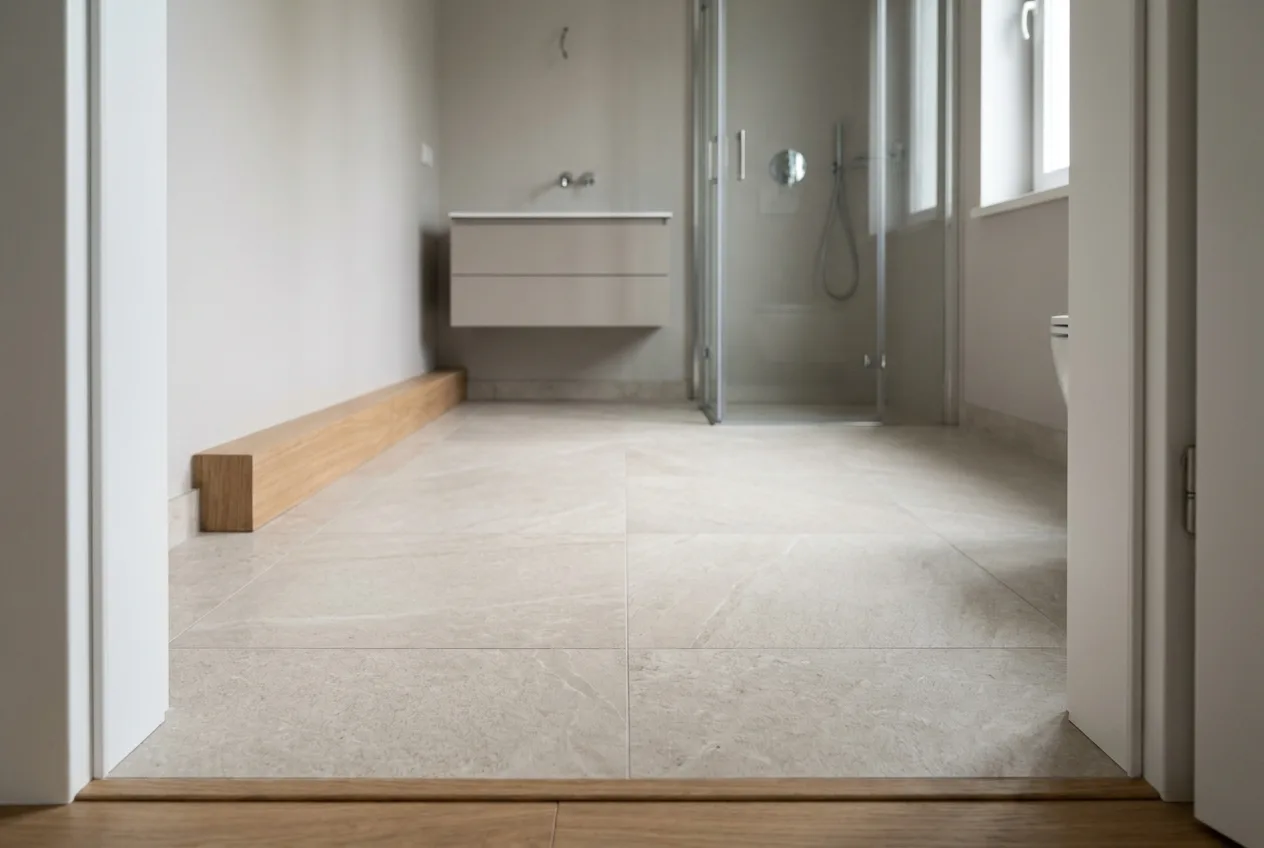
The layout was shifted so whole tiles run from the entrance and the cut went behind the door and under the boxing. The shift added three more cuts, the spare ran out, and more tiles had to be bought with a two-day wait. Had the layout been discussed before the purchase, the same money would have covered it with no pause.
Common questions
Can new tiles go straight over the old ones?
Technically yes, but in a bathroom almost nobody does it. The floor rises a couple of centimetres, the door starts to catch, and it only holds if the old tiles are solid across the whole area. There is no way to check that in advance.
How long does it dry, and when can I shower?
Adhesive gains strength over about a day, grout takes the same again. Leave a full wash until two days after grouting, or the joint washes out.
Who buys the tiles and adhesive?
The customer buys materials; they are not included in the price of the work. The tradesperson will give you the quantity with a spare for cuts and say which adhesive suits your format.
Why is mosaic charged separately?
A sheet of mosaic has dozens of times more joints than a plain tile and every one has to be set. The same square metre takes many times longer.
What if the tiles are already bought, but not all of them?
Say so before the start. The tradesperson will work out whether it covers the chosen layout and can suggest a version with fewer cuts. Topping up later from another batch almost always shows.
How this works here
Handyman24 puts you in touch with a tradesperson who works for themselves. You describe the job and add photos of the bathroom; they look and name the amount before starting. They answer for the quality of their own tiling and put their own mistakes right. For someone else’s work, the state of the substrate and whatever turned up under the old tiles, they do not.
Describe the job in the order form: you get a range from the price list back, and the exact amount comes from the tradesperson after they have seen it.