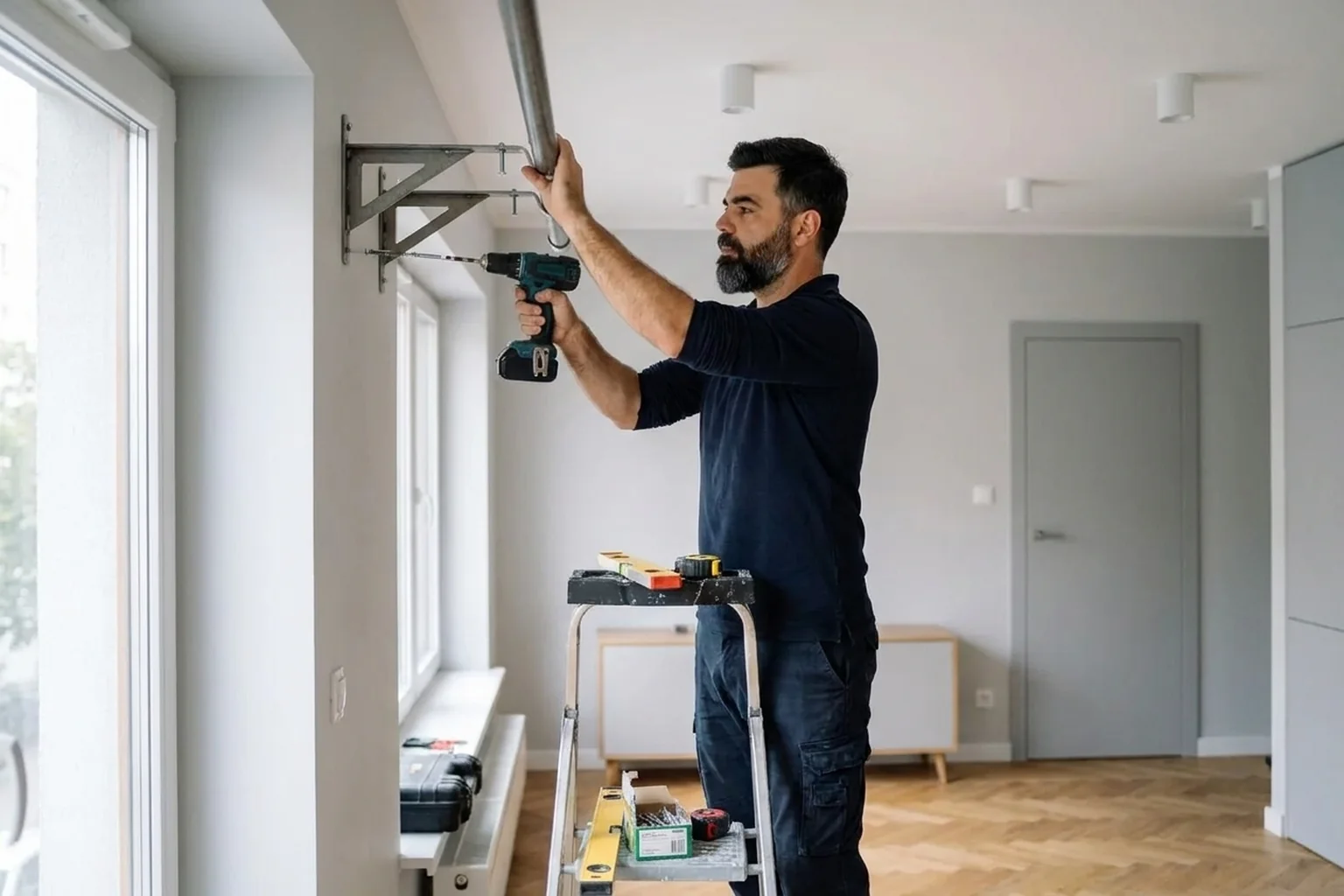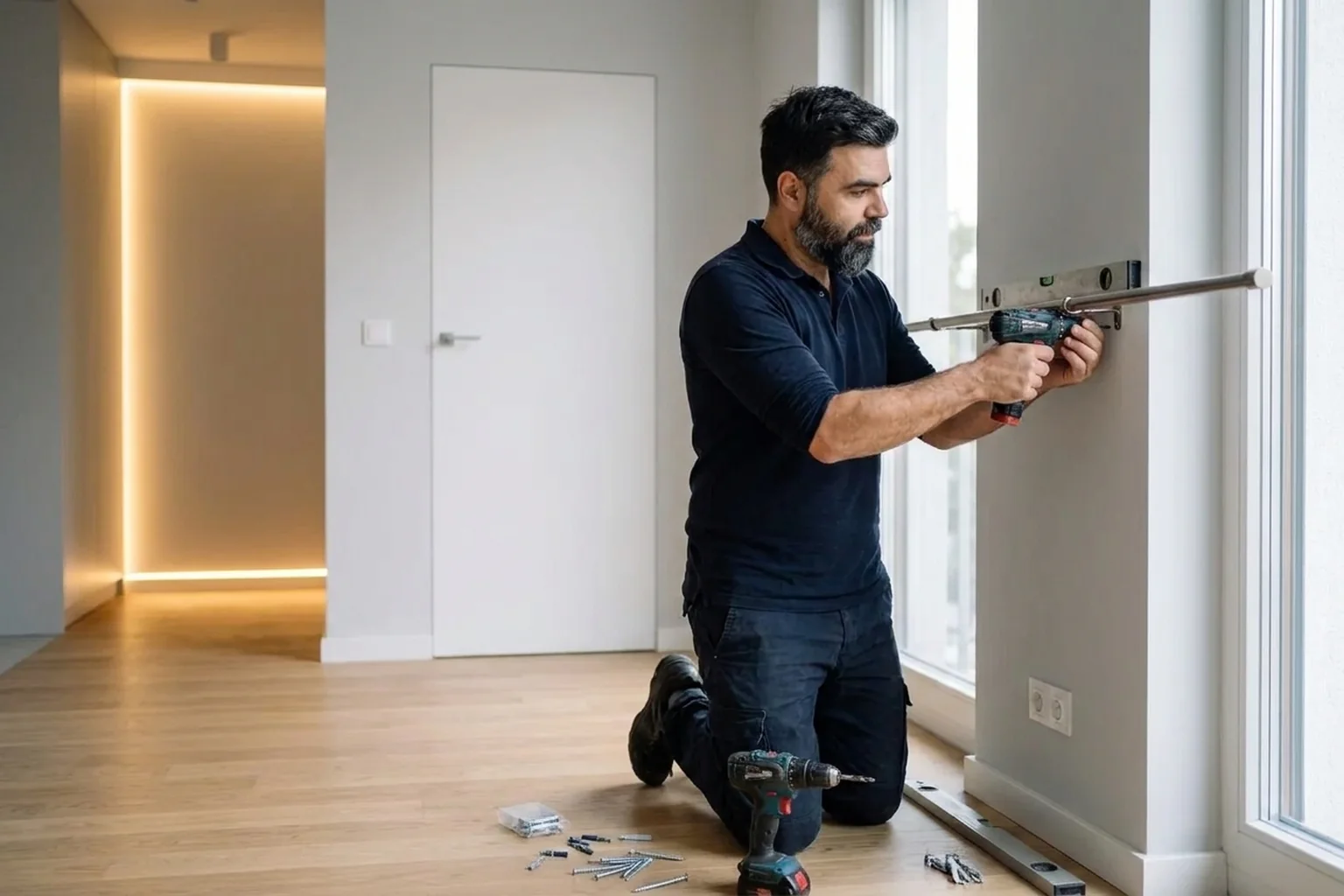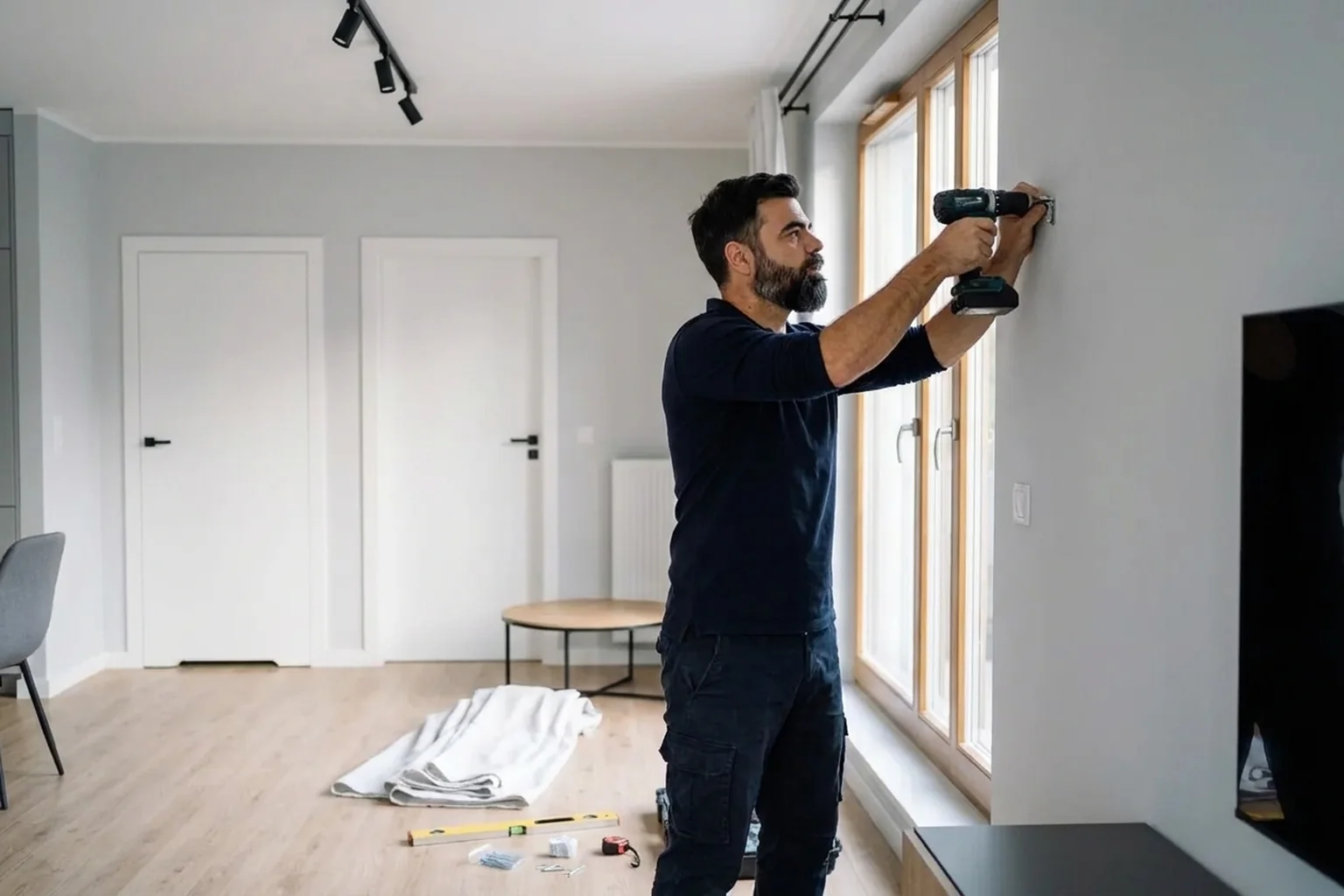
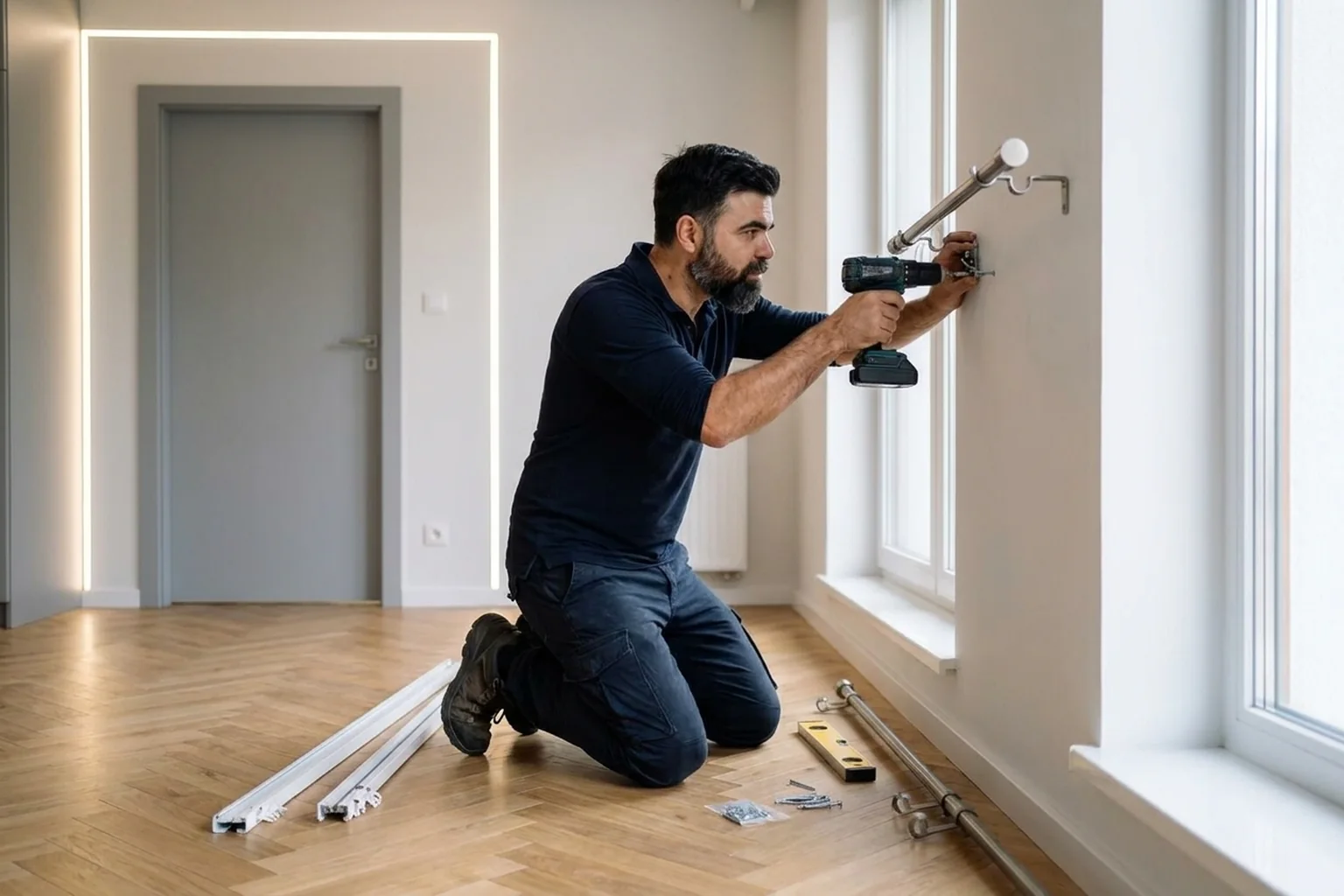
Track or rod: how they hang differently
IKEA sells two main setups. The VIDGA track system fixes to the ceiling or the wall and takes several layers, say a sheer plus a blackout curtain. Rods like RÄCKA or HUGAD are simpler: two or three brackets and a pole you thread the fabric onto.
A track needs more fixing points and a straight line along its whole length. If it sags even a little, the gliders start to catch, and you notice straight away. A rod is more forgiving, but the full weight of the curtains hangs on a few brackets. A heavy blackout on a long rod needs a middle bracket, not just one at each end.
Then there’s the wall. Warsaw flats have concrete, brick, aerated block and plasterboard, sometimes all in one room. The plugs in the IKEA box don’t suit every one of them, and that’s the usual reason a rod starts wobbling a month later.
If you also need a rail or a roller blind, there’s a separate piece on curtain rail and roller blind installation in Warsaw.
Rather hand the job over? More here: curtain rail fitting in Warsaw.
IKEA curtain hanging: common mistakes
- Whatever plug was in the drawer. In aerated block a standard one just spins, and in plasterboard without a spring toggle the bracket pulls out with a chunk of board.
- Measuring off the window frame instead of a level line. Frames are often out of true, and a rod lined up with them looks crooked against the ceiling.
- A rod that’s too short. Pulled back, the curtains still cover part of the glass and the room is darker than you planned.
- Drilling without checking for cables. Above a window that happens more often than you’d think.
- Screwing a track into a suspended ceiling without finding out what’s actually behind it.
IKEA curtain hanging: getting ready
- Unpack the kit and check it’s complete: brackets, end caps, rings or gliders.
- Decide how high and how wide the rod goes. Holding the curtain up against the wall is the easiest way to see how it falls.
- Clear the space under the window and take the plants off the sill.
- If you know what the wall is made of, say so in the order. If not, a photo does the job.
Getting it booked
Describe the job in the app: how many windows, rod or track, one layer or two. Add photos of the wall above the window and of the kit itself. Tradespeople who take this kind of work send bids with their own price and date, and you compare them alongside ratings and reviews.
Phone numbers and the address are shared once you’ve picked someone. You pay the tradesperson directly and he issues the invoice. Plugs and screws are normally part of the job; the rod and curtains you buy yourself. Whoever fitted it answers for his own fitting. Crumbling plaster and hidden faults in the wall are not on him.
Order in the app
Describe the job, add photos and the address. Tradespeople send their own prices and dates, and you pick one of the offers.
Open the app