Below we compare both the way a tenant or owner sees them: how much power suits your floor area, how much noise you can live with in the bedroom, what to do about the window, when you need consent from the wspólnota or spółdzielnia (the building’s owners’ association or housing cooperative) and how to look after the unit. We also say plainly what you can order through the HandyMan24 app and what you can’t.
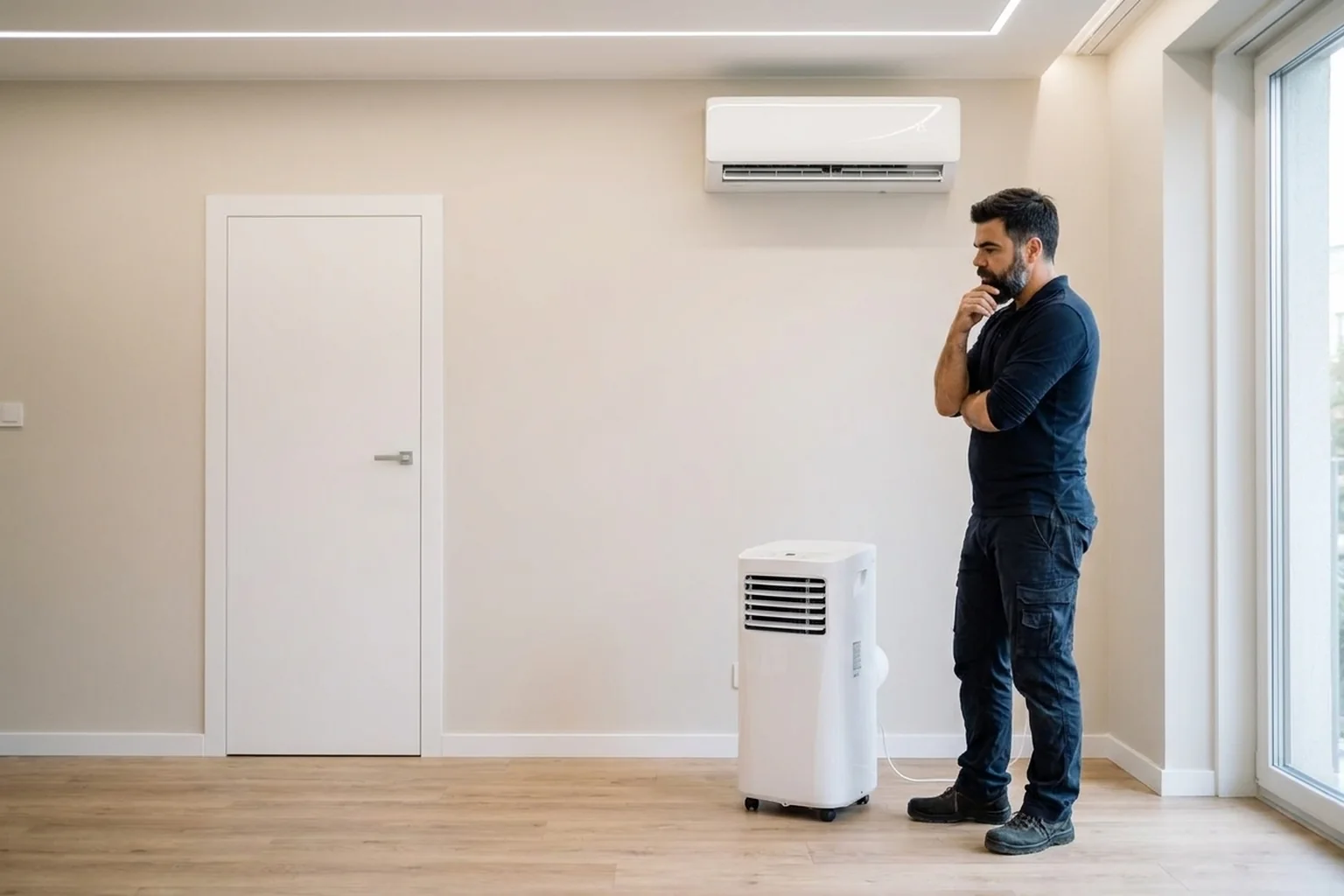
Portable or split: the practical difference
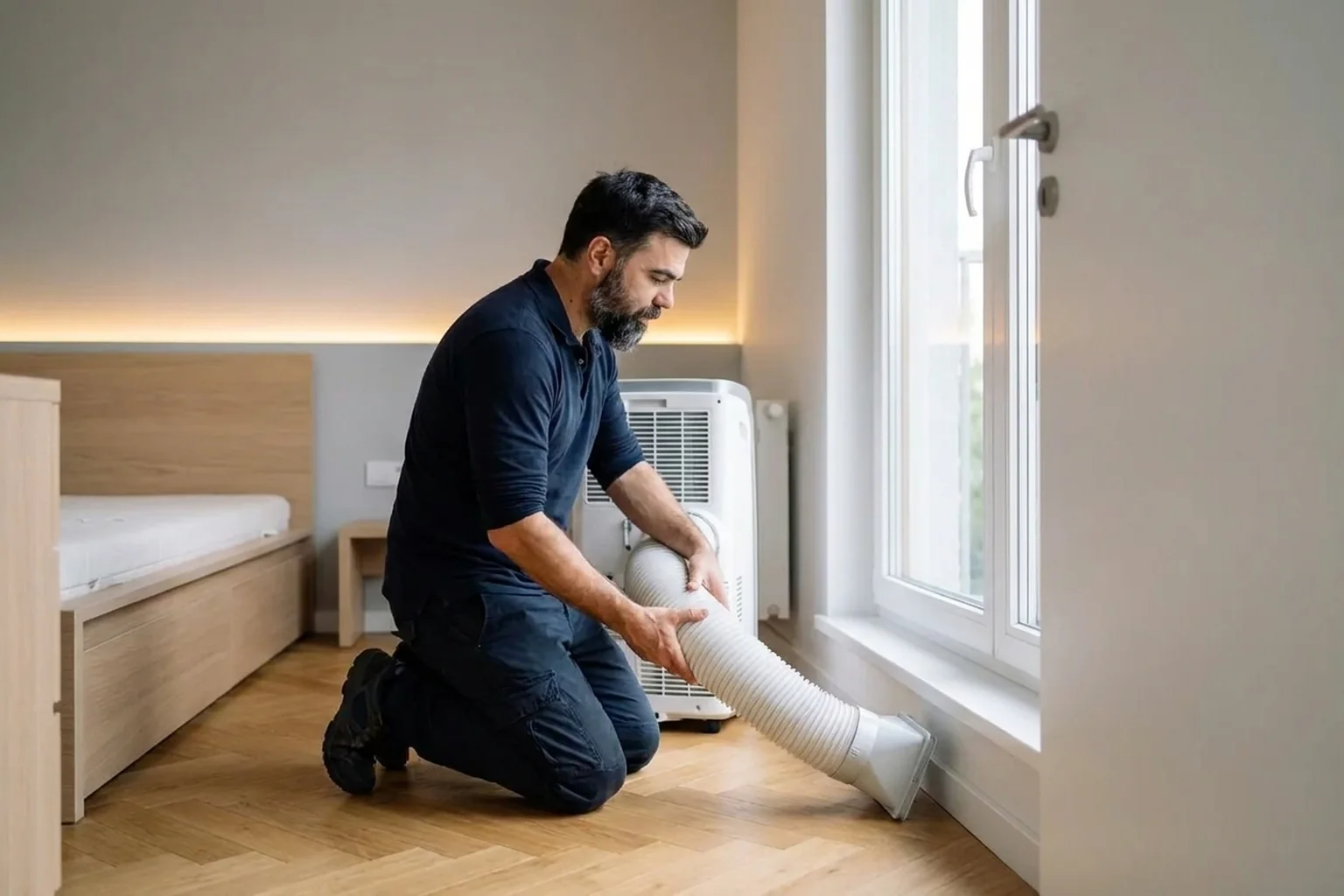
A portable air conditioner is a single box on wheels. Compressor, fan and condenser share one casing, and the hot air leaves through a flexible hose out of the window. A split has two parts: the indoor unit hangs on the wall, the compressor runs outside. Copper pipes with refrigerant and a cable connect them.
- Installation. A portable needs a hose and a window seal, no drilling. A split means a hole through the outer wall, a bracket for the outdoor unit and connecting the refrigerant circuit.
- Cooling. A split handles a large room in July without breaking a sweat. A portable copes with one modest room and loses some of its effect through the hose and the gap in the window.
- With a portable the compressor hums next to your bed; with a split it’s behind the wall.
- Electricity bills. For the same cooling, a split is usually noticeably cheaper to run. Compare the energy class and the SEER rating on the product sheet.
- Paperwork. A portable doesn’t touch the building’s shared parts. In a block of flats, the outdoor unit of a split goes through the wspólnota or spółdzielnia.
- You can wheel a portable into the bedroom at night and take it with you when you move. A split stays on the wall.
There’s also the through-wall air conditioner with no outdoor unit. It sounds like a compromise, but it needs two holes in the outer wall, so the facade and the consent question come straight back.
How to choose? Renting, need one cool room, or fairly sure the building won’t approve an outdoor unit: get a portable and don’t look back. Own the flat, want several rooms cooled and like sleeping with it on: a split will serve you better, even if the road there is longer.
Rather hand the job over? More here: furniture assemblers in Warsaw.
How much cooling power for your floor area
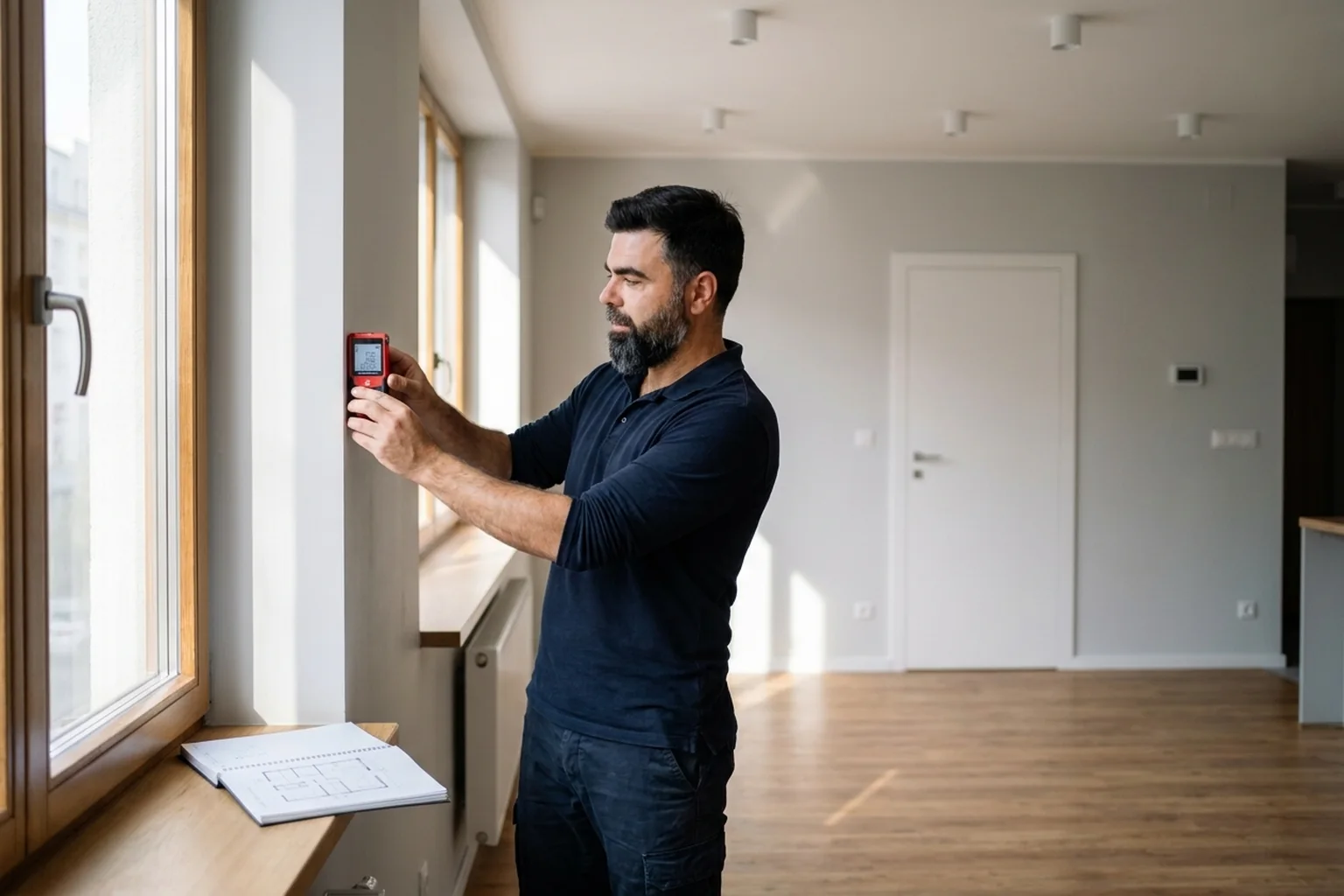
Cooling capacity is given in kW, and portables are often labelled in BTU (9,000 BTU is about 2.6 kW). A common starting point is roughly 100 W per square metre at a standard ceiling height. Windows and sun exposure then push it up or down, more on that below.
- room of 15–20 m²: about 2 kW,
- room of 20–25 m²: about 2.5 kW,
- living room of 30–35 m²: about 3.5 kW.
Add headroom if the windows face south or west, you’re on the top floor under the roof, the glazing is large, or a computer runs all day with several people in the room. A portable needs more headroom, because some of the cold escapes through the hose.
Oversizing doesn’t help either. The unit drops the temperature fast, cuts out, starts again a minute later, and the humidity stays. And don’t try to keep the room well over ten degrees below the outside temperature: stepping from an icy bedroom into a baking stairwell gets old quickly.
Noise and the window hose: what to watch with a portable
Noise is the biggest drawback of a portable. The compressor runs a metre away, and at night you hear every time it kicks in. When comparing models, check the noise level in decibels on the product sheet: a few dB of difference is clearly audible. With a split only the fan runs in the room, and on its lowest speed most people can sleep through it.
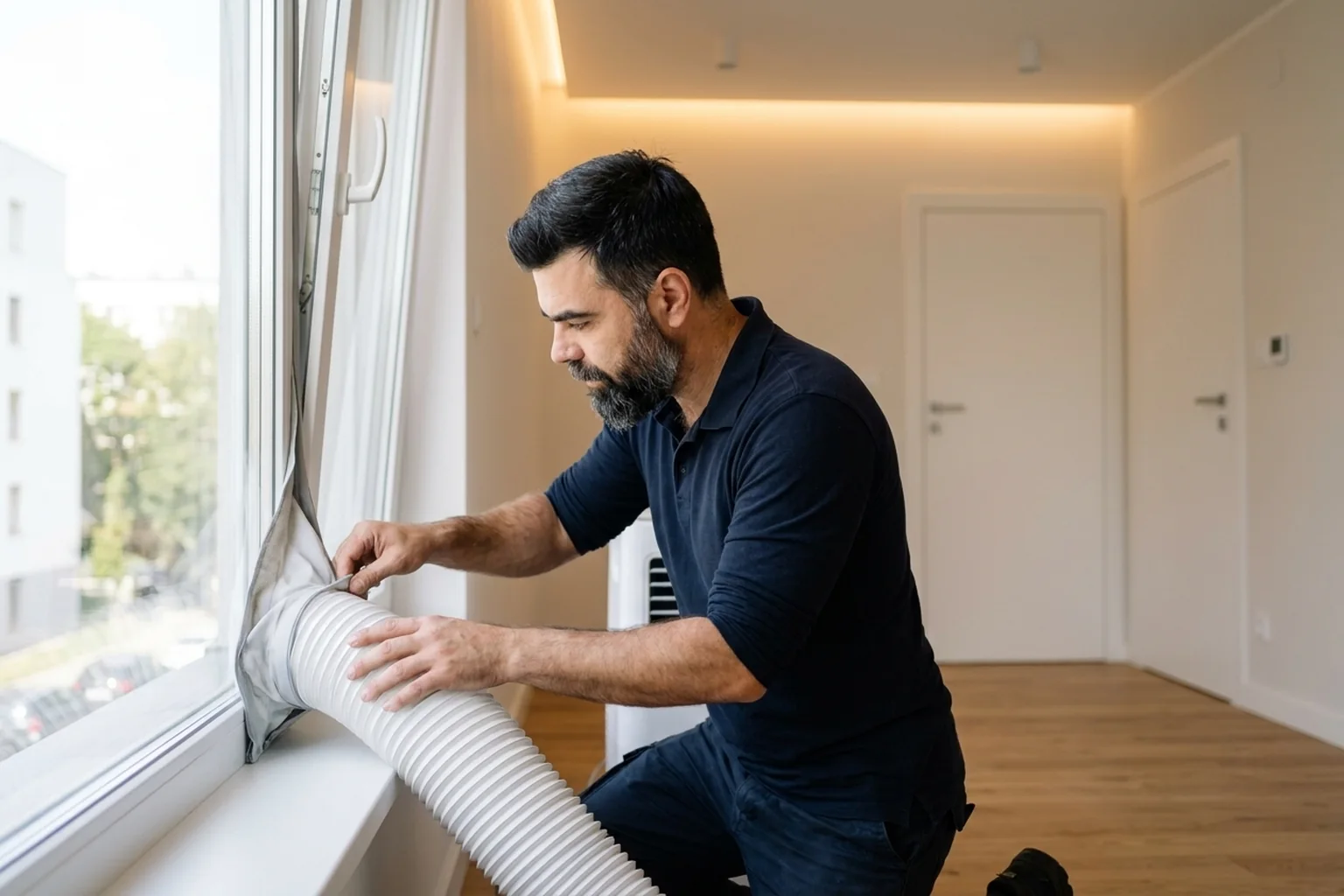
The hose has to go outside, and it has to seal. The most common mistake is a tilted window with the hose squeezed into the gap. Hot air comes straight back in and the unit runs at half power. You need a window seal kit: a fabric curtain with hook-and-loop strips for a tilt-and-turn window, or a panel for a sliding one.
- Keep the hose as short as possible and free of kinks. Extending it yourself cuts the output.
- Give the unit room to breathe: not flat against a wall, not behind a curtain.
- Check how the model handles condensate: evaporates it, collects it in a tank, or needs a drain hose.
- A single-hose model pulls air out of the room, and warm air from the rest of the flat replaces it. Dual-hose units do better, though the window kit is bulkier.
Safety: an air conditioner draws a lot of current. Plug it straight into a wall socket, not into an extension lead shared with the kettle and the computer. Socket getting warm, plug loose, breaker tripping? Stop using that outlet. A new socket should be fitted by someone qualified for electrical work. For the portable installation itself step by step, see our article Air conditioner installation and service.
A split in a block of flats: consent and F-gas certification
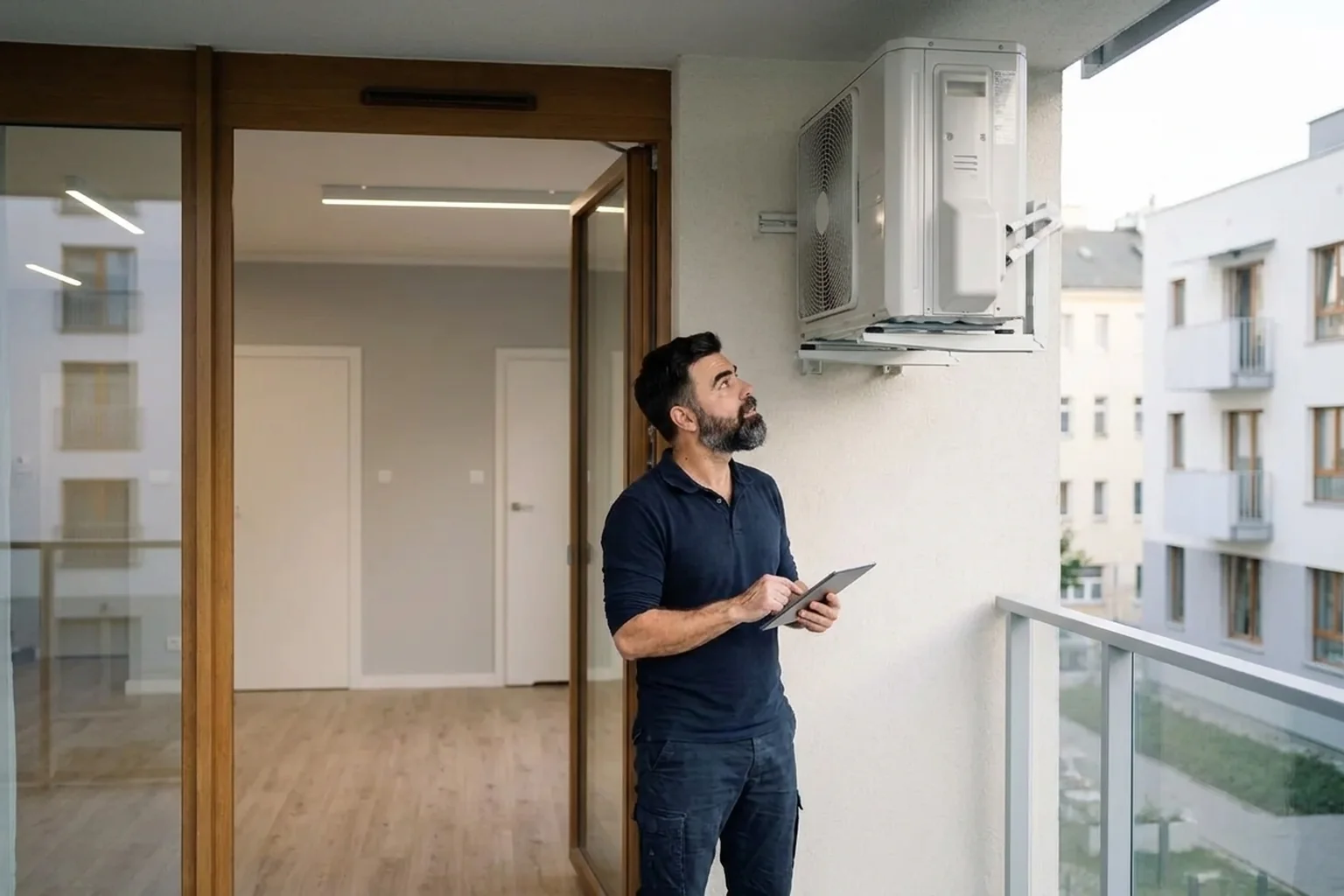
The facade and external walls are shared parts of the building. Before you buy a split, ask the board of the wspólnota mieszkaniowa or spółdzielnia whether you can mount an outdoor unit and on what terms. Many buildings have rules on placement, appearance and condensate drainage. Get the consent in writing; without it you may later be asked to take the unit down. Renting? You need the landlord’s consent too.
Go to the board with specifics:
- where the outdoor unit will go (balcony or facade) and how it will be fixed,
- where the hole and pipes will run, and whether they’ll be boxed in a trunking,
- where the condensate will drain, so it doesn’t drip onto the neighbours’ balcony,
- how loud the outdoor unit is, since it runs under other people’s windows.
Now, honestly, what our catalogue doesn’t cover. Installing a split and connecting its refrigerant circuit may only be done by people and companies with F-gas certification. You can’t order that service through the HandyMan24 app. Splits are installed by specialist, certified air conditioning companies, and you agree the placement, the hole and the commissioning with them. Ask about the certificate before you book.
What you can order through the app is everything around it: installing a portable unit with a window seal, air conditioning servicing, a new socket, or roller blinds that keep some of the sun out.
Installation, servicing and indicative prices
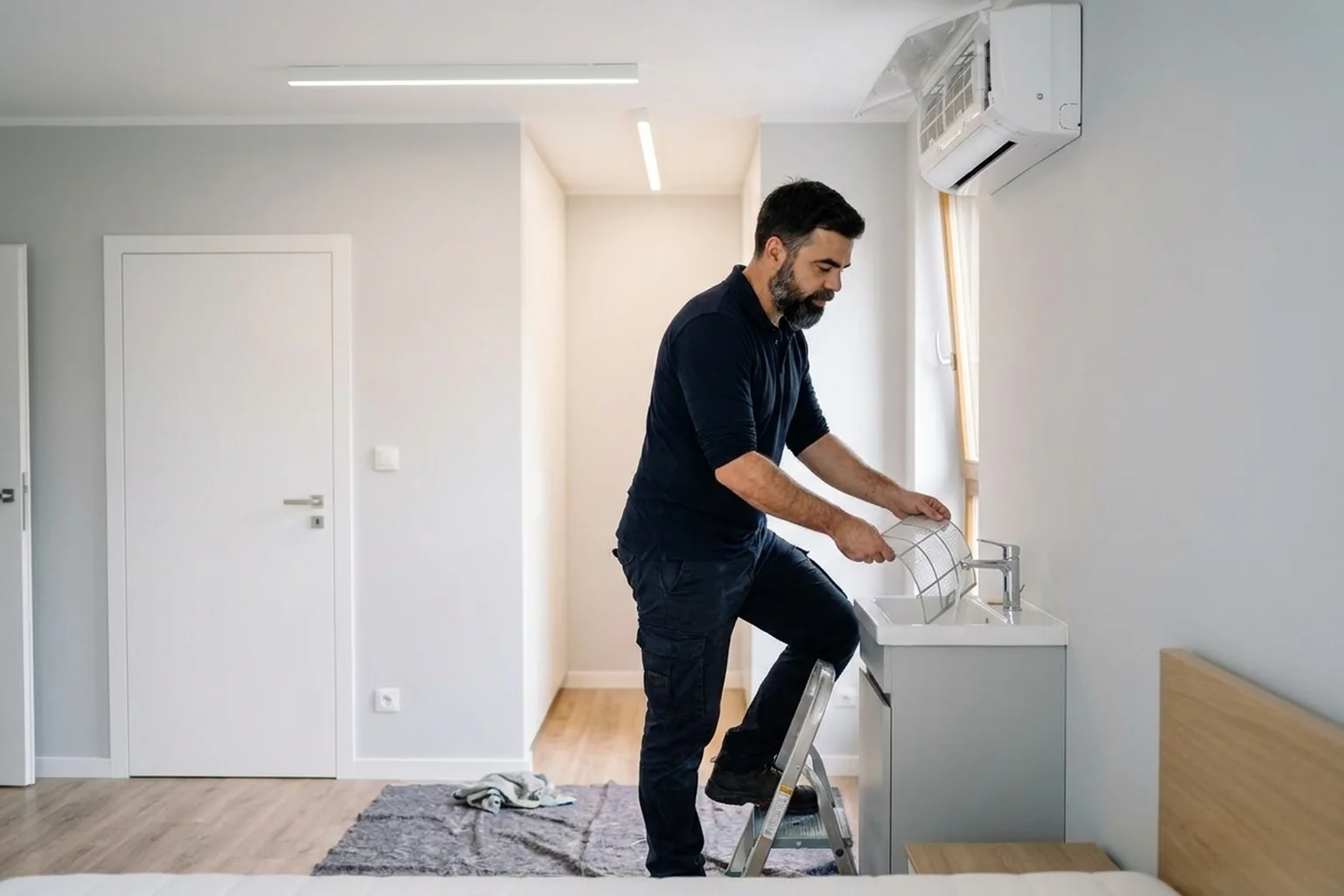
A portable needs little care, but regularly. In season, rinse the filter every few weeks, keep an eye on the tank or drain, and before storing it for winter run it in fan mode to dry out. A split should be cleaned before every season: filters, the indoor heat exchanger, the drip tray and the drain. A musty smell when you switch it on usually means the clean is overdue.
A tradesperson from the app will handle cleaning, filters and clearing the drain. If it turns out the split is short of refrigerant or the circuit leaks, you’ll need a company with F-gas certification. Whoever did the work answers for it, and the invoice comes from them as well.
Indicative ranges from the HandyMan24 price list (Warsaw): portable air conditioner installation from 250 to 500 zł, air conditioning service from 300 to 600 zł. Prices may differ in other cities, and the table below shows current figures. The final price comes in the tradesperson’s bid, before you choose anyone.
| Service | Price |
|---|---|
| Portable air conditioner setup | 250–500 zł |
| Air conditioner service | 200–500 zł |
| Socket installation | 30–90 zł/pkt |
| Roller blind installation | 300–500 zł |
| Handyman work - hourly rate | 250–300 zł/h |
Indicative prices. Ranges for a typical scope. Fixings included, materials separate. Minimum order 300 zł.
Say you’ve bought a portable for the bedroom and the only socket by the window barely holds the plug. In one order you describe fitting the air conditioner and the socket, add photos of the window and the wall, and tradespeople price each item separately. In the capital, small jobs like these are what a handyman in Warsaw takes on.
Common questions
Does a portable air conditioner need installing?
No drilling. But the hose has to leave through a proper window seal and the condensate needs somewhere to go, or the cooling will be weak. You can do it yourself or hand it to a tradesperson.
What size air conditioner for a 20 m² room?
Start from about 2 kW of cooling. South-facing windows, a top floor or large glazing call for headroom, and a portable needs more of it than a split.
Do I need consent for a split in a block of flats?
The outdoor unit usually hangs on a shared part of the building, so ask the board of the wspólnota or spółdzielnia, and your landlord if you rent. Get it in writing before you buy.
Can I order split installation in the HandyMan24 app?
No. Splits with a refrigerant connection are installed by F-gas certified companies, and that service isn’t in the catalogue. In the app you can order portable air conditioner installation and air conditioning servicing.
How often should I clean an air conditioner?
Rinse a portable’s filter every few weeks in season, more often with pets at home. Clean a split before the season: filters, heat exchanger and drain. A musty smell at start-up tells you it’s time.
Picked a portable and want it connected properly, or is your old unit due a clean? Describe the job in the app, add photos of the window and where the unit will stand, and tradespeople will send their prices. The app takes orders from anywhere in Poland.
Are you a tradesperson who installs portable units or services air conditioning? Join HandyMan24: clients post jobs, you send your price. You work for yourself and choose your own business form.