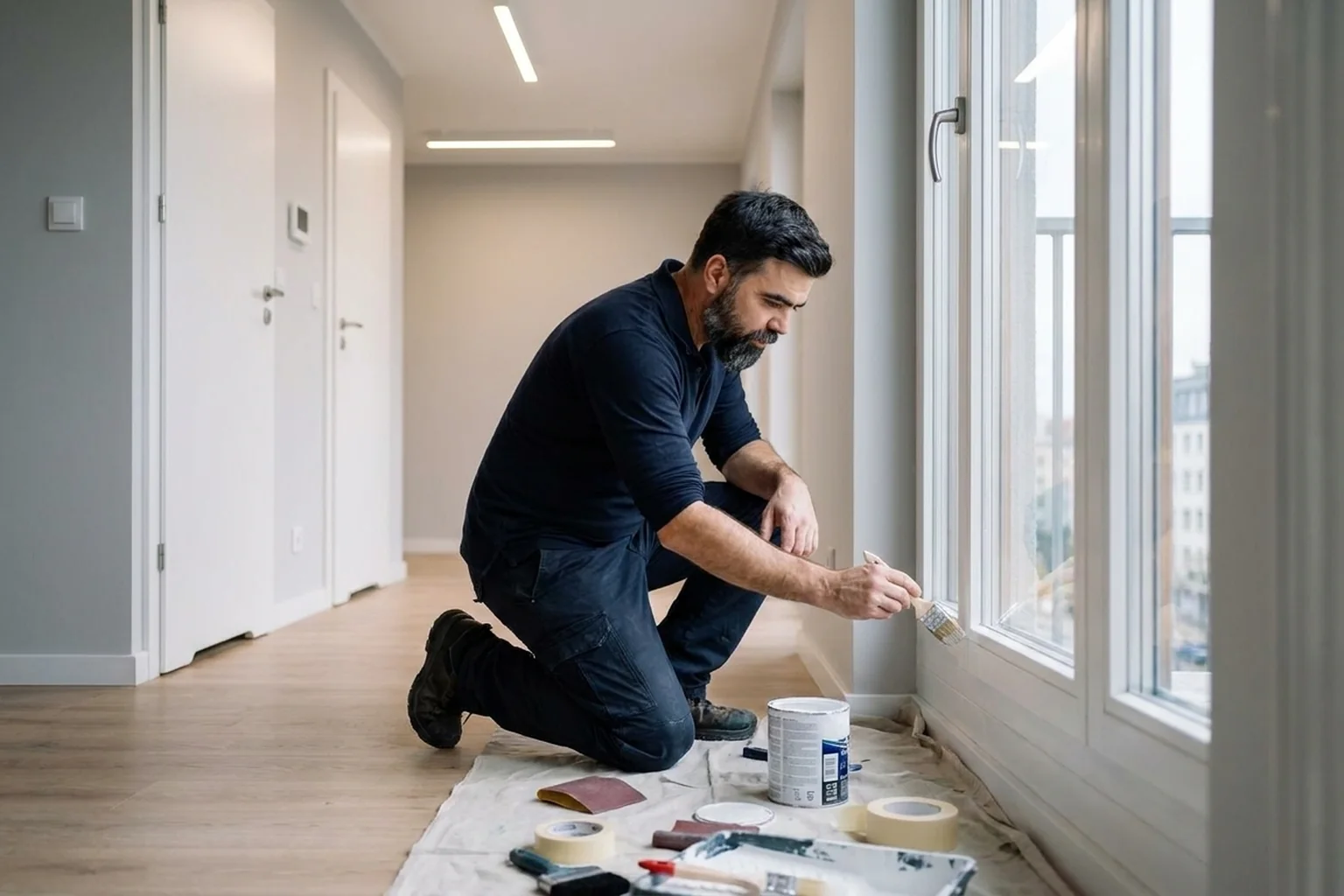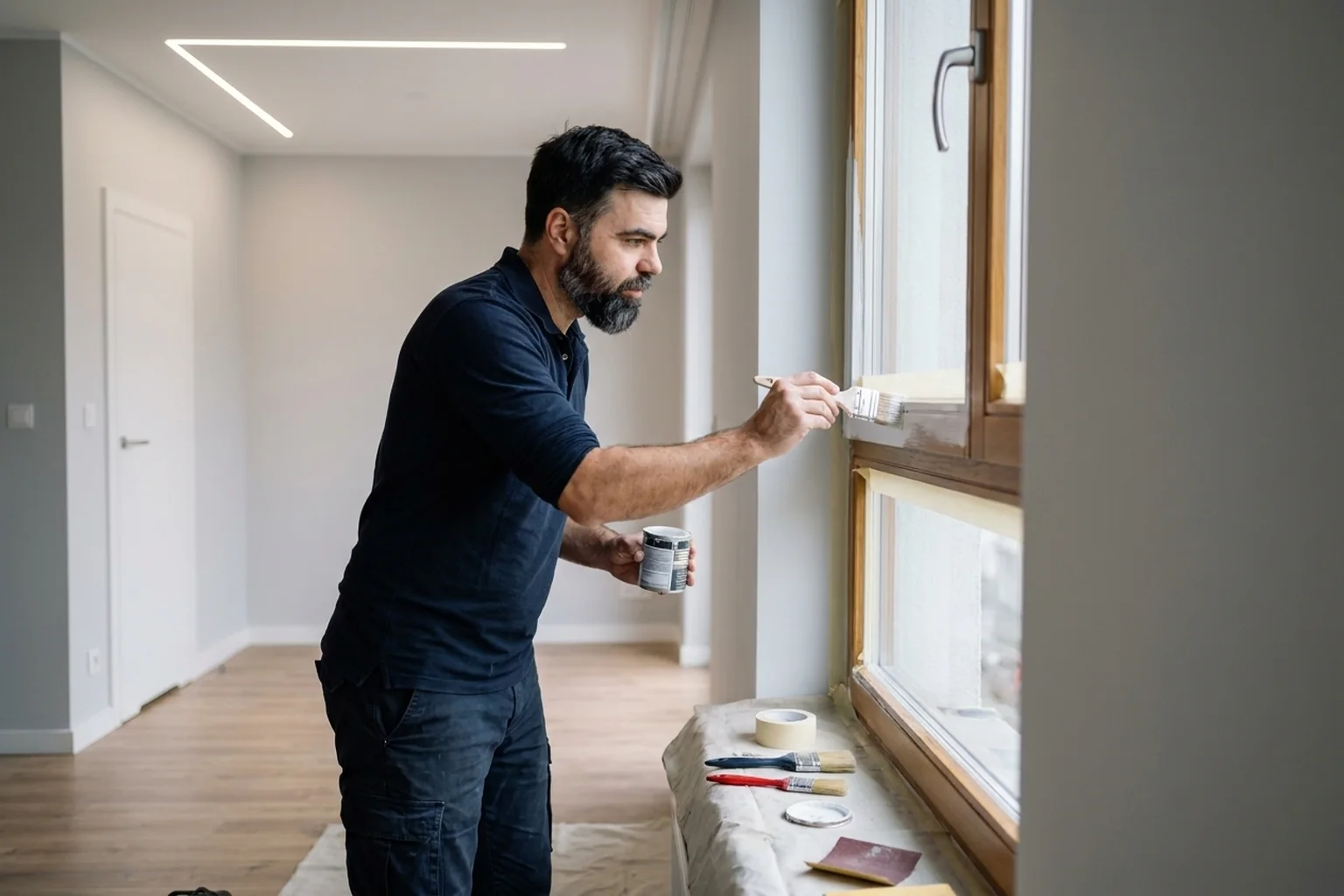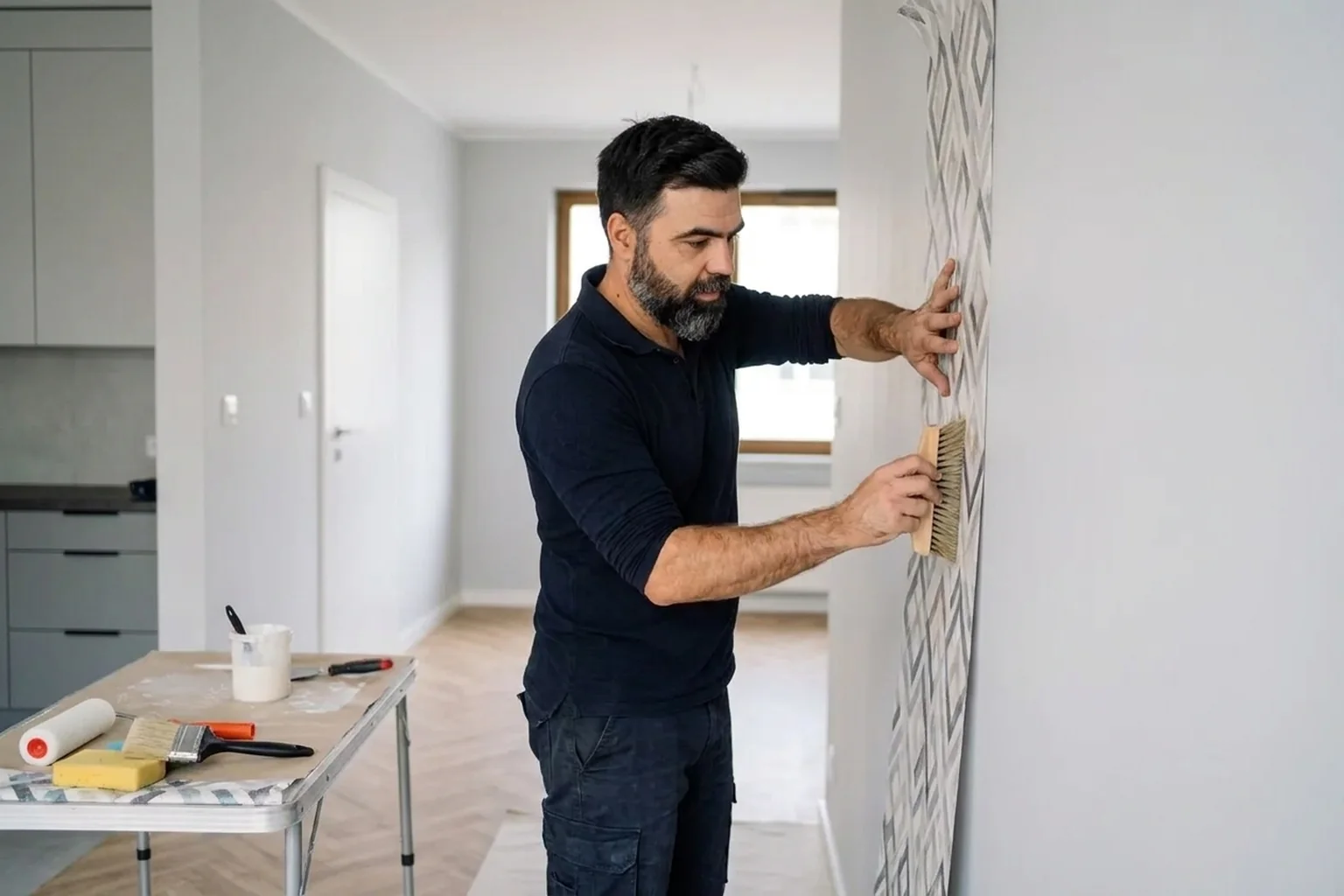
Below: wallpaper hanging cost per m² and what drives it, how different wallpapers are hung, how to prepare the walls and in what order to do a room.
How much does wallpaper hanging cost?
Current rates are in the table below. Labour is usually priced per square metre of wall, separately for paper, non-woven, vinyl and textile wallpaper. Wall preparation, ceilings, photo murals and pattern matching are priced on their own.
| Service | Price |
|---|---|
| Preparing walls for wallpaper | 30–50 zł/m² |
| Hanging paper wallpaper | 35–75 zł/m² |
| Hanging non-woven wallpaper | 45–75 zł/m² |
| Hanging vinyl wallpaper on non-woven backing | 40–80 zł/m² |
| Hanging wallpaper with pattern matching | 50–100 zł/m² |
| Hanging textile wallpaper | 70–90 zł/m² |
| Installing a wall mural | 60–110 zł/m² |
| Ceiling wallpapering | 60–75 zł/m² |
| Old wallpaper removal | 20–35 zł/m² |
Indicative prices. Ranges for a typical scope. Fixings included, materials separate. Minimum order 300 zł.
The pattern repeat (how often the design recurs), the state of the walls, room height and the number of windows, corners and sockets to cut round all affect the price. You buy the wallpaper, paste and primer separately, and waste removal and carrying materials in are paid on top. If there is old paper on the walls, see what wallpaper removal costs.
Paste the wall or the paper: non-woven, vinyl, paper
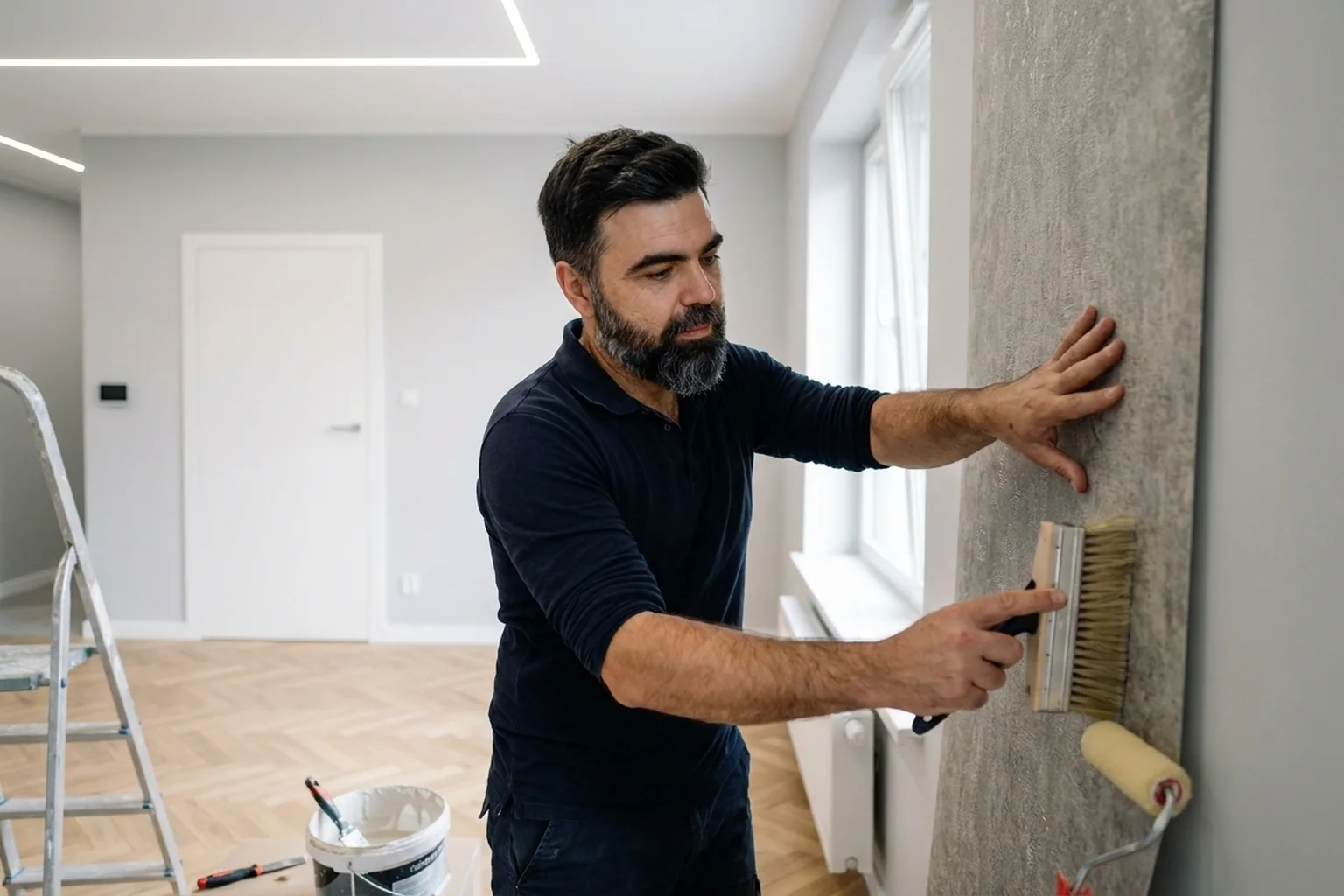
With non-woven wallpaper, the paste goes on the wall and the dry length is offered up from the top. Non-woven barely shrinks as it dries, so drops are butted tight. Paper wallpaper is hung the old way: paste on the length, a moment to soak, then onto the wall. Paper swells and shrinks back, so a length stretched while hanging will open a gap at the seam.
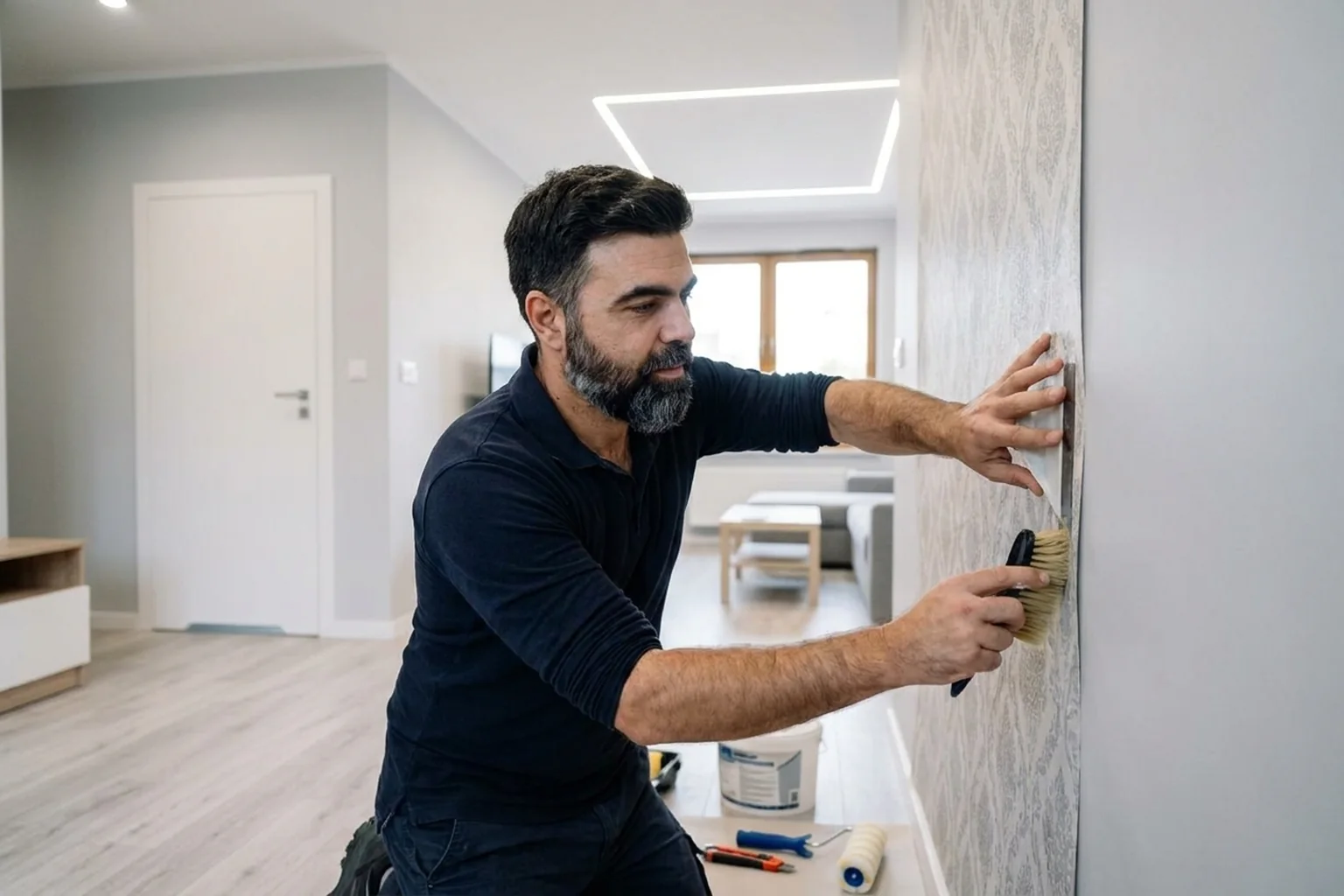
Vinyl on a non-woven backing can be heavy and deeply embossed. It needs a stronger paste, and seams are pressed with a rubber roller or soft brush rather than a hard roller. Flattened embossing stays as a shiny stripe.
Vinyl lets little vapour through. On a cold external wall or in a bathroom without ventilation, mould can grow underneath. If the room has already had mould on walls, deal with the cause first.
Everything you need to know about a roll is on the label: the pasting symbol, pattern repeat, batch number, washability and how it comes off.
Feature walls and pattern matching
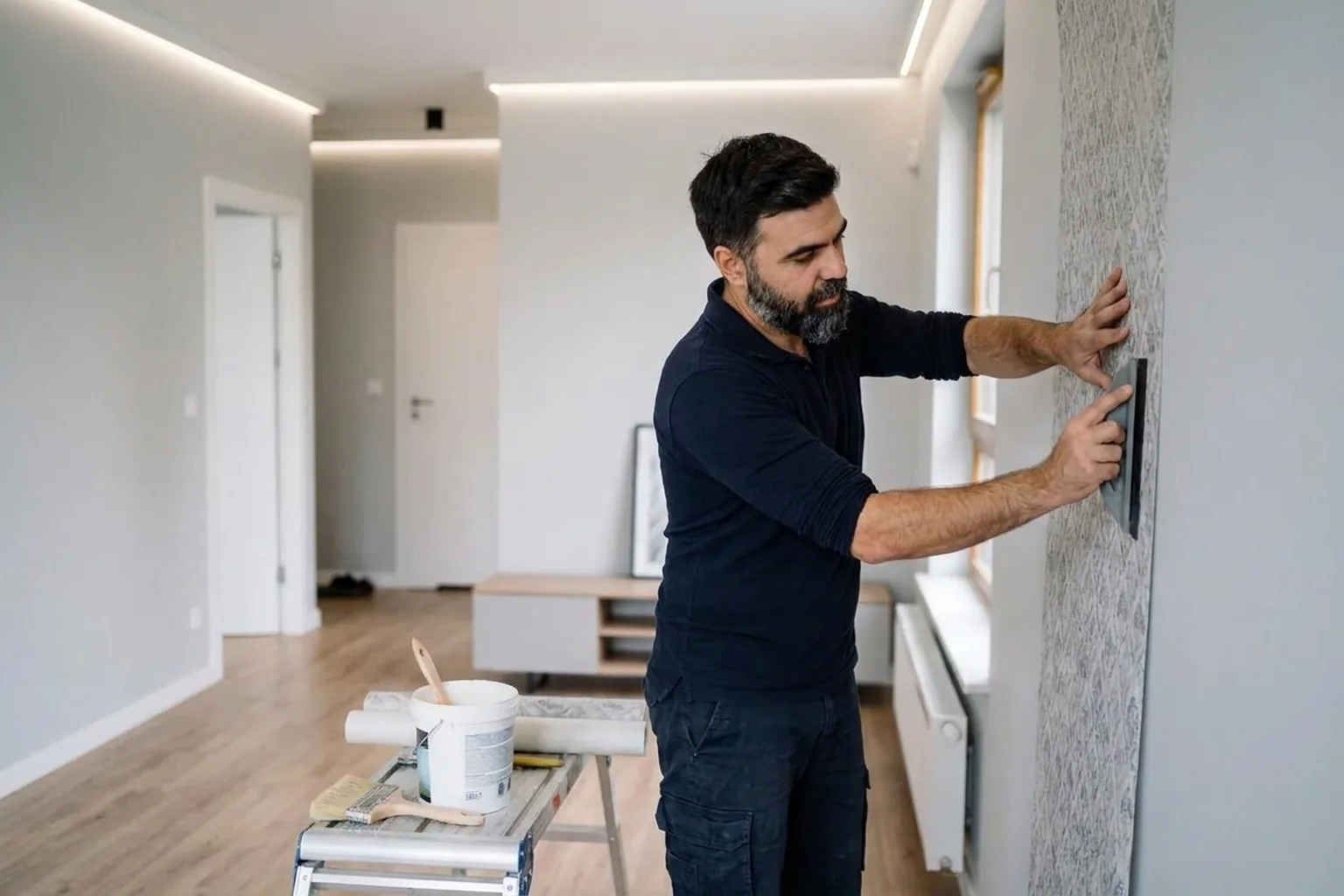
Most often wallpaper goes on a single wall: behind the bed, behind the sofa, in the hallway. That is exactly where every crooked drop shows, because the eye compares it with the plain walls next to it.
A large pattern is set out from the centre. The first drop goes on the centre line of the bed or sofa and the rest spread out to the sides, so the cut pieces of pattern land symmetrically in the corners. A large repeat means more waste, so you need more rolls.
A large, bold design in a narrow hallway can overwhelm, because you see it up close. On a wide living room wall the same design has room to breathe. If you are torn between wallpaper and colour, compare it with painting walls in different colours.
Preparing walls for wallpaper
Old wallpaper comes off before new goes on. Left underneath, it pulls away with the new layer and both come off in sheets. Flaking paint has to be scraped off: wallpaper holds on to the paint, but the paint does not hold on to the wall.
Deep holes and crumbling plaster mean filling first, then wallpaper. Thin non-woven will not hide a hole. For larger unevenness, gypsum skim coating comes into play. An absorbent wall is always primed, otherwise it sucks the paste out and the edges lift. How that is done is covered in priming walls before painting.
Before hanging, socket and switch plates come off and the circuit is switched off at the consumer unit. Wet paste and electricity do not mix.
Wallpaper hanging step by step
- The fitter checks the wall, primes it and waits for the primer to dry.
- Marks a plumb line for the first drop with a laser or plumb bob, not from the corner: corners in older blocks are rarely true.
- Cuts lengths with spare at top and bottom, checking the batch number and pattern direction.
- Pastes the wall or the length, depending on the label symbol.
- Hangs the length, matches the pattern and smooths from the centre outwards, pushing out the air.
- Wipes paste off the face straight away with a damp sponge.
- In a corner, trims the length with a small overlap and starts the next one from a fresh plumb line.
- Finally trims at ceiling and skirting with a sharp blade and refits the socket plates.
Order of work in a room
Ceiling first, because paint from a roller always spatters downwards. Then wallpaper, and finally the floor and skirting, which cover the bottom edge of the paper. Laminate laid before wallpapering catches paste and offcuts.
The fitter starts with the most visible wall, and the seam where the pattern cannot meet is hidden behind the door or in a corner behind a wardrobe. Starting at the door pushes that seam to the middle of the opposite wall.
After hanging, the room needs calm: no draughts and no radiator on full next to fresh drops. Wallpaper that dries too fast shrinks unevenly.
Common wallpapering mistakes
- Rolls from different batches. The shade differs only slightly, but on the wall it shows as stripes.
- Paste on the wrong side, or the wrong paste for the wallpaper.
- An unprimed wall. The paper lifts at the edges.
- The first drop hung from the corner without a plumb line. The skew runs across the whole wall.
- Stretching paper wallpaper to hit the pattern. The seam opens once it dries.
- Pressing embossed paper with a hard roller. The texture flattens and shines.
- Bubbles smoothed too late, after the paste has grabbed.
- No spare roll from the same batch in case a drop gets damaged.
Rasch, Marburg, Grandeco, A.S. Création: read the label
Rasch, Marburg and A.S. Création are German makers, Grandeco is Belgian. Their collections are mostly non-woven and vinyl on non-woven, with some paper-backed papers too. The brand does not change how the job is done. The backing and the label symbols do, which is why the fitter asks for a photo of the label before quoting.
The same rule applies to every maker: rolls for one wall from one batch, plus one spare.
What to prepare before the fitter arrives
- Buy all the rolls at once, from one batch and with a spare.
- Strip the old wallpaper or add stripping to the job.
- Move furniture away from the walls and take down pictures, shelves and wall lights.
- Decide where the centre of the pattern should fall on a feature wall.
- Photograph the walls and the roll label.
- Check the walls for damp or mould and show any such spots in the photos.
Frequently asked questions
How much does it cost to wallpaper a room?
Work out the square metres of wall without windows and doors and find the rate for your type of wallpaper in the table above. Add wall preparation if needed, plus materials.
Do you paste the wall or the wallpaper?
For non-woven, the paste goes on the wall; for paper wallpaper, on the length. The symbol on the roll label gives the definite answer.
Can you wallpaper over paint?
Yes, if the paint is well bonded and primed. Not over flaking paint, which will come away with the wallpaper.
How many rolls of wallpaper should I buy?
It depends on the area and the pattern repeat. A large repeat means more waste. Always buy a spare from the same batch.
Is wallpaper suitable for a kitchen or bathroom?
In a kitchen, choose a washable paper and keep it away from the hob. In a bathroom, only with good ventilation and outside the shower zone, because vinyl traps vapour.
Do fitters wallpaper ceilings too?
Yes, it is a separate line in the price list. Working overhead is slower, and on a ceiling the pattern and seams show under the light.
How to book wallpaper hanging in the app
Photos are the easiest start. Upload them to a job in the app along with the wall area and what wallpaper you have. Fitters reply with offers at their own price and date, and you pick one by price, ratings and reviews. Only the chosen fitter gets your phone number and address, and you pay them directly.
The fitter who hung the paper is responsible for their seams and bubbles and puts them right. Damp in the wall and crumbling plaster are not their responsibility. You can add painting the other walls to the same job; rates are on painting services in Warsaw, and a cost comparison is in wall painting prices.
Order in the app
Describe the job, add photos and the address. Tradespeople send their own prices and dates, and you pick one of the offers.
Open the app