
How much does built-in dishwasher connection cost in Warsaw?
The price of connecting a built-in dishwasher depends on a few things: whether the cabinet has to be altered (a cutout in the back panel, niche adjustment), whether water and drain points are already there, and how far away the power socket is. If the kitchen was planned for a dishwasher from the beginning, the hookup is simple. If outlets have to be moved or extended, that adds extra work. Check the table below for current kitchen service prices. Mounting hardware and standard consumables are included; materials for extending plumbing are charged separately.
| Service | Price |
|---|---|
| Assemble kitchen units (base and wall cabinets) | 400–1000 zł/mb |
| Base kitchen cabinet installation | 120–270 zł |
| Wall kitchen cabinet installation | 120–270 zł |
| Kitchen front adjustment | 80–250 zł |
| Kitchen worktop installation | 70–200 zł/mb |
| Laminate worktop installation | 70–135 zł/mb |
| Composite worktop installation | 250–400 zł/mb |
| Worktop joining | 190–300 zł/szt |
| Worktop cut-out (sink, hob) | 150–300 zł/szt |
Indicative prices. Ranges for a typical scope. Fixings included, materials separate. Minimum order 300 zł.
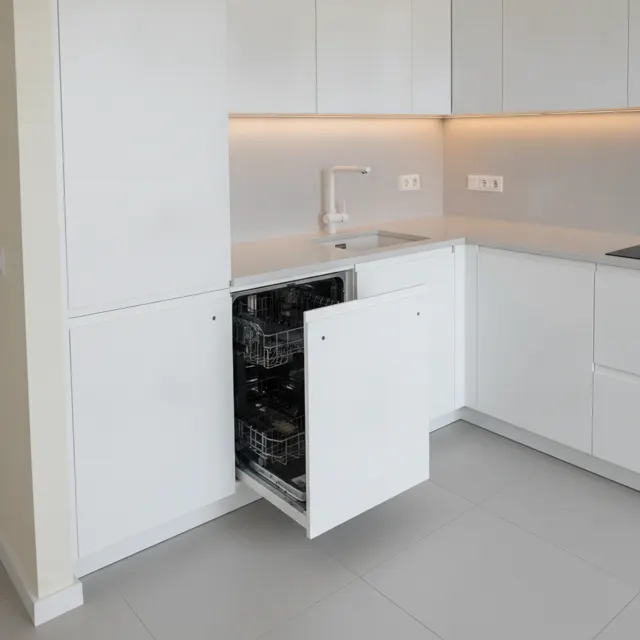
Price ranges and offers from tradespeople: dishwasher installation in Warsaw.
Built-in installation or just connection?
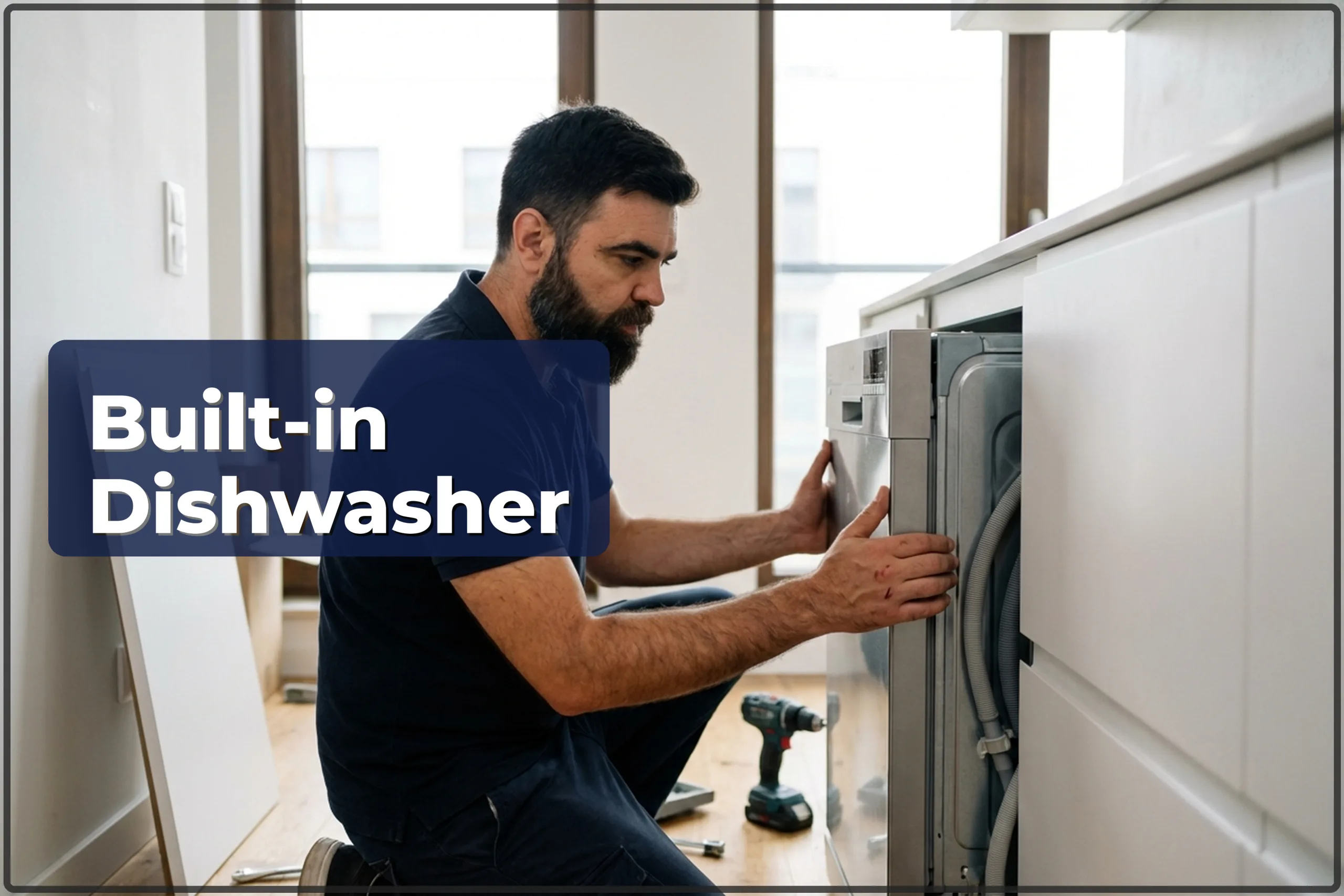
The door panel, levelling and fixing belong to a built-in installation. If the machine is freestanding or already in its recess and only needs water, waste and a socket, a dishwasher connection is enough.
How built-in dishwasher connection is done
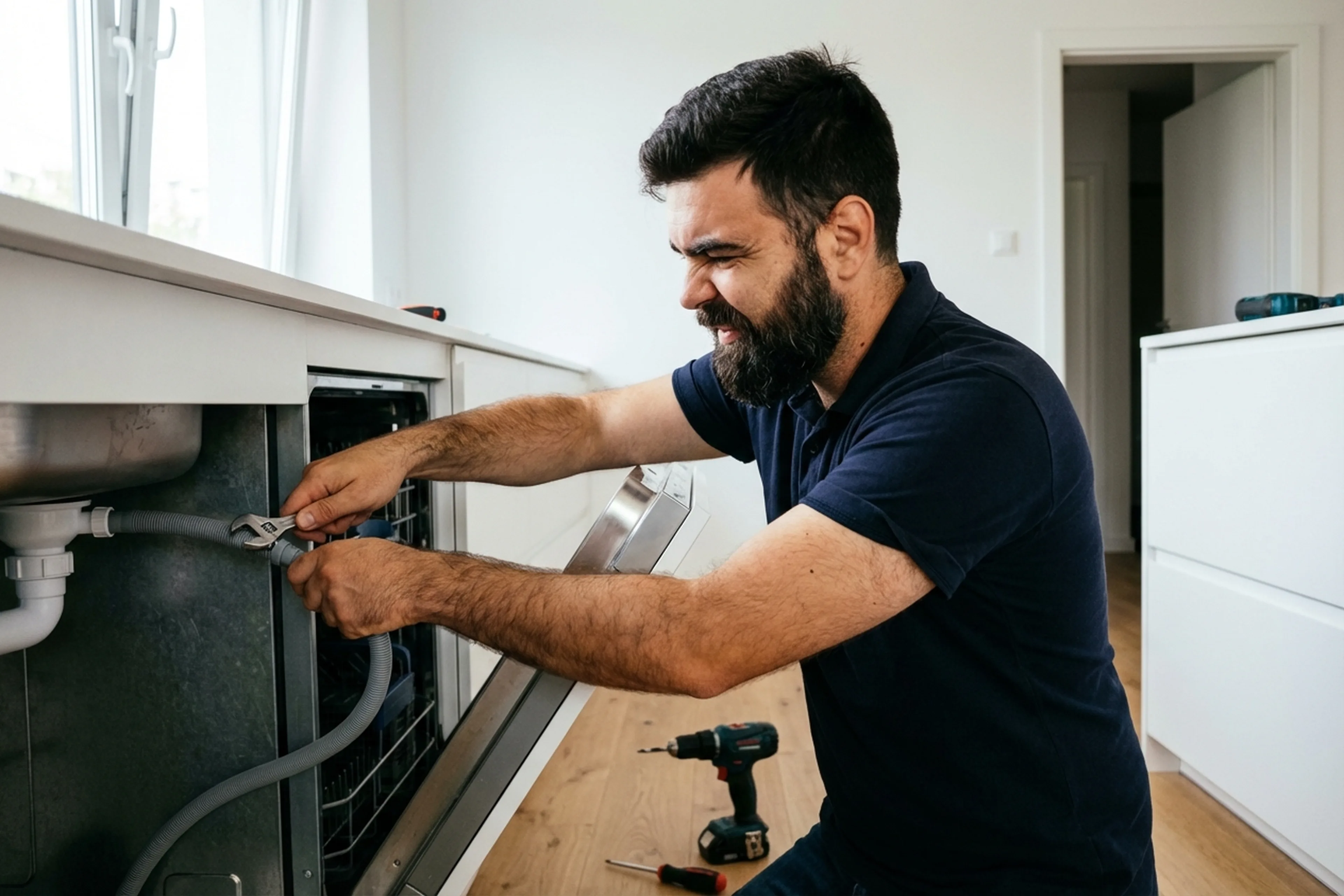
- You send a photo of the niche and the cabinet back panel, the technician checks how ready everything is.
- You agree the visit time with the tradesperson you choose; it depends on their schedule.
- On site, the technician inspects the niche: width, depth, and whether the back panel has a cutout for the hoses.
- If there is no cutout, one is made on the spot with a jigsaw or router.
- The dishwasher is pushed into the niche, connected to cold water through a tee valve, and the drain is led to the sink siphon or straight into the waste pipe.
- The electrics are checked: the socket must be earthed and not placed behind the appliance (so the plug is not pressed against the wall).
- The decorative panel is fitted and fixed to the dishwasher door.
- Test run: checking for leaks, drainage, and door alignment.
Common customer mistakes (and how to avoid them)
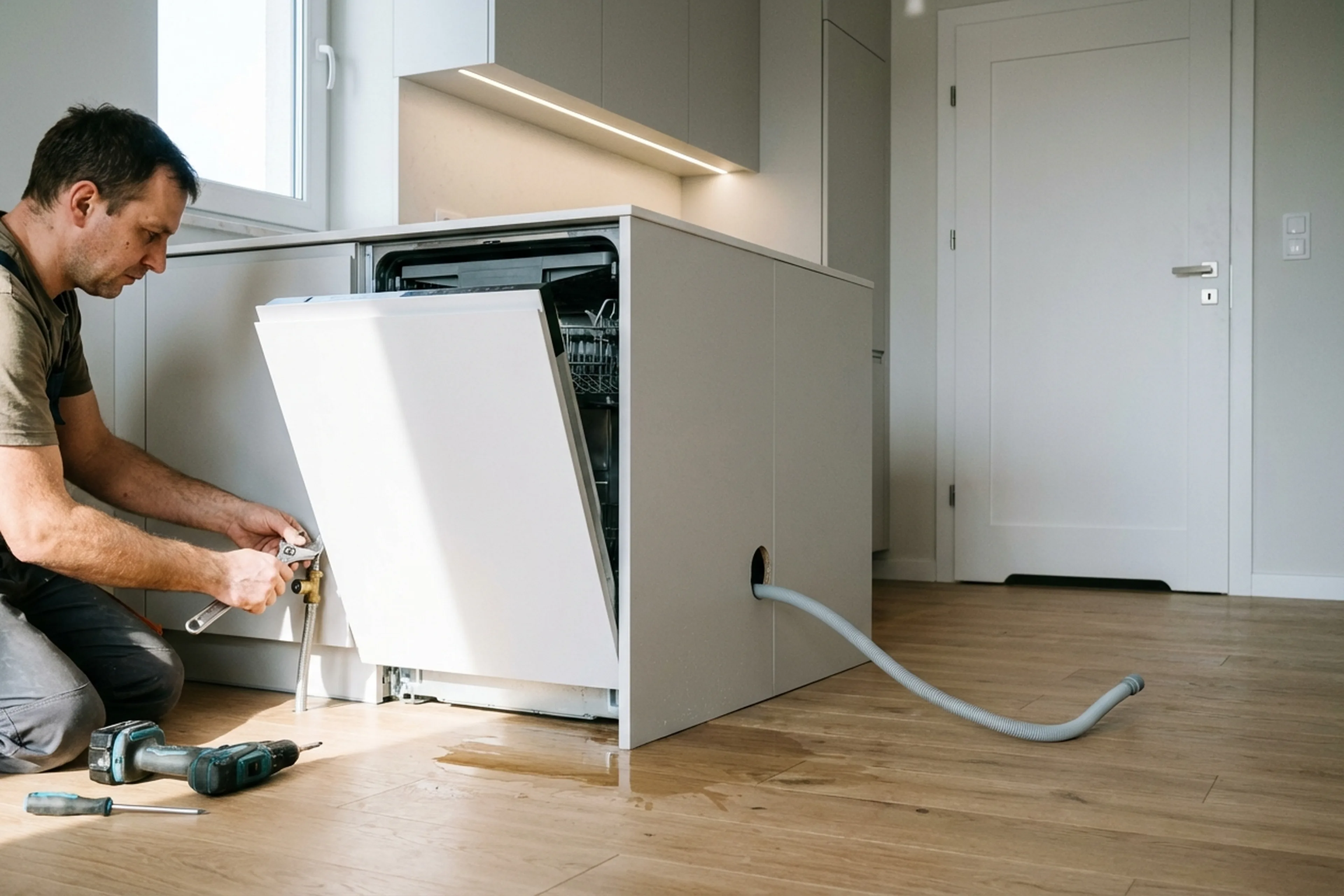
- Buying a 45 cm dishwasher for a 60 cm niche (or the other way round) without measuring first.
- Missing the cutout in the cabinet back panel: the hoses have nowhere to pass, and the machine will not slide all the way in.
- Connecting the drain without a siphon with a non-return valve — sewer smells end up inside the dishwasher.
- Putting the socket directly behind the dishwasher, the plug stops the unit from fitting, and if there is a leak it becomes unsafe.
- Leaving the dishwasher unsecured without mounting brackets, it shakes during cycles and damages the countertop.
- Using the old drain hose from a previous machine again — the diameter or length does not fit.
- Fixing the decorative panel before making the connections, then it all has to be removed again.
What to prepare before the technician arrives
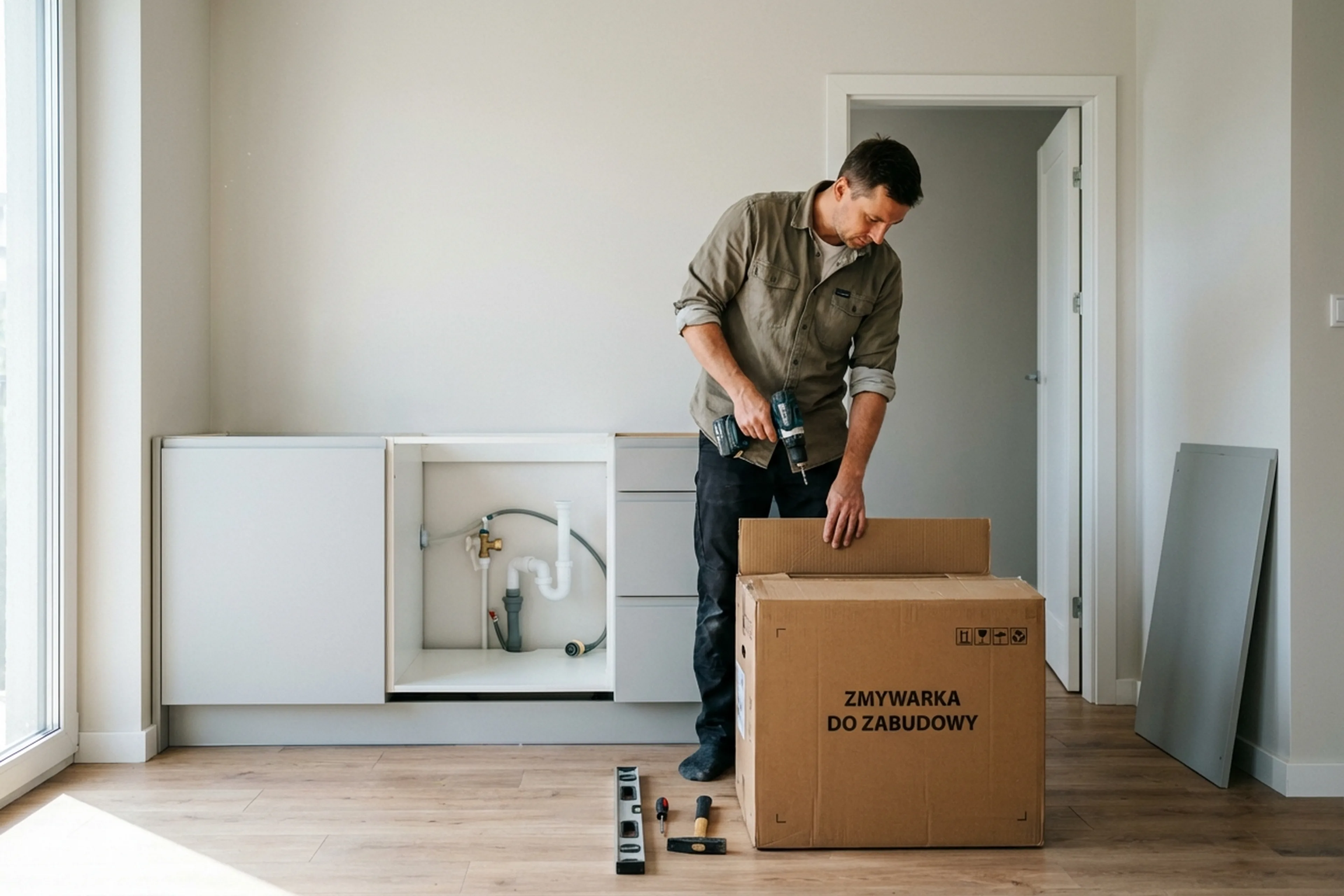
- Make sure the dishwasher has been delivered and is standing next to the installation spot (not in the hallway on another floor).
- Check what is inside: supply and drain hoses, mounting kit, manual.
- Measure the niche: width, depth, height: compare that with the dishwasher dimensions.
- Check if there is a cutout or hole in the cabinet back panel for the hoses.
- Make sure there is space under the sink for a tee on the water supply.
- Confirm there is an earthed socket within reach (not behind the appliance).
- Clear the area in front of the niche — remove chairs, boxes, rubbish.
- If the kitchen is still being assembled, coordinate with the fitters so they make the utility cutouts.
- Have the decorative panel (front) ready if it comes separately from the furniture.
- Give the technician the intercom code and parking details.
A real case from Warsaw: built-in dishwasher connection
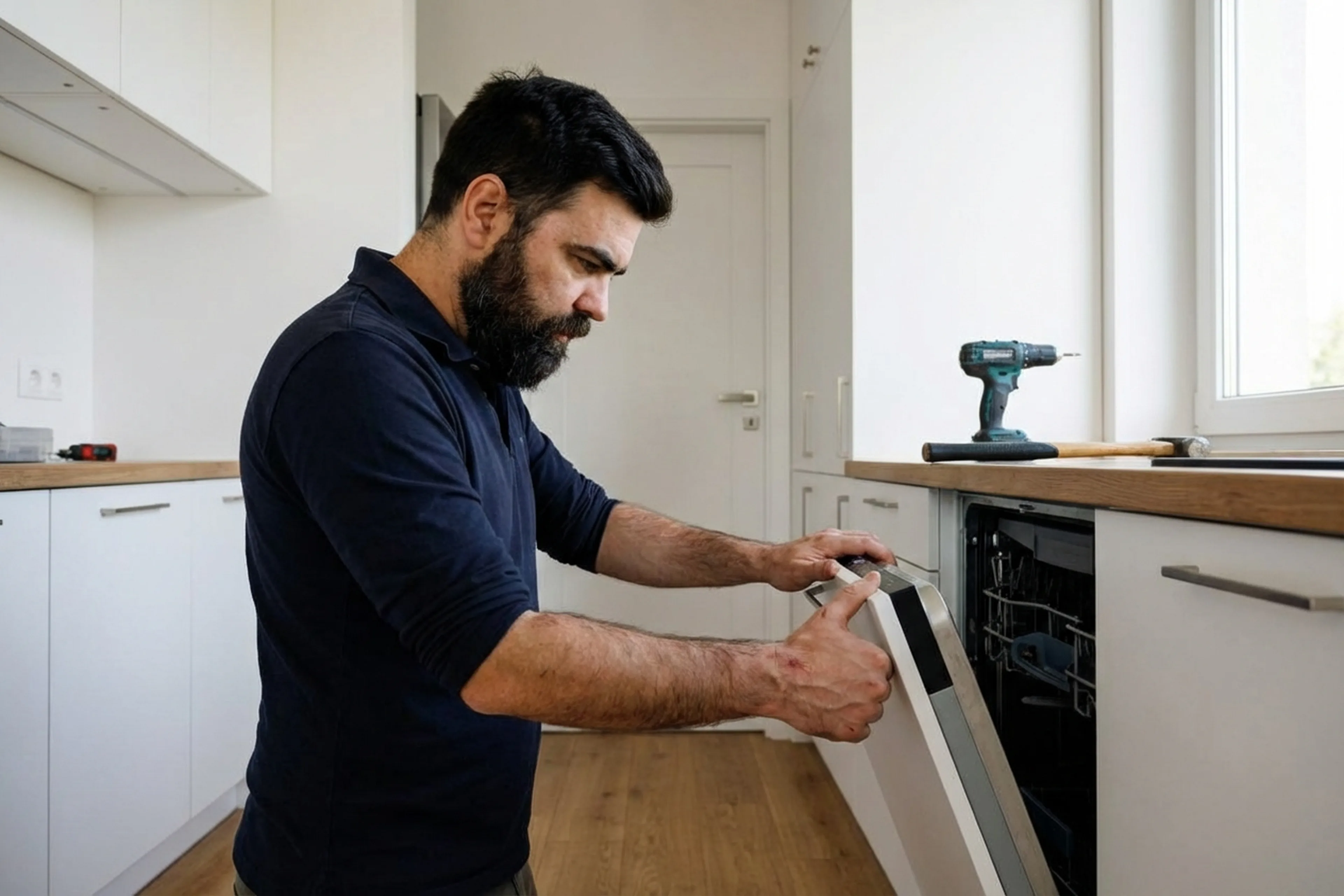
Clients in the Ursynow district ordered an IKEA kitchen and bought a Bosch built-in dishwasher. They put the cabinets together themselves but forgot to cut the opening in the back panel for the hoses. The dishwasher was hitting the wall and stopped 8 centimetres short of going in fully. The technician marked the opening and cut it on site with a jigsaw for the hoses and power cable. Then it turned out the drain hose was too short to reach the siphon, so an extension with clamps was installed. Water was connected through a tee with a shut-off valve, and all joints were checked for leaks. The decorative front panel was mounted on the factory guide rails. The test run went fine. The whole installation took about two hours. The lesson: when ordering a kitchen, plan built-in appliance space from the start and ask the fitters to make all utility cutouts beforehand.
Frequently asked questions
How is connecting a built-in dishwasher different from a freestanding one?
A built-in model has to be fixed inside the niche with brackets, fitted with a decorative front panel, and the cabinet back panel needs a cutout for the hoses. The actual hookups (water, drain, power) stay the same.
Can I connect a dishwasher if there is no drain nearby?
Yes, the drain can be extended to the sink siphon. However, the hose length should stay within the manufacturer’s recommendation (usually 2-3 metres).
Does the dishwasher need a dedicated socket?
Yes, a dedicated earthed socket on a circuit rated at least 16A is advised. Do not use an extension lead or adapter.
What if the niche is slightly wider than the dishwasher?
That is normal: the gaps are covered by the mounting brackets and the decorative panel. What matters is that the machine is fixed firmly.
Does the technician bring materials?
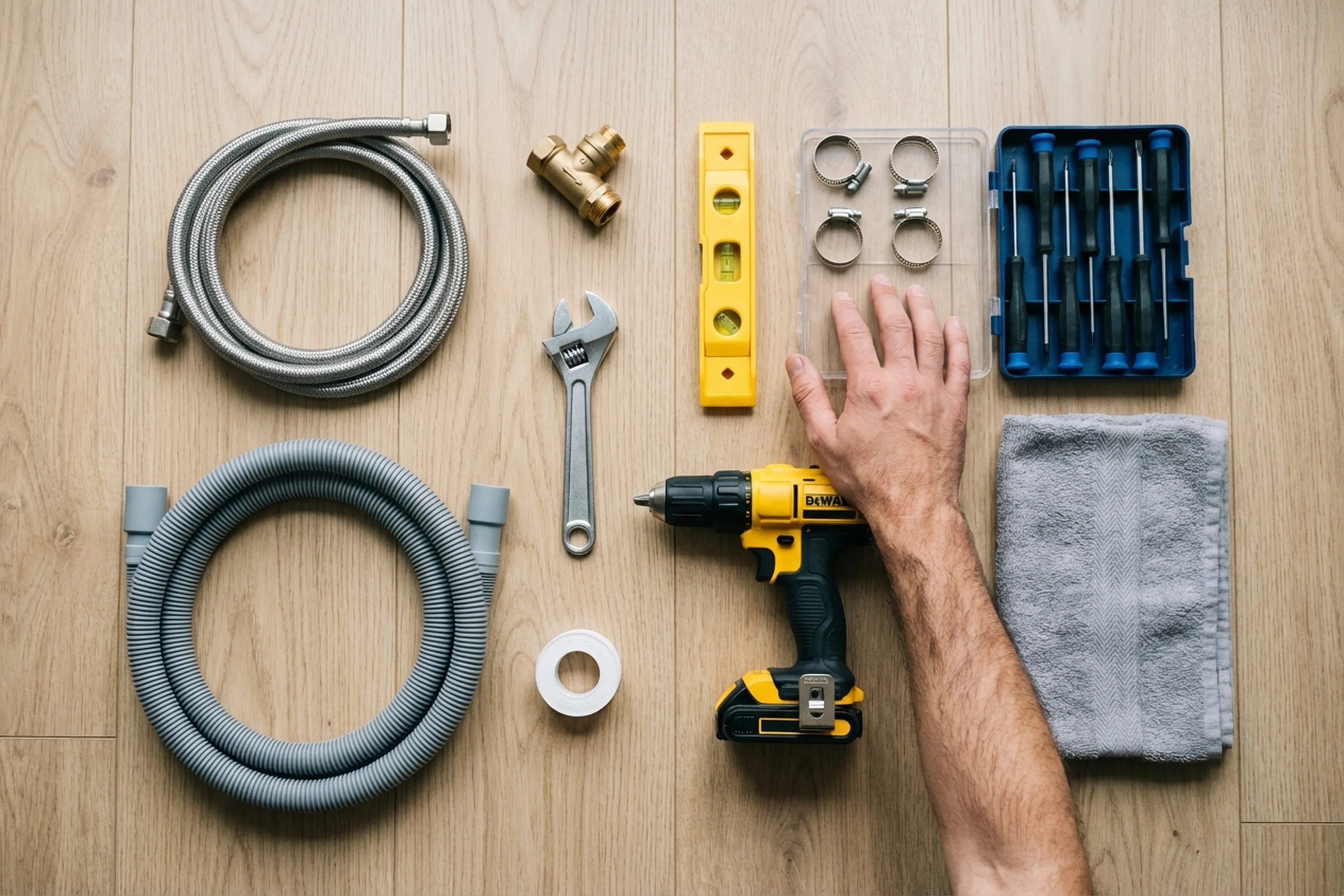
Mounting hardware and standard consumables — yes. Tee valves, hose extensions, siphons: that depends on the situation. Best to confirm when booking.
How long does the connection take?
If everything is ready (niche, cutouts, outlets), about 1 to 1.5 hours. If cabinet or plumbing changes are needed — up to 3 hours.
Can the dishwasher be moved to a different spot in the kitchen?
It can, but the plumbing will need extending. The technician will check on site whether that is possible.
Who does the work
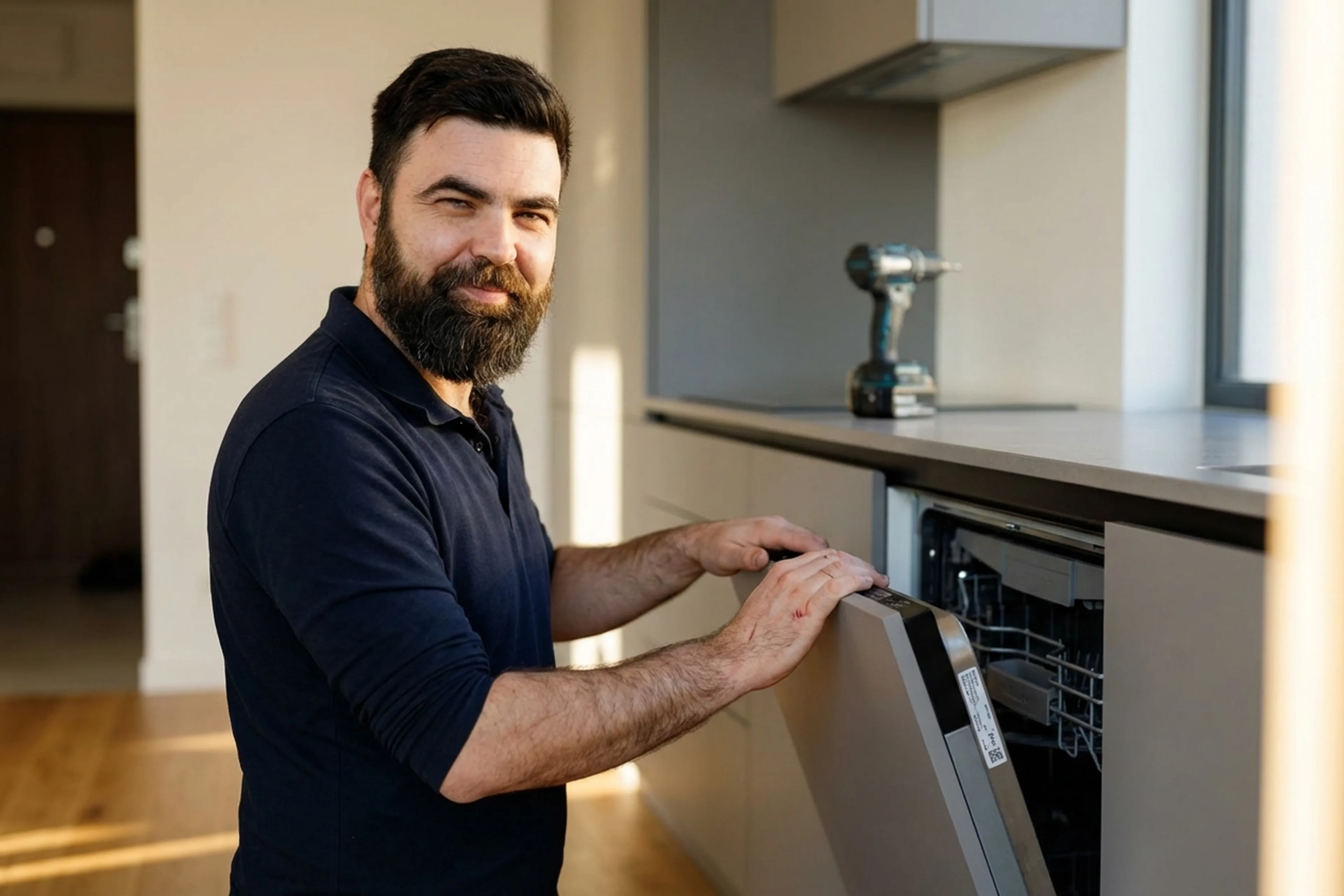
Kitchen appliance connections are done by technicians who know built-in equipment installation inside out. Tradespeople cover all of Warsaw: from Wilanow to Bielany. Tradespeople come with tools, check the setup on site, and give you the exact price before any work starts.
Order in the app
Describe the job, add photos and the address. Tradespeople send their own prices and dates, and you pick one of the offers.
Open the app